




In the course of our time as a nation, the United States has had enemies, neutrals, friends and reliable allies. These relationships change over time and move from one end of the scale to the other – and often back again. There really are no permanent allies or permanent enemies.
Japan, for example, has moved back and forth through this sliding scale over the centuries to the position of ally today. Similarly, Great Britain has been a stalwart ally up from the deadliest enemy. Some might argue that they are working their way back down the scale again.
Other relationships sour over time like ours with China and Russia; each of which has moved from the closest wartime ally to at least neutral and possibly actual enemy in the eyes of some.
The complexities of the Middle East have made these descriptions difficult for our relations with the nations there. What is our relationship with the various Middle East nations and factions? How can we describe our state of being with each of them?
I believe that the Middle East nations have developed from merely wealthy families sitting on some ancestral land to actual functioning nation states. Their relationships with their neighbors, their trading partners and others seeking their friendship have matured and nuanced from the simple black and white.
Good or bad, friend or foe, ally or enemy is not the simple language used by these states even a decade ago. In the time of Trump, the Middle East nations have become much more mature in how they truck with the world. These nations are more stable and more reliable. They crave the healthy “friend” while studiously avoiding becoming an automatic ally of that friend. They enjoy neutral relations without letting them become enemies. This is the behavior of a mature nation.
Nowhere is this truer than in the Gulf, where the nations of the GCC -- Saudi Arabia, the UAE, Qatar, Bahrain, Kuwait and Oman -- have been reliable U.S. partners. We have had our ups and downs with each but, at the end of the day, we can count on them.
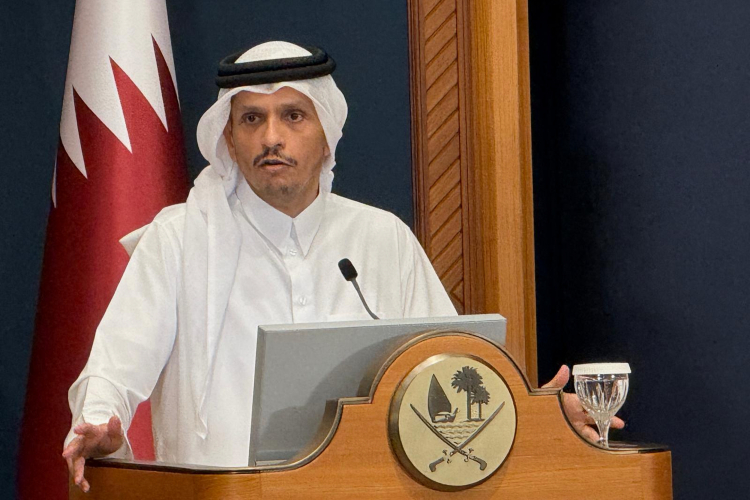
Since the start of hostilities with Iran, Qatar has exemplified the steadfastness and reliability of our allies in the Gulf States.
At the start of the war with Iran, Qatar was in a very tough spot. Having cultivated very warm relations with Iran over the decades, Qatar imperiled its relations with other Arab states and their allies in the West. They played Hamlet for so long that they ran the risk of having no friends at all – or possibly worse, a basket of unreliable friends.
When faced with the crisis, Qatar stepped-up and declared itself against Iran. Because of its proximity to Iran, this was no easy decision, but it was made and Qatar made itself available to the growing alliance against Iran. This decision was not without consequence. Approximately 20% of its natural gas production was destroyed by Iran. It will take more than a decade and billions to repair. This is a painful cost which has not deterred Qatar’s resolve and commitment to the alliance.
Having had their nose bloodied by an insane and powerful neighbor, the old Qatar could have been expected to withdraw from the coalition and declare its neutrality. It didn’t. It’s a “big boy” country now and an ally worth having; an ally worth sacrificing for. Qatar is an ally worthy of pride in the relationship.
Over the years, the United States has cultivated this friendship hoping for an actual ally when the time came. We have built our largest military base in the Middle East in Qatar, the Al Udeid Air Base. This base not only has an air wing stationed there but also houses about ten thousand US military personnel. It also serves as the forward base for the United States Central Command, normally located in what the military affectionately calls “Tampa-stan,” Florida.
This is in addition to our having agreed to many joint training and planning exercises and programs with Qatar. Just last year, the United States agreed to train Qatar’s air force (one of the largest in the Middle East) in the safety and seclusion of Idaho.
To its peril, Qatar has even defended this airbase against Iranian attack during the Twelve Day War last summer. Qatar put its pilots and planes on the line for our military personnel at Al Udeid. This is the behavior of an ally.
Further, Qatar has continued to act as the go-between with Hamas and the Taliban at our request in seeking peace with these factions. This position benefits Qatar nothing. On the contrary, they have had to pay a high price. Politicians in this country at home and abroad have attacked Qatar relentlessly for saying yes to the U.S. government and hosting these talks. They endured these baseless accusations with strength because the secrecy of the role of the United States in requesting their assistance was paramount to the success of the mission.
As our relationship deepens, Qatar will be asked to take on a role in reconstruction of Gaza. There are also plans to work with Qatar in the coming field of Artificial Intelligence where their access to capital and cheap energy makes them natural partners.
Their efforts, sacrifices and friendship in all these areas make Qatar among America's strongest allies.
Mike Flanagan represented the 5th District of Illinois in the U.S. House of Representatives.
