




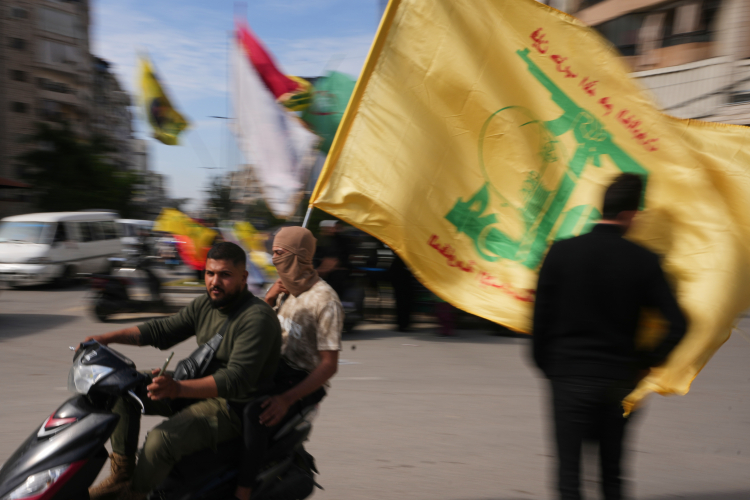
While the White House continues negotiations with Iran, the blockade of Iranian ports has resulted in Iran backing out of negotiations. However, should Iran return to the negotiating table, the United States and Israel must keep in mind that Iran’s terror proxies will be discussed in any future negotiations. Israel and the U.S. are in talks over Hezbollah; questions remain over the other terror groups Iran backs. If Iran wants to protect its terror clients in the region, it needs to commit to controlling them and be held accountable when they act up.
For the past few months, the United States and Israel have engaged in an air campaign against the Islamic Republic of Iran, targeting military assets and leadership. Iran’s air force, navy, and ballistic missile stockpile have been seriously degraded by this campaign. The only card Iran had left to play was a shutdown of the economically critical Strait of Hormuz. That resulted in a two-week ceasefire between Iran and the Americans and Israelis.
However, Israel continued to launch airstrikes against Hezbollah, a terrorist group in neighboring Lebanon. Iran, as the chief sponsor of Hezbollah, took exception to these strikes, believing that Hezbollah is covered under the aforementioned ceasefire. Despite the U.S. and Israel both disputing this, Israel demonstrated a willingness to play ball by negotiating with the Lebanese government over Hezbollah.
The Iranian government’s outrage over the strikes on Hezbollah reveals what many Western observers already know: Hezbollah is supported by Iran. Founded in the 1980s to destroy Israel, Hezbollah has long received financial and other assistance from Iran. As a proxy, however, there has always been plausible deniability about Iran’s relationship with Hezbollah. Support them, but deny the connection so as not to draw responsibility for their actions. By asking that Hezbollah be covered under the ceasefire, Iran concedes it has more control over Hezbollah than it had been willing to admit.
If Iran wants to include Hezbollah in any peace deal, that deal needs to tie sanctions to the performance of its proxies. If any of Iran’s terror proxies, including Hezbollah, attack the U.S. or its allies in the region, Iran needs to be subject to punishment. Binding Iran with its client terrorist groups denies them the ability to effectuate violence vicariously. Any violence perpetrated by Hezbollah would mean pain for Iran.
This logic holds for all the other Iran-backed terrorist groups in the Middle East. Hamas in the West Bank, the Houthis in Yemen, and Iraqi militias all receive material support from Tehran. For Israel, thousands were killed in the October 7th terrorist attacks that kicked off the wave of conflict over the past few years. They did so using Iranian weapons. If we want to prevent future terror attacks from Hamas, punishing Iran for Hamas’ actions is a necessity.
This isn’t just an Israeli problem; it affects U.S. interests as well—the Houthis targeted commercial ships transiting the Red Sea, affecting U.S. economic interests. More importantly, Iranian-backed militias in Iraq killed hundreds of U.S. servicemen. Those militias are now oppressing the Iranian people on behalf of the regime. To prevent U.S. deaths at the hands of Iranian militias, any deal must tie these militias to Tehran in writing.
Why is holding Iran accountable for its proxies so important? For decades, Iran has spread terror and violence covertly through groups like Hezbollah. If the link between such groups and the Iranian government is codified in a treaty, Iran won’t be able to escape the consequences of its actions anymore. Realistically, Iran will continue spreading violence even under the aforementioned scenario. What will change is that the source of the problem will be addressed head-on rather than the side effects. In this context, terrorism is the side effect, and the Iranian regime is the source.
Another way to hold Iran to account for its proxies is through the terrorist groups themselves. Previously, the U.S. and Israel dealt with the groups receiving money and weapons from Iran, leaving the supplier untouched. If the source of the assistance is cut off, it leaves those terrorist groups weakened. We are already seeing this as a result of Operation Epic Fury. Groups like the Houthis were able to shut down trade by launching missile attacks that they received from Iran. Now that Iran is under attack, the Houthis have been far quieter than one would expect. Holding Iran accountable keeps the region safer by checking both Iran and its proxies.
As far as groups like Hezbollah, Iran wants to have its cake and eat it too. They want to deny they have control over them while simultaneously claiming a ceasefire involving Iran covers their proxies. Iran’s demand to include Hezbollah in the ceasefire should come with strings attached. The United States must bind Iran to the behavior of its proxies to ensure the Islamic Regime suffers the consequences of its support for terrorism.
