




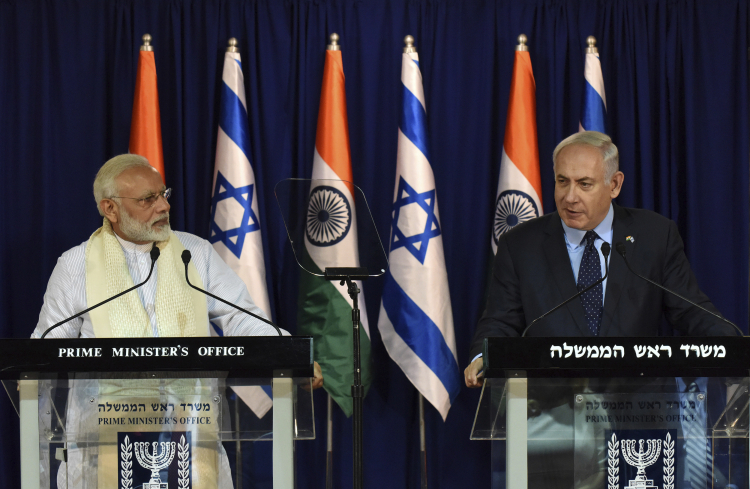
The close cooperation between the UAE, Israel, and India, endorsed by the United States, manifests the resurgence of I2U2 (India, Israel, the United Arab Emirates (UAE), and the United States) as a predominant security bloc. The strategic group, which remained practically dormant for many years, now seeks to exert its influence on the global strategic milieu.
The U.S.-Israel War on Iran has resulted in bloc realignment in the Middle East. UAE’s decision to quit OPEC indicates that the Gulf allies are no longer on the same page. Differences over retaliation and mediation with Iran have pushed the UAE away from Saudi Arabia into the Israeli camp. The transfer of the Iron Dome to the UAE demonstrates its reliance on Israel as the new security guarantor. The Indian foreign minister’s calculated visit to the UAE amid conflict and tacit American patronage shows that this realignment is not region-specific but rather a part of I2U2’s global resurgence.
Saudi-UAE Rift: A Precursor to Shifting Alliances
The rift between the Kingdom of Saudi Arabia and the UAE, which had been brewing for a long time, finally erupted into open disagreement over the UAE’s support for the Southern Transition Council in Yemen. Their support for rival groups in Libya, opposing views on the situation of Sudan, diplomatic engagement with Israel, and the status of Somaliland further aggravated the split. The US-Israel war in Iran and the resultant approach towards the conflict pushed the two sides into opposing camps.
The Saudi leadership, on the advice of Pakistan, supported the negotiation process between Iran and the U.S. The Saudi Crown Prince Muhammad Bin Salman validated Pakistan’s role as a facilitator and later as a mediator. Saudi Arabia also refrained from invoking the mutual defense agreement with Pakistan that it signed in September 2025 after Israeli strikes on Doha. This decision of the Saudi leadership prevented a head-on confrontation with Iran. Furthermore, this strategic prudence also averted the possibility of an encounter between Pakistan and Iran, as the former reiterated its commitment to defending Saudi sovereignty. This thwarted the prospects of inessential broadening of the conflict.
The Emirati leadership derided the Saudi reluctance towards retaliation, as the UAE suffered the highest number of Iranian strikes in the conflict. The UAE advocated for stern retaliation against Iran and for decimating its offensive capabilities. It rejected the negotiation efforts led by Pakistan and penalized the latter by demanding $3.5bn deposited in its reserves.
Saudi Struggle to Retain Gulf’s Leadership
Saudi Arabia has faced multiple challenges to its regional dominance in recent months. The Kingdom has faced Iranian attacks on U.S. military installations on its soil, alongside the UAE's revisionist challenge. Amidst growing rifts within the GCC and the persistent threat of Iranian strikes, Saudi Arabia has expanded its diplomatic and strategic efforts to retain its sphere of influence.
Nuclear-armed Pakistan has stepped up as the net security provider for Saudi Arabia. Pakistan has emerged as a key player in the US-Israel War on Iran. It has leveraged its relations with Iran and the rapport with the Trump administration, established in the aftermath of the May 2025 war with India, to facilitate peace talks in the ongoing conflict.
Pakistan’s role in securing a temporary ceasefire eased Saudi apprehension and threats to its sovereignty. Additionally, Pakistan also deployed 13000 soldiers and 20 fighter jets in Saudi Arabia as part of its mutual defence agreement. The Kingdom also relies heavily on Pakistan’s nuclear umbrella as its trust in US security assurances and extended deterrence fades.
Pakistan’s security assurances are vital to Saudi Arabia’s security and the perpetuation of its regional leadership. Counting Pakistan’s unwavering diplomatic and strategic assistance, the Kingdom has also extended diplomatic outreach with Turkey. Additionally, Qatar and Egypt also appear to be standing beside the Saudi leadership in the ongoing conflict.
Prospects of Saudi-led Quadrilateral Security Bloc
The visit of Saudi, Turkish, and Egyptian foreign ministers to Pakistan highlighted the prospects of the formation of a new regional bloc. The Sunni background of these nations axiomatically attached a sectarian label to the gathering. The projection of a strategic bloc, much akin to NATO or QUAD, gained further traction as a mutual defense agreement already exists between Pakistan and Saudi Arabia. This agreement was signed last year after Israeli airstrikes on Doha and guarantees a nuclear umbrella to the Kingdom in case of a threat to its sovereignty.
The discussions regarding Turkey’s entry into the alliance surfaced in January and were confirmed by Pakistan’s Minister of Defence Production, Raza Hayat Harraj. Given the security situation in the region, standing strategic agreements, and growing rifts between the UAE and Saudi Arabia, the Saudi leadership will benefit from a quadrilateral security cooperation. The follow-up meeting between the leadership of the four countries in Turkey further consolidated the quadrilateral engagement, projecting a united front through a concerted diplomatic effort.
UAE’s Withdrawal from OPEC/OPEC+
UAE’s latest decision to quit OPEC and OPEC+, the world’s leading oil production cartels, indicates an irreconcilable rift between the UAE and Saudi Arabia. Saudi control over oil production limits and price management helped consolidate its grip over the GCC. The Emirati decision to part ways with OPEC demonstrates that the UAE is no longer willing to accept Saudi Arabia’s leadership role. The UAE expects a massive increase in its oil revenues through increased production. The simultaneous price diminution will directly hamper Saudi financial interests, as it benefits from limited production and higher oil prices. The UAE’s determination to challenge Saudi control is evident, and the rift widens with the UAE’s recent actions.
Consolidating Regional Realignment and Resurgence of I2U2
In the wake of the Iran War, the UAE, backed by Kuwait and Bahrain, categorically sided with Israel and renounced mediation efforts supported by the Saudi bloc. Emirati Minister Reem Ebrahim Al-Hashimi announced further strengthening of collaboration with the US and Israel against Iran and rejected the possibility of detachment from its Western allies. The transfer of the Iron Dome system and defense equipment from Israel to the UAE indicates a clear-cut strategic cooperation between the two nations. This cooperation is patronized by American endorsement, as both nations tow the US interests in the region.
The inclusion of India broadens the scope of this developing bilateral bond beyond regional cooperation. The calculated visit of the Indian foreign minister, Dr. Jaishankar, to the UAE points towards Indian designs to capitalize on the newfound Emirati regional autonomy while balancing the Pakistani footprint in the Middle East. India, which maintains strong strategic ties with Israel and seeks to reinsert itself into Washington’s good graces, sees regional bloc alignment as a major opportunity. It also forged a strategic defense partnership with the UAE, as a counterbalance to the Pakistan-Saudi Arabia mutual defense agreement.
The engagement between the members of I2U2 will not only counter the Iranian challenge but also undermine the Saudi-led bloc. India envisages the resurgence of I2U2 as its opportunity to step out of the strategic isolation it faced after bearing a massive setback in the May 2025 war against Pakistan. The rebound I2U2 demonstrates that the GCC is no longer united, and the Middle East’s strategic milieu encounters new antagonistic blocs.
Hamza Zaman is an Assistant Research Associate at the Islamabad Policy Research Institute, Pakistan. He holds an M.Phil. degree in International Relations from Quaid-i-Azam University, Islamabad, Pakistan.
