




Western defense secretaries and technology executives should keep a map pinned above their desks. It would show the global distribution of rare earth deposits, the 17 elements that make electric vehicles run, wind turbines spin, fighter-jet guidance systems lock onto their targets, and smartphones come to life. On that map, one color would dominate, the red of China.
China controls 85 percent of the world’s rare earth processing capacity. It has used that dominance to impose export restrictions on gallium, germanium, and graphite. Those limits are a stark reminder that any major disruption to rare earth supply chains, particularly any linked to Chinese export controls, would present a serious challenge for the U.S. and its allies. This is a strategic vulnerability of the first order.
The good news is that the map is changing. A wave of significant rare earth discoveries and development projects outside China is giving the U.S. and the West options that they have lacked for decades. The question is whether governments will find the will to use them.
Australia has led the way. Lynas Rare Earths, operating the Mount Weld mine in Western Australia, is the largest rare earth producer outside China. It has built processing facilities in Malaysia and is establishing a heavy rare earth processing operation in the U.S. This is the kind of end-to-end, allied-nation supply chain that Washington has been seeking for years. Canada’s Wicheeda project, held by Defense Metals, and Peak Rare Earths’ Ngualla project in Tanzania represent further nodes in an emerging non-China-based supply network.
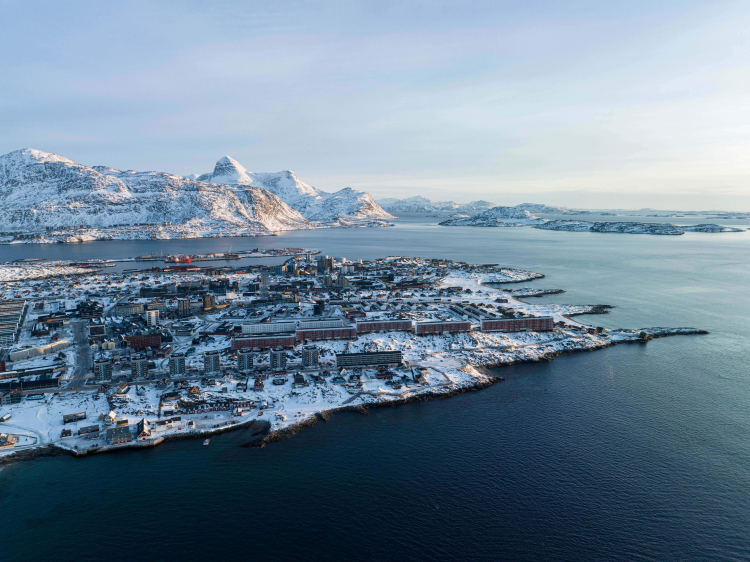
The most transformative developments are unfolding in Greenland. The island’s southwestern region has emerged as one of the world’s great rare earth districts. Major deposits such as Tanbreez and Kvanefjeld have long demonstrated Greenland’s rare earth scale. More recently, Eclipse Metals (EPM), where I serve as executive chairman, has added a further strategic dimension. It announced a significant update to the Mineral Resource Estimate for its Grønnedal Rare Earth Element Project in southwest Greenland, with a 208 million tonne resource grading 0.72 percent total rare earth oxides, containing approximately 1.5 million tonnes of rare earth material. The data also reflect 456,000 tonnes of the magnet rare earth oxides most critical to clean energy and defense. Taken together, these three deposits in Greenland redefine what a Western rare earth supply could look like.
Greenland’s advantages extend beyond geology. The island sits between North America and Europe with deep-water port access to the North Atlantic. It operates under the legal and political framework of a NATO ally. Its government has supported mineral development, and it offers a rules-based permitting framework with environmental and social assessment processes that provide a clear pathway for responsible development. Greenland is close to ideal for governments seeking supply chains that are not hostage to Beijing’s decisions.
What is missing is urgency. The rare earth projects capable of supplying Western countries in the 2030s and 2040s must begin serious development now. Building a mine, constructing processing capacity, and integrating new supply into manufacturing chains takes a decade or more. Every year of policy delay is another year of dependence on a supply chain that a strategic rival controls and has shown a willingness to weaponize.
Western governments have begun to act. The Critical Minerals Strategy of the U.S., the European Union’s Critical Raw Materials Act and a growing web of bilateral agreements recognize that supply chain sovereignty is a vital part of national security. The Development Finance Corporation, the Export-Import Bank and equivalent institutions in allied nations possess the financing tools to de-risk the kind of capital-intensive, long-lead projects that rare earth development demands. These instruments should be aggressively marshaled with projects in stable, friendly jurisdictions such as Greenland, which should be viewed as investments in allied industrial resilience.
The minerals that power Western defense and clean energy ambitions are not exclusively in China. They are in the Pilbara and the Kimberley, in the Canadian Shield, in the valleys of southern Tanzania and under the ancient carbonatites of Greenland. The strategic imperative to deploy them could not be clearer.
China spent thirty years building its rare earth dominance through patient, coordinated state investment. For the West to reclaim supply chain sovereignty its governments will have to finance, partner, and issue permits with the same coherence and determination that Beijing long has.
Carl Popal is the executive chairman of Eclipse Metals Ltd. (ASX: EPM), an Australian exploration company developing the Grønnedal Rare Earth Element Project in southwest Greenland.
