




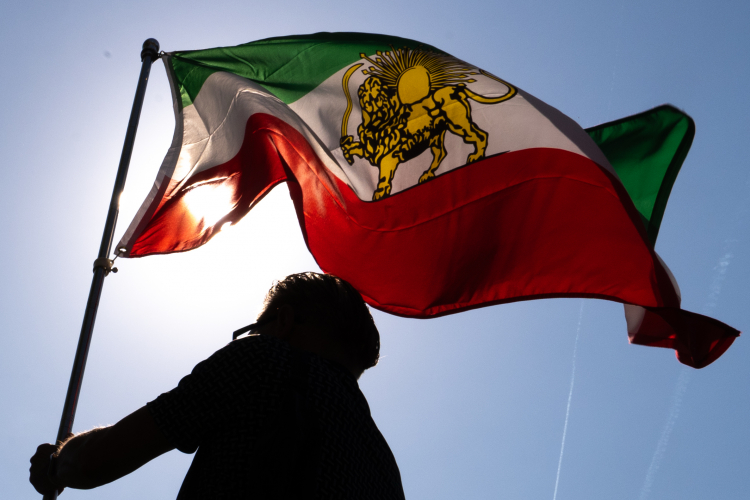
Nearly five decades after the 1979 Islamic Revolution, Iran is experiencing one of the deepest legitimacy crises in its modern history. Economic collapse, political repression, corruption, and social unrest have profoundly weakened public confidence in the Islamic Republic. At the same time, a growing number of Iranians—both inside the country and in the diaspora—have begun openly discussing constitutional monarchy as a possible alternative political system for a post-Islamic Republic Iran.
While no free national referendum or election has been possible under the current regime, public sentiment expressed through protests, social media, diaspora activism, and opposition movements suggests that constitutional monarchy has gained significant traction, particularly among younger generations. The increasing visibility of Crown Prince Reza Pahlavi and the revival of the historic Lion and Sun symbol point to a broader reawakening of Iranian national identity. There are many reasons why Iranians would support a constitutional monarchy if a free election were held today:
1. Economic Collapse Has Increased Desire for International Reintegration
Iran’s economy is in severe crisis. Inflation, unemployment, currency devaluation, capital flight, corruption, and international sanctions have dramatically lowered living standards. Many Iranians compare current conditions with the relative economic growth and modernization associated with the late Pahlavi era.
Supporters of a constitutional monarchy argue that a post-Islamic Republic government with close ties to the United States and Europe could quickly normalize diplomatic relations, remove sanctions, attract foreign investment, and reintegrate Iran into the global economy. For many citizens, the issue is less ideological than practical: they want economic stability, jobs, and international engagement.
The perception that a constitutional monarchy would pursue a pro-development and internationally cooperative foreign policy has become increasingly appealing amid the failures of the current regime’s confrontational approach.
2. Constitutional Monarchy Resonates With Iran’s Historical Identity
Iran possesses one of the world’s oldest continuous state traditions, with more than 2,500 years of monarchical history dating back to the Achaemenid Empire. Over the past decade, there has been a visible revival of interest in pre-Islamic Persian history, culture, and national symbols.
The Lion and Sun flag—once associated with Iran’s monarchy—has increasingly appeared in anti-regime protests both inside and outside Iran. For many Iranians, especially secular nationalists, constitutional monarchy symbolizes continuity with Iran’s historical identity rather than a return to authoritarian rule.
This revival reflects a broader effort among many citizens to reclaim a national identity they believe was marginalized by the Islamic Republic’s ideological emphasis on political Islam over Persian heritage.
3. Monarchists Present Themselves as Non-Ideological
One factor contributing to the appeal of a constitutional monarchy is that many of its supporters present it not as an ideological project but as a national institution above partisan politics.
Unlike revolutionary Islamist, Marxist, or other highly ideological movements that have shaped modern Iranian politics, advocates of constitutional monarchy often point to models such as Sweden, Norway, or Denmark, where monarchs serve largely symbolic roles within democratic systems governed by elected parliaments.
After decades of ideological rule under the Islamic Republic, many Iranians appear wary of political movements that promise utopian visions. A constitutional monarchy is viewed by supporters as a stabilizing framework rather than a rigid doctrine.
4. The Pahlavi Era Is Increasingly Viewed More Favorably
Despite decades of state propaganda portraying the Pahlavi monarchy negatively, perceptions among younger Iranians have shifted. Many compare the modernization, economic development, women’s rights reforms, secular education, and global engagement of the Pahlavi era with the repression and isolation of the Islamic Republic.
Young people born long after 1979 often encounter alternative historical narratives through satellite television, social media, and family memories. As a result, nostalgia for aspects of the Pahlavi period has grown.
This does not necessarily mean all Iranians wish to restore the past exactly as it existed before the revolution. Rather, many view the period between the 1920s and 1979 as a time when Iran was moving toward modernization and integration with the international community.
5. Constitutional Monarchy Is Seen as a Source of Political Stability
Iran’s future transition raises fears of instability, fragmentation, or prolonged power struggles. Supporters of a constitutional monarchy argue that a ceremonial monarch could serve as a unifying national symbol while elected political parties compete democratically for power.
In this vision, Iran would function similarly to parliamentary democracies such as Denmark or United Kingdom, where the monarch represents national continuity while elected institutions govern the country.
Many Iranians, exhausted by decades of political turmoil and factional conflict, increasingly prioritize stability and institutional continuity over revolutionary transformation.
6. Many Iranians Distrust Republican Systems in the Region
Another factor shaping public opinion is the regional experience of republican systems in the Middle East. Numerous republics in the region—including Iraq under Saddam Hussein, Syria under Bashar al-Assad, and Egypt under multiple military-backed governments—have often evolved into authoritarian systems despite formally republican constitutions.
As a result, some Iranians no longer automatically associate the word “republic” with democracy. Supporters of constitutional monarchy argue that democratic governance depends more on institutions, rule of law, separation of powers, and political culture than on whether a country has a president or a monarch.
For these citizens, the key question is not monarchy versus republic in theory, but which system is more likely to produce accountable government and long-term stability in practice.
7. The Opposition Remains Fragmented and Ideologically Divided
Iran’s opposition landscape remains deeply fragmented. Secular republicans, leftist organizations, ethnic movements, Islamist reformists, and exiled political groups often disagree sharply on ideology, leadership, and the future structure of the state.
Many Iranians remain skeptical of highly ideological movements after experiencing the consequences of the 1979 revolution, which replaced one authoritarian system with another under religious rule.
In contrast, Crown Prince Reza Pahlavi has increasingly positioned himself as a unifying national figure advocating secular democracy, human rights, and national unity rather than partisan ideology. Whether or not one supports monarchy itself, his message has attracted attention among segments of the opposition seeking a broadly recognizable transitional figure.
Conclusion
No one can definitively predict the outcome of a truly free election in Iran because such a vote has never been permitted under the Islamic Republic. Iran’s political future may ultimately take many forms, including a republic, a constitutional monarchy, or another democratic arrangement chosen by its people.
Yet one reality has become increasingly clear: constitutional monarchy is no longer a marginal discussion confined to exiled royalists. It has reemerged as a serious political current rooted in economic frustration, national identity, distrust of ideological politics, and a desire for stability after decades of authoritarian rule.
For many Iranians, the debate is not simply about restoring a dynasty. It is about searching for a political framework capable of reconnecting Iran to the world, rebuilding national unity, and creating democratic institutions that can endure beyond revolution and ideology.
