




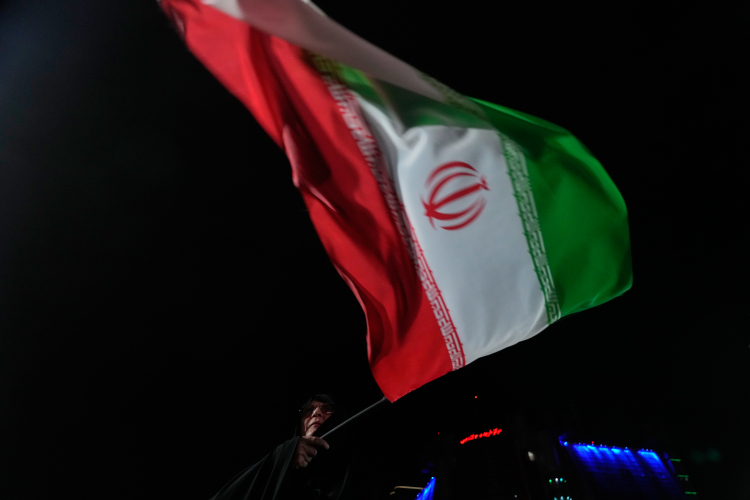
As diplomats debate ceasefires, nuclear agreements and regional security, another crisis is unfolding inside Iran with alarming speed. While global attention remains fixed on war and negotiations, the clerical regime has launched one of its most extensive campaigns of political executions and repression in recent memory. Young protesters, political activists, students and opposition supporters are being sent to the gallows while much of the democratic world remains distracted.
The surge in executions should be a matter of grave concern for every civilized nation. Instead, silence prevails as governments hold their breath, waiting for the latest twist in Donald Trump's on-again, off-again peace initiative and hopes of an end to conflict involving Iran. Meanwhile, Tehran's rulers are using the cover of international distraction to intensify their campaign of terror against their own people.
Between March and early June alone, at least 32 political prisoners were executed, including members of the People's Mojahedin Organization of Iran (PMOI/MEK) and participants in the January 2026 uprising. 775 have been hanged since the beginning of the year. Dozens more remain under sentence of death. These executions carry a political purpose. They form part of a calculated strategy designed to crush dissent and spread fear throughout Iranian society. The regime understands the significance of the January uprising far better than many observers abroad. Those nationwide protests represented the culmination of years of mounting anger over corruption, economic collapse, soaring inflation, environmental destruction and relentless political repression. Millions of Iranians have watched their living standards plummet while the ruling elite channel vast resources into foreign adventures and military projects.
The grievances that drove people into the streets remain unresolved. Indeed, conditions have worsened. Tehran's rulers understand that another explosion of public anger could erupt at any moment. Their answer is terror. The crackdown extends far beyond the prisoners themselves. Families of executed detainees face harassment, intimidation and arrest. Relatives report threats from security agencies, restrictions on funeral ceremonies and pressure to remain silent. Lawyers defending political prisoners encounter persecution. Campaigners opposing executions face imprisonment. Even elderly parents become targets of the security apparatus.
Women prisoners have endured especially harsh treatment. Reports describe denial of family visits, restrictions on medical care and punishment for participating in anti-execution campaigns. The message from the authorities could hardly be clearer. Fear must reach every household. The regime seeks to convince citizens that resistance carries consequences for entire families. Collective punishment has become a central instrument of governance.
Yet beneath this brutality lies profound insecurity. Iran's rulers routinely claim overwhelming public support while dismissing organized opposition as insignificant. Such claims collapse under the weight of reality. A government enjoying genuine legitimacy would welcome free elections, independent media, freedom of expression and political pluralism. It would permit international monitoring and allow competing political movements to present their programmes to the electorate.
Instead, Iran's leadership relies upon tightly controlled electoral exercises from which genuine opponents remain excluded. Political parties face severe restrictions. Journalists encounter censorship. Dissidents endure imprisonment. Executions continue at a relentless pace. These realities expose a deep crisis of legitimacy. The regime also attempts to portray mass rallies and demonstrations as evidence of popular enthusiasm. Yet many participants emerge from the ranks of the Revolutionary Guards, the Basij militia, state institutions and government agencies. Organized mobilization, financial inducements and official pressure play a significant role in filling the crowds. The extraordinary security measures surrounding such events reveal a government fearful of its own citizens.
History offers many examples of regimes that appeared powerful shortly before entering periods of irreversible decline. The Shah's dictatorship projected strength until its foundations suddenly gave way. Communist governments across Eastern Europe seemed permanent until they collapsed with astonishing speed. Authoritarian systems often become increasingly dependent upon coercion once popular consent evaporates.
Iran displays many of the same characteristics today.
For months, many commentators argued that the massacre of thousands of protesters and dissidents during the suppression of the January uprising represented the final straw. Across Europe and North America, voices grew louder demanding a fundamental reassessment of policy towards Tehran. Calls for accountability gained momentum. Recognition spread that appeasement had failed. Today, that sense of urgency appears to have faded. Diplomatic engagement has once again become the dominant theme. Endless negotiations continue. Fresh concessions remain under discussion. Optimistic predictions repeatedly emerge from diplomatic circles. Meanwhile, the execution chambers continue operating at full capacity. Experience demonstrates that silence encourages further repression. Concessions breed fresh demands. Appeasement strengthens the hand of hardliners.
A clear message must reach Tehran. Western governments should close Iranian embassies and expel regime diplomats who serve as instruments of influence and intelligence gathering. Diplomatic representation should be reduced to the absolute minimum. Economic sanctions should be expanded and rigorously enforced. Every official responsible for executions, torture and crimes against humanity should face targeted measures and international accountability. Further rounds of fruitless negotiations serve little purpose while prisoners are marched to the gallows.
Most importantly, democratic nations should recognise the legitimacy of Iran's democratic opposition. Mrs. Maryam Rajavi and the National Council of Resistance of Iran (NCRI) have consistently advocated a secular, democratic republic based upon universal suffrage, gender equality, abolition of the death penalty and peaceful coexistence with the international community. Their Ten-Point Plan offers a democratic alternative to the current theocracy.
The Iranian people deserve more than expressions of concern. They deserve active solidarity.Every execution represents an attempt to extinguish hope. Every political prisoner facing death symbolizes a struggle for freedom that transcends national borders. The courage displayed by Iran's protesters deserves a response equal to their sacrifice.
The world faces a choice. It can continue averting its gaze while Tehran's execution machine accelerates, or it can stand firmly alongside those risking everything for democracy and human rights.
History will record which path we chose.
Struan Stevenson was a member of the European Parliament representing Scotland (1999-2014), president of the Parliament's Delegation for Relations with Iraq (2009-14) and chairman of the Friends of a Free Iran Intergroup (2004-14). He is an author and international lecturer on the Middle East.
