




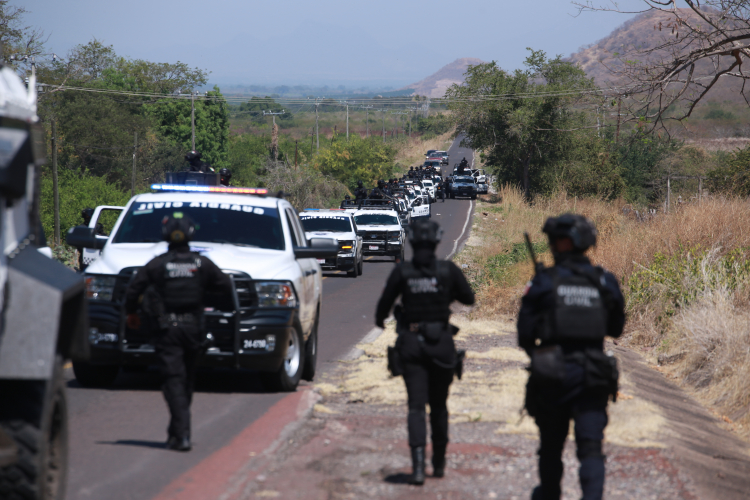
There was a time not so long ago when Mexican President Claudia Sheinbaum had the distinct honor of being one of the world’s few heads-of-state who could legitimately boast about having a positive relationship with President Donald Trump. During one particularly revealing display, Trump referred to the former scientist-turned-politician as a “wonderful woman” with a nice voice who was doing a stellar job running her country. Trump’s remarks were the inverse of his fire-breathing rhetoric during the 2024 campaign, when he pledged to wage war on Mexican cartels and threatened steep tariffs on Mexico unless it did more to crack down on the drug trade.
Yet those warm feelings have since dissipated into controversy and mutual recrimination. Washington’s escalating campaign against narcotrafficking and corruption in Mexico, combined with Sheinbaum’s defensiveness about what she terms U.S. intervention in Mexican politics, could eventually bleed into policy and undermine the bilateral cooperation that is so crucial in combatting drug trafficking.
The downward trend began in April, when two CIA agents were killed in a car-crash after they participated in a raid on a drug lab in the Mexican state of Chihuahua. For Sheinbaum, this was an intrusion of the highest order and one she claimed her administration knew nothing about. The Mexican government called for an investigation to determine whether Mexican law was violated, and the episode has since snowballed into a domestic political scandal.
That episode was a harbinger of things to come. On April 29, the U.S. Justice Department unearthed a bombshell indictment against ten Mexican officials for involvement in narcotrafficking. One of those officials, Sinaloa Governor Ruben Rocha Moya, is one of Sheinbaum’s top political allies. The indictment charged Moya with striking a deal with the so-called Chapitos faction of the Sinaloa Cartel providing him votes in exchange for enabling the cartel’s activity.
Sheinbaum blasted the U.S. indictment request as political. "There has to be evidence based on Mexican laws,” she told a press conference, and the Americans haven’t provided any. Sheinbaum sharpened her rhetoric weeks later, using a public rally to claim that the far-right in the United States was attempting to weaken her government. This earned a rebuke from Ronald Johnson, the U.S. Ambassador to Mexico, who on June 1 wrote on X that injecting divisive politics into the debate "is a missed opportunity to strengthen our partnership and protect the people we serve.”
It’s unlikely the tit-for-tat will end anytime soon. The Trump administration is launching more investigations of sitting elected Mexican officials for everything from bribery schemes to fuel theft.
The United States and Mexico find themselves in a catch-22 situation. Every U.S. investigation of a sitting Mexican official, however warranted, risks elongating the drama by forcing the Mexican government into a highly defensive crouch. This, in turn, exacerbates the Trump administration’s preconceived assumption that Mexico is not only unwilling to get tougher on the cartels but may be actively colluding with them The end result is less cooperation at a systemic level and greater mistrust, none of which bodes well for the objective both countries share: diminishing the cartels’ power to wield violence and make money.
While it sounds bleak, the U.S. and Mexico have gone through this cycle before. During Andrés Manuel López Obrador’s term, the two states saw restrictions in their collaboration. After U.S. authorities arrested a former Mexican defense minister in October 2020 on allegations of taking bribes from criminal groups, Mexico responded by clamping down on foreign agents on Mexican territory, stripping diplomatic immunity from U.S. law enforcement officers stationed on Mexican soil and disbanding an elite Mexican anti-drug unit that worked with the Drug Enforcement Administration.
Still, the two states came out on the other side of the dispute—and they can do so again. But it will require concrete commitments from the Trump and Sheinbaum administrations and a willingness to meet each other halfway.
For starters, the Trump administration should stop hinting, however obliquely, that U.S. military force against the cartels inside Mexico is a real possibility. The military option is not only unhelpful from the standpoint of bringing U.S.-Mexico relations back on track but is wholly ineffective at stopping the drug trade. Military force tends to split cartels into more violent, deadly factions, who then battle amongst themselves for territory and overstretch state security forces in the process. The Trump administration’s boat strikes in the Western Hemisphere have failed to stem the tide of cocaine into the United States; it’s highly unlikely strikes on land targets in Mexico will be any different.
Second, if the Trump administration insists on criminally charging Mexican officials, it should do so quietly. Mexican authorities aren’t immune to cooperating with U.S. extradition requests but are likely to balk on nationalist grounds, as Sheinbaum is presently doing, if Washington treats these indictments as public relations fodder. Trump needs to ask himself a basic question: is playing to his base more important to him than Mexican cooperation?
Finally, the White House would be wise to limit its expectations of what Sheinbaum can deliver. Like all elected leaders, the Mexican president must account for domestic political considerations. A big part of this is maintaining unity within her Morena political movement, particularly as it seeks to maintain its legislative majority when Mexicans will head to the polls next year. Sending cartel operatives to a U.S. courtroom is one thing; sending senior party officials there is something else entirely. Acceding to U.S. requests on this front would generate a whirlwind of criticism from a chunk of her party which is inherently suspicious of U.S. intentions. Washington would be better served pressing Mexico to conduct its own credible criminal investigations, and offer assistance as they proceed. Although this will be a tough pill to swallow for some U.S. agencies, it’s better than effectively allowing the fates of a few high-level personalities to degrade one of Washington’s most important foreign relationships.
Fighting narcotrafficking is difficult on a good day. The Trump administration should take care to ensure its policies don’t make it any harder.
Daniel R. DePetris is a fellow at Defense Priorities and a syndicated foreign affairs columnist at the Chicago Tribune.
