




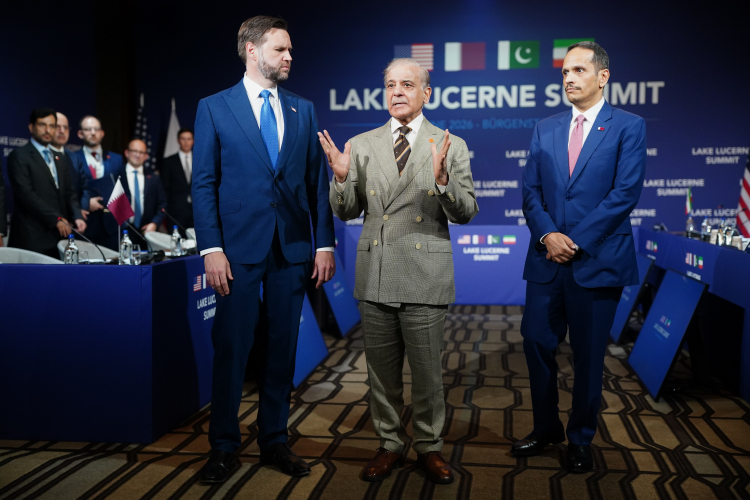
There is a country absorbing missile strikes on its energy infrastructure while simultaneously negotiating a path away from the very conflict that produced them. That country is Qatar — and if you have not been paying attention, now would be a good time to start. Qatar deserves far more credit than it typically receives in American strategic discourse.
From its capital of Doha, the ruling family of Qatar, the Al Thani Emirate has dived into the region’s politics (and the conflict that the politics often brings) without a prejudice rooted in Islam, Sunnism, pan-Arab loyalties or even GCC membership. Qatar has looked to the future of its people and the world at large. Qatar has embraced forces outside of its parochial backyard in order to bring stability, success, peace and even wealth to its people.
Doha’s critics have been wrong for years. For Example, when Washington needed a channel to the Taliban, Qatar hosted negotiations at Donald Trump’s request. Without Doha’s diplomatic infrastructure and its willingness to engage actors that most capitals refuse to touch, no viable framework for talks would have existed. Also, when the Biden administration’s chaotic exit from Afghanistan left American allies stranded and desperate, Qatar became America’s emergency lifeline. Qatari officials and military personnel helped evacuate tens of thousands including Afghans who had placed their lives in American hands.
For nearly two decades, administrations of both parties have relied on Doha to maintain back-channel communication with Hamas and to negotiate the release of hostages. Washington may bristle at the necessity of dealing with proscribed terrorist organizations through third parties, but serious statecraft demands intermediaries capable of reaching actors that direct diplomacy cannot. Qatar has filled that role consistently.
The same dynamic has played out with Iran. Doha has quietly facilitated the release of American citizens held in Tehran and has served as a critical conduit between Washington and the Islamic Republic during periods of acute tension. These are not small contributions. They are the kind of patient, sustained diplomacy that rarely generates headlines but frequently prevents catastrophes.
This moment, however, is different in a way that deserves particular consideration.
Iran has directly targeted Qatari LNG facilities, military installations and civilian infrastructure — strikes that took roughly 17 percent of Qatar’s LNG export capacity offline, with the IMF projecting an 8.6 percent contraction in Qatari GDP this year alone. Qatar is not mediating this crisis from a position of comfortable neutrality. It is simultaneously a victim of the conflict while also being a strategic stakeholder with profound economic interests at risk. Qatar is the diplomatic intermediary most capable of threading the needle toward de-escalation. That combination of roles is extraordinary and it should reframe how Americans think about what Doha is contributing.
What Qatar is providing diplomatic sophistication, strategic maturity and a conviction that regional stability serves purposes larger than any single grievance. Pakistan attempted to broker progress and failed. Other regional actors lacked either the sustained relationships or the trust necessary to move the parties toward an off-ramp. Qatar succeeded where others stalled, not by accident, but because it spent years building channels of communication that the West finds indispensable precisely when things go wrong. The countries that show up in genuinely hard moments by picking up the phone, convening the parties and absorbing the political costs of engagement are the partners that matter. Qatar is that kind of ally.
While Americans are understandably preoccupied with domestic concerns, the granular politics of the Gulf can feel remote from daily life. But the connection is more direct than most people appreciate. If the current diplomatic effort succeeds in containing the conflict, stabilizing energy markets and forestalling a wider regional war then ordinary Americans will feel the effects at the gas pump, in household budgets and in the broader economic environment. Lower energy prices and reduced global volatility are not abstractions. These are the tangible dividends of effective diplomacy in a region where America lacks the reach to act unilaterally.
The United States has spent decades investing in relationships across the Middle East with mixed results and considerable cost. Qatar is a strategic and tactical ally worth protecting. Though a small country, Qatar has a history of communicating across deep divides, the trust of actors that distrust nearly everyone else and the resilience to keep working even when attacked. These are assets that cannot be manufactured quickly or replaced.
To be clear, Qatar is not perfect. No state in the region is. But Washington has turned to Doha when crises spin out of control and it will need to do so again.
When the weeks ahead bring a measure of stability, de-escalation in the conflict with the regime in Tehran and a steadying of energy markets, part of the credit will belong to Qatar. A country to whom we will have a debt of more than just gratitude.
Mike Flanagan represented the 5th District of Illinois in the U.S. House of Representatives
