




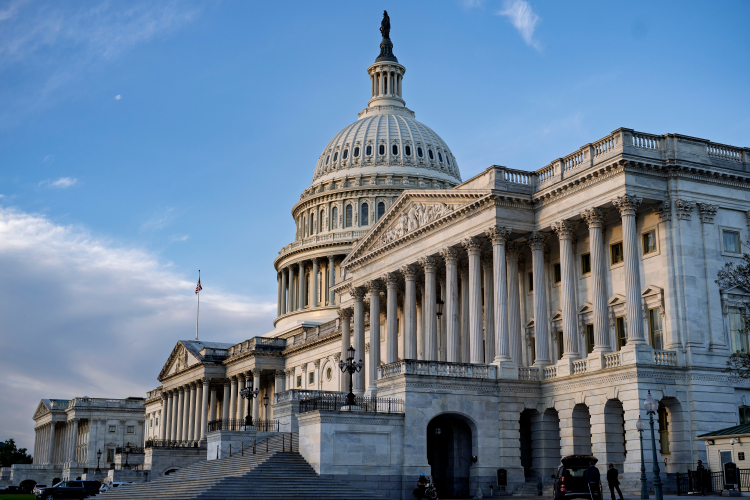
On June 23, the United States Senate passed a war powers resolution directing the president to remove American forces from hostilities against Iran. The vote was 50 to 48. Four Republicans crossed. Every Democrat voted yes except one, John Fetterman of Pennsylvania. It was the first time both chambers of Congress have passed a concurrent war powers resolution directing a sitting president to remove forces from a conflict since the War Powers Act passed in 1973.
The same Democratic caucus that built the JCPOA on the explicit premise that Iranian nuclear ambitions required verifiable containment just voted, nearly unanimously, to stand down from the most significant pressure campaign on Iran in American history. The same Republican Party that spent two generations defining itself against Soviet expansionism now has its leadership actively blocking Ukraine aid while Democrats run discharge petitions to force floor votes. And the same Democratic senators who spent years demanding Nicolas Maduro's removal, who raised the reward for his capture to $100 million and called him an illegitimate narco-terrorist propped up by Cuban and Russian support, called his January capture reckless before the sun came up.
None of the threats changed. Russia did not become less aggressive. Iran did not become less threatening. Venezuela did not become less of a narco-state. What changed was which team each position became associated with, and if you are willing to sit with that for a moment, it is the entire explanation.
What is happening across all three of these reversals is not hypocrisy in the ordinary sense, which would require someone to know they were being inconsistent and proceed anyway. It is something more automatic than that. When a position becomes associated with the opposing team's president, it stops being evaluated on its strategic merits and starts being processed as an identity signal. The foreign policy did not change. The jersey did. And once the jersey changes, the old position does not get reconsidered, it gets abandoned, because wearing the other team's colors is the one thing the base will not forgive.
The JCPOA deserves an honest accounting because both sides have spent a decade talking past each other about it in ways that made serious policy analysis nearly impossible. The $1.7 billion that became a political flashpoint was not a payment for the nuclear deal. It was the settlement of a 1981 arbitration claim from the Shah era, $400 million in undelivered military equipment plus 35 years of accrued interest the United States legally owed under the Hague Tribunal regardless of any nuclear negotiation. The Obama administration initially denied the timing was linked to a prisoner release and later acknowledged it was used as leverage. Two separate transactions that happened simultaneously, conflated for a decade, which made it impossible for either side to evaluate either one on its merits.
The legitimate critique of the deal that compliance numbers cannot answer is the sunset clause. The enrichment restrictions expired on a rolling schedule starting in 2025. A regime that received sanctions relief used the relief period to build the infrastructure it needed to accelerate enrichment the moment those constraints lifted. The critics were never primarily arguing Iran would cheat during the active period. They were arguing the deal's own terms were strategically insufficient even if fully honored. That argument does not appear anywhere in the Democratic war powers votes, because the people casting those votes are not working through the strategic logic. They are working through a wardrobe problem, and the strategy is what gets left on the floor.
Democratic senators leaving classified briefings described war plans as lacking coherent objectives and no clear framework for what follows the strikes. Those are real concerns about execution that deserve a real answer, and they are being raised most loudly by the same people who spent years on record demanding exactly this kind of pressure on exactly this regime. The objection is to the executor. The execution is what they asked for.
The resolution itself is symbolic. Concurrent resolutions have no force of law and do not go to the president's desk. The White House noted that hostilities terminated with the April 7 ceasefire, making the directive moot as a practical matter. But the vote count is not symbolic, and neither is the pattern underneath it. Ten Senate votes on Iran war powers since February. A House discharge petition that reached 218 signatures to force a Ukraine aid vote over the Speaker's explicit opposition, with every Democrat signing and two Republicans. The reversals are not inferred from rhetoric. They are documented in the record.
Small-dollar digital fundraising, algorithms that reward outrage over analysis, and primary systems that elevate the most activated fraction of each base have spent two decades at this, and the foreign policy that comes out the other end is the byproduct of whatever generates the most engagement from the core audience, not of anyone working through the strategic implications. The people paying the cost of that arrangement are not the ones doing the posting.
What the roll call record shows is something more durable than a bad news cycle. When both parties are structurally incapable of sustaining a foreign policy position that has become associated with the opposing team's president, American strategic interests become a function of the election calendar rather than the threat environment. The discharge petition and the ten war powers votes are answering that question in real time. Neither side seems to find it particularly remarkable. The adversaries paying attention to both votes certainly do.
Jacob Childress is a retired Army Master Sergeant with four combat deployments and four years supporting presidential operations from inside the White House Communications Agency across two administrations. He is a Senior TSCM Technician supporting the National Nuclear Security Administration and writes geopolitical analysis at jacobchildress.com.
