




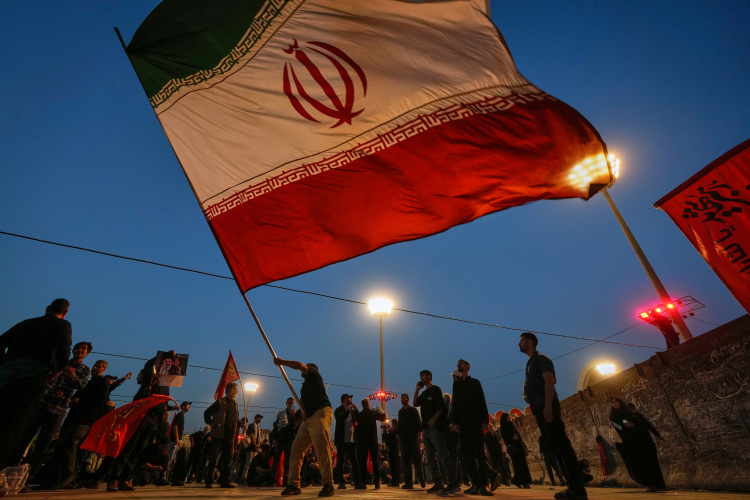
As international attention remains fixed on the fallout from war, nuclear diplomacy, and regional instability, another crisis is unfolding in Iran largely beyond the headlines. The clerical regime is carrying out what may be its most extensive campaign of political executions and repression since the aftermath of the nationwide uprising that shook the country earlier this year.
Between March 19 and June 3, at least 33 individuals linked to political dissent were executed, including eight members of the People's Mojahedin Organization of Iran (PMOI/MEK) and at least 25 participants in the January 2026 uprising and related protests. At the same time, dozens of other political prisoners remain under sentence of death, while family members, lawyers, and supporters are increasingly targeted by the security apparatus.
The political character of the current wave demonstrates its unmistakable connection to the regime's fear of renewed unrest.
The victims are not random criminal offenders. They include young protesters, students, engineers, lawyers, political prisoners, and individuals accused of participating in anti-government demonstrations. Some were executed for acts allegedly committed during the January uprising. Others were accused of supporting or belonging to opposition organizations. Still others died under torture before their cases ever reached a final conclusion.
The regime's actions reveal a simple reality: Tehran is engaging in another confrontation with its own people.
The authorities understand what many outside observers often overlook. The January 2026 uprising was not an isolated event. It was the culmination of years of growing public anger over economic collapse, corruption, political repression, environmental crises, and the regime's costly foreign interventions. Despite mass arrests, executions, and the deployment of overwhelming force, the grievances that drove Iranians into the streets remain unresolved.
That explains why the repression extends far beyond the prisoners themselves.
According to recently documented cases, family members of executed prisoners have been arrested, denied final visits with their loved ones, prevented from recovering bodies, and threatened with further prosecution. Relatives of political prisoners report being summoned, interrogated, and pressured to testify against opposition organizations. Even elderly parents and siblings have become targets of the security services.
Women political prisoners have faced particularly harsh treatment. Several have been denied family visits and punished for participating in campaigns opposing executions. Others have reportedly been denied medical treatment or threatened with transfer to remote prisons.
The objective is not merely punishment. It is intimidation.
The regime wants every Iranian family to understand that political dissent carries consequences not only for the dissenter but also for parents, siblings, spouses, and children. Collective punishment has become an increasingly important instrument of governance.
Yet beneath this campaign of fear lies a deeper insecurity.
The Iranian regime routinely claims that it enjoys broad popular support while dismissing organized opposition as marginal. Yet such claims are belied by decades of repression, executions, censorship, and the exclusion of genuine political competition.
If the regime is truly confident in its popularity, it should accept a free and fair election under international supervision, with freedom of expression, free political parties, independent media, and unrestricted monitoring. Under such conditions, the Iranian people would have the opportunity to consign the ruling theocracy to the dustbin of history through the ballot box. The regime's refusal to permit such an election, and its reliance on tightly controlled electoral exercises from which genuine opponents are excluded, reveals a profound crisis of legitimacy that no amount of propaganda can conceal.
History offers a warning. Regimes often appear strongest shortly before they enter periods of irreversible decline. The Shah's dictatorship seemed secure until it suddenly was not. Authoritarian regimes projected stability until they collapsed. The same pattern can be observed whenever governments increasingly rely on coercion because consent is no longer sufficient.
Iran today shows many of those symptoms.
The international community should not view the current wave of executions as a domestic judicial matter. It is a political strategy designed to extinguish dissent through fear. Every execution sends a message not only to the prisoner but to society as a whole.
The response should be equally clear. Democratic governments, the United Nations, and international human-rights institutions must publicly condemn these executions, demand access to political prisoners, support independent investigations into deaths in custody, and insist that those responsible for systematic human-rights abuses be held accountable. Despite the French police’s last-minute banning of the June 20 rally in Paris of 100,000 Iranians from both sides of the Atlantic, 50,000 Iranians still showed up to urge a halt in executions.
The world should heed their call. Silence has never moderated Tehran's behavior. More often, it has been interpreted as permission.
The men and women now facing execution in Iran are not merely prisoners. They are the latest victims of a regime attempting to preserve itself through terror. Whether that strategy succeeds will depend not only on the courage of the Iranian people, but also on whether the outside world chooses once again to look away.
Ali Safavi, a sociologist, is an official with the Foreign Affairs Committee of the Paris-based National Council of Resistance of Iran (NCRI). His elder brother was executed by the current Iranian regime. He was 29. He is on X at @amsafavi
Comment
Show comments
Hide Comments
