




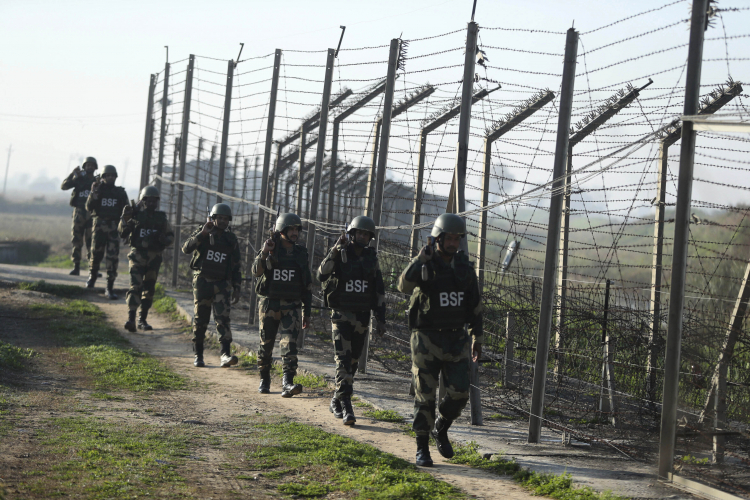
More than 100 prominent citizens from India and Pakistan including former diplomats, academics, political leaders and members of civil society have jointly appealed to Prime Ministers Narendra Modi and Shehbaz Sharif to restore dialogue, diplomatic engagement and people-to-people contact. Their open letter arrives at a particularly difficult moment. Relations between the two nuclear-armed neighbours remain deeply strained following the 2025 military crisis, while diplomatic engagement, trade and public exchanges continue to operate at minimal levels.
The appeal is significant not because it promises an immediate breakthrough, but because it reframes an increasingly important question: can South Asia's two largest military powers continue treating permanent hostility as the normal state of affairs?
For decades, crises have shaped India-Pakistan relations. Wars, military standoffs, terrorist attacks and diplomatic breakdowns have repeatedly interrupted engagement before meaningful progress could take root. The result is a relationship managed primarily through crisis response rather than sustained diplomacy.
Yet the strategic environment surrounding South Asia has changed considerably. India is expanding its global diplomatic profile and seeking a larger role in international governance and advanced manufacturing. Pakistan is focused on economic recovery, attracting investment and improving macroeconomic stability. At the same time, shifting geopolitical dynamics from the Indo-Pacific to the Middle East are reshaping trade routes, energy security and regional partnerships. In such an environment, prolonged hostility increasingly carries strategic costs for both countries.
Geography Cannot Be Changed, Only Managed
History demonstrates that geopolitical rivals do not need to resolve every dispute before cooperating in areas of mutual interest.
France and Germany transformed one of Europe's most destructive rivalries into the foundation of European integration through gradual political and economic cooperation. China and India continue significant commercial exchanges despite unresolved border disputes. Vietnam and China have managed expanding economic relations while continuing to disagree over maritime boundaries.
These cases differ substantially from South Asia's unique historical and political circumstances. Nevertheless, they illustrate a broader lesson: effective foreign policy is not built on eliminating disagreements but on preventing disagreements from eliminating communication. Geography offers India and Pakistan neither side an exit strategy. Strategic realism therefore requires managing competition while preserving diplomatic channels capable of reducing misunderstandings and preventing escalation.
The Cost of a Divided South Asia
South Asia is home to nearly one-quarter of the world's population, yet it remains one of the least economically integrated regions in the world. Intra-regional trade accounts for only about 5% of South Asia's total trade, compared with roughly 25% within the Association of Southeast Asian Nations (ASEAN) and around 60% within the European Union. This stark gap illustrates the considerable economic opportunities that continue to be lost because of political divisions and limited regional cooperation.
The stagnation of the South Asian Association for Regional Cooperation reflects these broader challenges. ASEAN demonstrates that countries with unresolved territorial disputes can nevertheless build institutions that facilitate trade, attract investment, strengthen regional supply chains and establish mechanisms for dialogue and crisis management. South Asia, by contrast, has struggled to develop comparable institutional cooperation despite its enormous demographic and economic potential.
The consequences extend well beyond governments. Much bilateral commerce between India and Pakistan is routed indirectly through third countries, particularly the United Arab Emirates, increasing transportation costs, transaction expenses and delivery times for businesses. Academic partnerships remain limited, sporting and cultural exchanges have become increasingly rare, and restrictive visa regimes continue to separate students, researchers, entrepreneurs and families with historical ties across the border.
The region also risks missing broader opportunities emerging from changing patterns of global trade. Central Asia, the Gulf and the Indian Ocean are becoming increasingly important components of regional connectivity. Efficient transport corridors, energy cooperation and commercial integration require a degree of political stability that prolonged confrontation makes difficult to sustain.
The greatest long-term cost, however, falls on younger generations. Millions of Indians and Pakistanis have grown up knowing each other primarily through media narratives, political rhetoric and moments of crisis rather than through direct interaction. The absence of meaningful contact reinforces stereotypes and reduces the constituency for future cooperation.
Dialogue Serves National Interest
Calls for dialogue are often misunderstood as signs of political compromise. In reality, diplomacy is one of the principal instruments through which states protect their national interests. Governments negotiate not because disagreements have disappeared but because unresolved disputes require communication to prevent miscalculation and reduce the risk of unintended escalation.
The recent appeal from public figures in both countries should therefore be viewed less as an endorsement of any political position than as recognition that sustained diplomatic paralysis benefits neither side. Dialogue does not require abandoning security concerns, altering legal positions or diminishing national sovereignty. Instead, it provides mechanisms for managing disputes while reducing the risks associated with recurring crises.
History offers useful precedents. For decades, the Indus Waters Treaty stood as a rare example of sustained institutional cooperation between India and Pakistan, surviving wars and prolonged periods of political tension because both sides recognized the practical necessity of managing shared water resources. Although the treaty entered a period of uncertainty following India's decision to place it in abeyance in 2025, its long history nevertheless demonstrates that practical cooperation on issues of mutual interest can endure even amid deep political disagreements. Likewise, ceasefire understandings and confidence-building measures have periodically shown that limited cooperation remains possible even during periods of heightened tension.
Incremental measures such as restoring diplomatic representation, expanding visas for students and pilgrims, encouraging academic exchanges and gradually rebuilding commercial engagement would not resolve every bilateral dispute. They would, however, restore communication channels that become indispensable whenever tensions rise.
Strategic Competition Does Not Exclude Strategic Dialogue
Competition between India and Pakistan is unlikely to disappear. Both countries will continue pursuing their own security interests, strategic partnerships and regional influence. The real question is whether competition must permanently exclude dialogue.
National power in the twenty-first century is measured not only by military capability but also by economic resilience, technological innovation, regional connectivity and diplomatic influence. Countries that remain locked in cycles of confrontation often sacrifice opportunities for growth, investment and human development, weakening their long-term strategic competitiveness.
The recent appeal by Indian and Pakistani citizens is unlikely to transform bilateral relations on its own. Nevertheless, it highlights an important strategic reality: dialogue is not the opposite of national interest; it is one of the means through which national interest is advanced.
For two nuclear powers seeking greater influence in an increasingly fragmented international order, the real measure of strategic maturity will not be the absence of rivalry but the ability to prevent rivalry from becoming perpetual crisis. Strategic dialogue should therefore be viewed not as an act of optimism, but as an essential instrument of responsible statecraft.
Saima Afzal is a researcher specializing in South Asian security, counterterrorism, and broader geopolitical dynamics across the Middle East, Afghanistan, and the Indo-Pacific. Her work examines strategic affairs and evolving patterns of regional conflict. She is currently a Research Scholar at Justus Liebig University, Germany.
