




Rumors have been circulating that China is not yet ready to provide Pakistan with its 5th-generation Fighter jets in the near future, citing the rationale that Beijing will hold off on J-35 sales to Pakistan because India currently does not possess any fifth-generation fighters and the arrival of the J-35 will alter the balance of power in South Asia. Moreover, China will prioritize its domestic military needs amid the rising challenges it faces in the South China Sea; Pakistan will be unable to bear the cost of the J-35, and the Chinese will not allow the placement of J-35 at bases hosting US F-16s. However, the article argues that all this is just rhetoric because the on-ground situation reveals a different picture.
Since the Indian Air Force (IAF) lost multiple jets on the night of May 6/7, 2025, including cutting-edge Rafales, it has increased its defense spending. The most significant measure undertaken in this regard by the IAF is to induct an additional 114 Rafale jets costing approximately $31 Bn. This is part of the IAF's broader strategy adopted in the aftermath of Operation Sindoor to boost its offensive capability by adding more advanced fighter jets in its fleet.
In view of this emerging threat, Pakistan’s decision to continue with the procurement of J35s will not come as a surprise because it became a compulsion for the Pakistan Air Force (PAF) to induct J-35s to compete with the IAF. The decision to induct J-35 is grounded in the PAF’s war philosophy, which does not fall for numbers but tries to maintain a qualitative edge, along with refraining from indulging in any arms race. PAF will receive them from China sooner rather than later because the PAF has to first rigorously test its new fighters under various threat scenarios at its Airpower Centre of Excellence (ACE) before deploying them on the front lines in a crisis.
Besides, the argument that the Chinese will not allow the placement of J-35 at bases hosting US F-16s is an absurd rationale because China has a long-established history of never attaching any strings to its weapons sales to Islamabad. This is further affirmed by the likely assistance provided by China to Pakistan, enabling it to produce its indigenous supersonic cruise missile in the form of Fatah-III, which appears to have similar physical traits to the Chinese HD-1 missile.
On the other hand, China’s aviation industry is fully capable of not only providing timely fighter jets to the Chinese military but also to Pakistan because the latter order is of merely 40 J35s. Beijing has all the wherewithal to ensure timely delivery to PAF without affecting its own force modernization to counter emerging threats in the South China Sea.
Recent economic indicators show that Pakistan’s growth rate is rising and is expected to grow further in the coming years. Asian Development Bank report released in April 2026 affirmed this notion by stating that “Pakistan’s economy has stabilized and begun to show stronger momentum, amid a challenging global environment”. This indicates that the concerns around Pakistan’s fiscal capacity to buy and maintain J-35s are based on an agenda-driven campaign rather than facts.
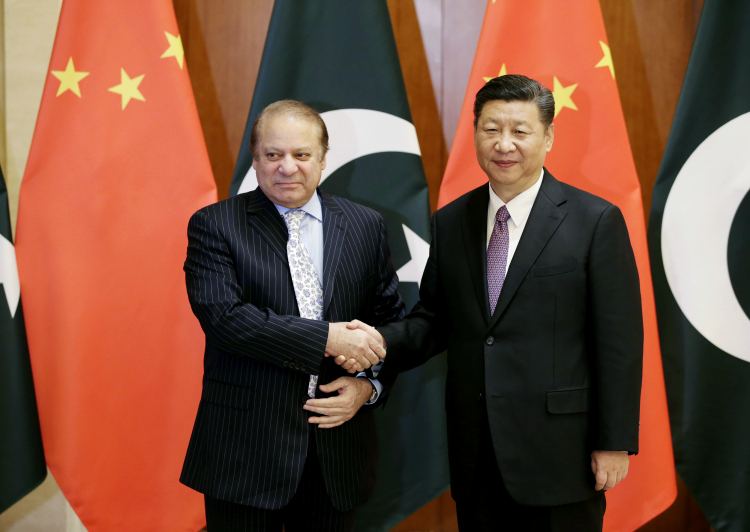
China has a strategic partnership with Pakistan, and history validates that Beijing’s relationship with Islamabad is similar to US-Israel relations. Owing to this nature, Chinese weapons sales to Islamabad have generally been governed by strategic considerations rather than by the kind of political conditionality the rumors imply. China remains the largest armament supplier to Pakistan, with around 81 percent of the latter’s imports coming from the former.
Based on the current philosophy of the current Pakistan air chief, the PAF is likely to induct J35s sooner to counter the IAF in the region. This will be the case as the PAF has already signed an “initial collaborative agreement” for the acquisition of the J-35 stealth fighter. Therefore, in light of this development and the foregoing analysis, the discourse questioning China’s decision to supply J-35 fighters to Pakistan warrants a more critical reading than it has thus far received in open-source commentary.
Looking ahead, the trajectory of J-35 induction will likely serve as a bellwether for Pakistan-China strategic partnership at a moment when regional threat alliances are shifting. Beijing also knows that to counter India, which is advancing its defense partnerships with Israel, France, Russia and the US, it also needs to expand its defense partnership with Pakistan. Therefore, if anyone has any doubt pertaining to the transfer of J-35s to the PAF, it will end soon when the first 6th-generation jet lands in Pakistan.
Usman Haider has an MPhil degree in Strategic Studies from the National Defense University, Islamabad, Pakistan. His articles have been published in The Diplomat, Australian Institute of Affairs, South Asian Voices, South China Morning Post, RealClearDefense, and many others
Ramsha is currently pursuing MPhil degree in Strategic Studies at national Defense University, Islamabad.
