




Earlier this month, President Donald Trump promised a historic economic reckoning targeting Iran. Steeped in the usual boisterous platitudes that have come to define his administration’s approach to policy without strategy, Washington’s options to further constrain the Islamic Republic’s already dire economic prospects remained unclear, raising questions regarding how this move would differ from the long-running “maximum pressure” approach that has failed to seriously alter the country’s behavior or leadership. The answer on the self-proclaimed “Economic D-Day” of August 24 proved that this new “strategy” looks like a massive flop.
The Trump administration finds itself without a clear path out of its war of choice with Iran. Thousands of missiles and dead Iranians, numerous destroyed U.S. military bases and killed troops, and a battered economy in the Islamic Republic have not brought Tehran to heel. Once again, Iranian “maximum resistance” has proven far more resilient than the White House would like to admit, continuing the saga of underestimating Iranian resolve while exaggerating and overextending American capacity and willingness to do far too much abroad in a region of diminishing strategic importance.
Faced with limited military options after unleashing the American armed forces on the Islamic Republic, the White House is struggling to articulate a strategy that it never had in the first place. More bombs targeting Iranian leaders, military and civilian infrastructure, and elementary schools in Minab will not achieve the amorphous goals of the war. Trump’s team understands this reality but refuses to admit defeat.
Instead, Washington has opted to fall back on economic tools, determining that today’s Iran cannot withstand such pressure on its economy. Yet this approach is not new: The United States has heaped economic sanctions on the Islamic Republic for decades, including before the current war, just to see the country discover workarounds that gradually recovered oil exports and economic activity. Numerous instances of domestic upheaval failed to dislodge the country’s leaders as Iran’s population suffered economically and politically when crackdowns expectedly increased. Reverting to a sanctions-first approach is, in and of itself, an admission of failing to use the military to affect Washington’s desired outcome.
Tehran’s leaders understand that the Iranian Rial sits at 2.02 million to the U.S. dollar. They understand that aspects of their economy are deindustrializing. They understand that they cannot export oil at near the level needed to sustain their domestic budget, nor can they refine it to produce enough petroleum to meet domestic demand. They understand that inflation is again reaching record levels, leaving the average Iranian unable to afford basic necessities.
Yet the country’s leaders have doubled down. Supreme Leader Mojtaba Khamenei recently elevated the extreme end of the hardline camp into the nation’s highest security positions. Loyalists continue to patrol the streets, hunting for any remote sign of discontent. Iranian officials threaten to go on the offensive, even as Washington repeatedly claims Tehran’s military capabilities have been depleted repeatedly, despite evidence to the contrary. The very pressure that the Trump administration has proclaimed can achieve its supposed objectives in this war has, once again, empowered the hardest line in Iran. This development should have always been expected because it has happened repeatedly for years.
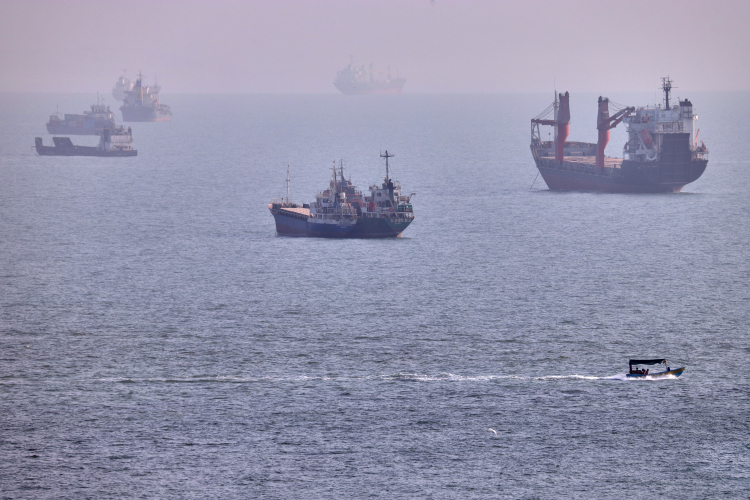
In this game of chicken, no one wins. For the Trump administration, the hope is that the Islamic Republic’s precarious position – and it is certainly precarious – can still force capitulation. Its blockade of Iranian ports, constituting an act of war, and sanctions are the key. “Economic D-Day” was meant to signal to any country holding economic relations with Iran that a line was being drawn: Continue to trade with the Islamic Republic and lose access to the dollar.
That logic is flawed. China, Iran’s top trade partner outside of the United Arab Emirates and Turkey, will not allow the United States to dictate its trade relationships to such a degree because it sets a precedent within the broader great power competition between the two countries. Even hoping for Beijing to lessen its economic relationship with Tehran to the point that it collapses the Islamic Republic or forces some undefined capitulation is unrealistic. Time and again, China has matched U.S. economic coercion with its own, with disastrous results for both the American and global economies. Why should anyone expect this round to be different?
The economic effects of this war are already profound for communities across the globe. Further wrecking U.S.-China relations would only compound those impacts, with horrific results that speak to the dead-end nature of this would-be strategy. It is unlikely that China or other major Iranian trade partners fully cut economy ties with the Islamic Republic, nor that Washington risks the global economy in such a way. Simply put, Washington is bluffing. Treasury Secretary Scott Bessent said as much in response to questions about secondary sanctions, which would apply to trade partners of Iran, not being mentioned in the grand announcement of the Trump administration’s new strategy on Iran: “Why would I want to blow up the global financial system?”
The fact of the matter is that the United States lost this war when it chose to strike Iran with Israel in what is an illegal war of choice. The sooner the Trump administration understands this reality and acts accordingly, as opposed to diving deeper down the escalatory spiral, the better.
Alexander Langlois is a Contributing Fellow at Defense Priorities.
