« Brazil and That Coveted Security Council Seat | Blog Home Page | The Woman Who Wants Us Out »
December 03, 2009
By Thomas G. Mitchell
For forty years the Israel Labor Party (ILP) has been America’s partner in the peace process. From the Roger’s Plan negotiations during the War of Attrition in 1969-70, through the Kissinger shuttle diplomacy of 1973-75, to the Oslo peace process of the 1990s it has been Labor that has negotiated with its neighbors. Even when the Likud Party was in power and negotiating with Egypt from 1977-79 it was carried out by a former Labor defense minister and a future defector to the Labor Party.
From 1977 onwards the ILP was in "The Shadow of the Likud" - to quote the title of a book on the party from 1977-96. The only two elected Labor coalitions after 1977 were both headed by former generals. In fact, since Golda Meir resigned in 1974, Shimon Peres was the only “civilian” Labor prime minister and he had to share his term with Yitzhak Shamir of the Likud because Labor’s margin of victory was so narrow. This means that Labor should be compared to the only Western democratic parties that were also dependent on former generals (military politicians): the Whigs in antebellum America, the Republicans in post-Civil War America, and the South Africa Party/United Party in the Union of South Africa. The Whigs collapsed over a four year period after suffering a leadership vacuum and adverse public reaction to a failed compromise on the slavery issue. The United Party staggered on for three decades after running out of generals but collapsed rather quickly over a three-year period.

Since 2000 Labor has also been suffering from the backlash from the failure of the Oslo process and the Al-Aksa Intifada. It can be compared to the Ulster Unionist Party (UUP), which suffered from a similar backlash from the failure of the Irish Republican Army to decommission its weapons during the two years allowed for this under the Good Friday Agreement. The UUP went from nine MPs in the House of Commons in 1997 to a single MP in 2005 and lost its dominance in the Assembly in the second Assembly election in November 2003. The UUP has yet to begin to recover from this loss.
Labor, and its main predecessor, Mapai, ran Israel from 1948 to 1977. Its dominance ended for four main reasons. First, the public was simply tired of it after three decades in power and another fifteen years of running the prestate Jewish yishuv in Palestine. Second, the party and its officials had grown corrupt after so long in power. Third, the party’s Central European-descended electorate had become a demographic minority within Israel by 1977. Rabin was elected prime minister for a second time in 1992 with the temporary support of Russian Jews but they soon abandoned it for Russian-immigrant parties and the Likud. And starting in 1996 those Israeli Arabs who voted for Labor in the past began either abstaining or voting for Arab parties as the Arabs became more nationalistic. And finally, the voters voted against Labor as a punishment for Israel being surprised by Egypt and Syria in the Yom Kippur War in October 1973. When Labor also lost the 1981 election, it understood that it had a real problem.
For the next quarter century after the 1973 election there were two blocs of roughly equal size led by Labor and the Likud. But because the National Religious Party had become expansionist and moved to the right after 1967, the Likud enjoyed a natural advantage in coalition formation. This usually gave them the first shot at forming a coalition following an election. In 1992 a new law was passed, which went into effect in 1996, giving Israeli voters two votes—one for the Knesset (parliament) and one for the prime minister. This caused voters to begin voting for smaller parties and abandoning the two main parties. This behavior continued even after the double voting system was repealed following a 2001 prime ministerial election. In Israel voters vote for a party list and seats are divided proportionately among the parties based on the percentage of the vote that they receive. Every Israeli government has been a coalition government. It is the party best able to form a majority coalition rather than the largest party that is given the nod to form a coalition.
-------
This is part one of a two-part series. Part two will be published tomorrow.
Thomas G. Mitchell, PhD is an independent researcher who was educated in Israel and the United States and specializes in research in settler societies.
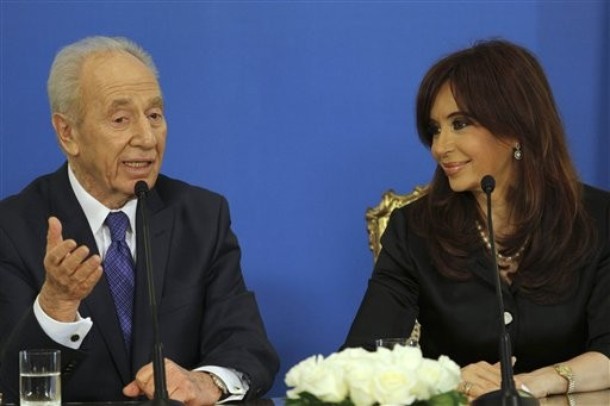
(AP Photos)