




If the United States wants to contend with anti-American countries like Russia and China, it should pay more attention to countries like Hungary on the frontline between East and West.
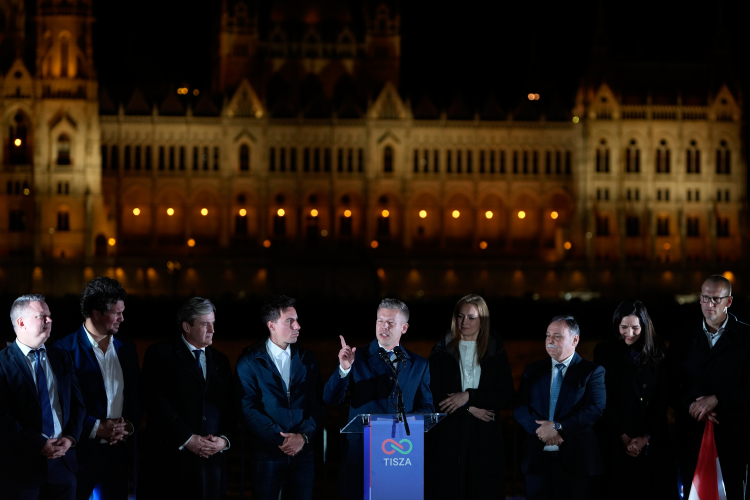
Hungarians celebrated throughout the country on Sunday as the illiberal Orbán government was ousted at the elections after 16 years in power. Joyful people took to the streets, chanting elatedly: 'Russian go home!' These words are deeply ingrained in the Hungarian psyche. They were used during Hungary’s failed revolution against Soviet influence in 1956, and more successfully in 1989, when Hungary finally took a democratic turn after a long period of communism. Today, these words are as relevant as ever.
The Hungarian elections were also in the focus of the international community. Orbán, a close ally to Trump, Putin, and Xi, relied heavily on foreign policy successes and the endorsement of foreign allies in his campaign. However, the struggling economy made worse by socialist measures such as state-mandated price reductions, and a misuse of taxpayers' money, made Hungary not only one of the most corrupt, but also one of the poorest countries in the EU.
People obviously cared more about the cost of living than about JD Vance’s visit. Over the past decade, Hungary has served as a positive example for the MAGA movement, with its anti-immigration, anti-EU stance, conservative economic and family policy along with its purported Christian values, culminating in anti-LGBTQ measures.
Hungary, however, has not modelled democracy, but hypocrisy. Orbán’s friends invited a lot of migrant workers to Hungary, disadvantaging local laborers, and released 777 foreigners convicted of people smuggling; the country’s foreign policy blatantly helped Russian interests; the family policies produced no results and birthrates plummeted; and the loudest anti-LGBTQ voices turned out to attend gay orgies with probably a lot of party drugs during the Covid lockdowns. As for Orbán’s self-proclaimed conservative economy, Orbán has proudly claimed his government has taken over 47.6 billion dollars for big businesses over the years to spend on social policies.
It is not in the interest of any U.S. government to get involved in party politics in Hungary, especially if the party Trump supports is one which kowtows to Russia and China. Putin was also deeply involved in the Hungarian campaign. Orbán was a useful ally for him in undermining western alliances such as the EU and NATO. Putin has not only sent GRU agents to help Orbán’s campaign with false flag operations and disinformation campaigns, according to the Washington Post there were even discussions in Moscow of making a deliberately failed assisiantion attempt on Orbán to boost his popularity.
Whereas most EU nations reshuffled their energy supplies to be independent of Russian oil, Hungary received exemption from sanctions and still relies on Russia for energy. Hungary was among the few EU nations whose imports from Russia did not decrease significantly. Russia exports more to Hungary than the United States. The media leaked information that Hungary’s foreign minister, Szijjárto frequently spoke with his Russian counterpart, Lavrov, sharing information and doing favours for the Kelmin, leading the EU to keep Hungary out of sensitive talks.
China is also heavily involved in Hungary. The Asian country spends large amounts in Hungary to build battery factories and boost the Chinese electric vehicle sector. In foreign direct investment into Hungary China is leading, spending more than eight times more than the U.S.
Orbán was never a trustworthy friend of the United States. He ran anti-American propaganda campaigns, whenever Trump was not in power. As evidenced by Hungary’s growing economic ties to China, Orbán also bets on the Asian country being a stronger global power than the U.S., a sentiment shared by the majority of Hungarians, despite the positive perception of the U.S. running high in the country.
When Vance visited Budapest he claimed the U.S. will continue a good relationship with whichever government wins. Hungarians would welcome this choice. After 16 years of illiberalism modelled upon Russia and China in Orbán’s own words, and after a myriad of Russian interference, Hungary got rid of Russian and their influence by ousting Orbán. It is time for the U.S. to step up its soft power efforts in Hungary, a country forever torn between East and West lest China and Russia keeps exerting economic pressure.
Trump would benefit from an increased economic cooperation between the U.S. and Hungary. The more Hungary wants to distance itself from Russia and China, as promised by Tisza, the party who won the elections, the more it will need a strong ally. The U.S. can stand by Hungary and deepen mutually beneficial economic and diplomatic relations and so claim victory on the frontline of the clash between freedom and authoritarianism.
Máté Hajba, a Hungarian political analyst and writer, is the director of Free Market Foundation, a Hungarian think tank.
