




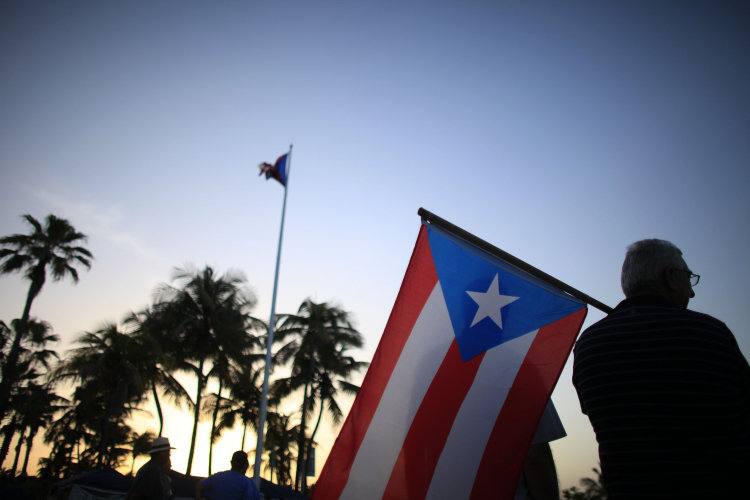
The recent RealClearWorld article, “The Case for Puerto Rican Statehood,” makes a familiar case: that Puerto Rico’s future depends on becoming fully part of the United States through economic reforms, reduced dependence, and the modernization of its institutions. It portrays statehood as both a moral duty and a practical answer. However, this argument is based on flawed assumptions about Puerto Rico’s political situation, economic prospects, and national identity. In the end, it doesn’t provide a true solution but rather continues the very dependency it says it wants to eliminate.
The discussion about Puerto Rico's statehood often revolves around the idea that it must demonstrate its value, its worth, typically by eliminating certain tax benefits, decreasing welfare reliance, and making its economy resemble those of U.S. states. Nevertheless, this perspective is flawed because it views Puerto Rico not as a national community with self-determination rights but as a subordinate territory compelled to conform to external standards. Historically, no U.S. state has been admitted under such conditions. This exposes a troubling truth: the offer of statehood is less about equality and more about Washington-imposed assimilation, a policy Puerto Ricans have rejected and resisted for over a century.
More importantly, the argument overlooks Puerto Rico’s current reality. It is not merely "underdeveloped" but institutionally constrained by colonial structures and policies. As an unincorporated U.S. territory, Puerto Rico’s economic policies, trade regulations, and fiscal choices remain controlled by Congress. The establishment of the Fiscal Control Board in 2016, after the colonial debt crisis, made this clear: the veneer of democratic self-governance can be overridden at any time. Statehood does not erase this history - it confirms it.
Proponents of statehood believe it would bring more stability, attract more investment, and ensure equal treatment under federal laws. However, they often ignore the catastrophic potential downsides. Becoming a state would require Puerto Rico to lose its remaining fiscal tools, which, despite their flaws, provide some economic flexibility. It would also subject the island-nation to full federal taxes without guaranteeing proportional economic growth. According to a 2014 GAO report, such a tax burden could severely harm Puerto Rico’s economy. The notion that Puerto Rico must abandon its special status overlooks that many U.S. states also rely on tailored economic policies and federal aid.
More importantly, statehood does not solve Puerto Rico’s primary economic problem: reliance on external factors. For more than a hundred years, the island-nation’s economy has been shaped by outside interests - first as a military base, then as a manufacturing center, and now as a tax haven. Gaining statehood would not alter this fundamental issue; it would only make it official. Puerto Rico would still be largely dependent on decisions made elsewhere, leaving little opportunity to create independent economic strategies.
In contrast, national sovereignty (either through full independence or free association) offers a path to economic self-determination, prosperity, and growth. It allows Puerto Rico to negotiate trade deals, develop industrial policies, and build strategic partnerships that serve its interests. Many small countries demonstrate that sovereignty does not impede prosperity; rather, when accompanied by good governance and strategic planning, it is crucial for economic success.
From a U.S. perspective, sovereignty is an opportunity rather than a loss. An independent Puerto Rico could serve as a strategic ally in the Caribbean rather than remain a dependent territory. Amid rising geopolitical rivalry, especially in Latin America and the Caribbean, the U.S. would benefit from a stable, democratic partner at the Atlantic's crossroads. This partnership approach, similar to U.S. ties with countries such as the Marshall Islands, Micronesia, and Palau, offers security cooperation without the political and economic issues associated with territorial status.
Culturally, the case for Puerto Rico’s statehood is weak. Puerto Rico operates as a Latin American and Caribbean nation with its own language, history, and national identity, making it more than a mere territory or jurisdiction. Merely considering statehood would intensify existing anti-colonial resistance and Puerto Rican nationalism. The idea that Puerto Rico must embrace a more “American" identity to achieve equality echoes historical debates where language and identity were considered barriers to political rights. These perspectives conflict with the United States' values of pluralism and diversity.
The political landscape in Puerto Rico is changing. While referendums indicate decreasing support for statehood, the situation remains complex due to low voter turnout, questions about legitimacy, and increasing dissatisfaction with traditional options. At the same time, new political movements, particularly among younger people, are challenging the straightforward choice between statehood and the current status, embracing national sovereignty, which now has over 43% support and continues to grow. Cultural icons such as Bad Bunny, civil society groups, and emerging leaders are increasingly advocating for Puerto Rico to become a sovereign nation with the ability to establish its own government, democracy, economy, and international ties.
This change is not limited to Puerto Rico alone. Increasingly, Puerto Ricans in the diaspora, especially in the United States, recognize that Puerto Rico’s colonial status conflicts with democratic principles. In a recent university poll in Florida (a major Puerto Rican area), only 13% supported statehood, while 36% supported sovereignty options. The discussion among many Puerto Ricans has moved from advocating for change to debating what form that change should take.
Supporters of statehood often frame it as the “realistic” path, labeling sovereignty as unworkable, scary, or hazardous. However, this reasoning rests on outdated political and colonialist beliefs about Puerto Rico’s potential. For generations, the idea that Puerto Rico is incapable of self-sufficiency has been widely circulated, even though facts show otherwise. It is not an economic assessment - it is a political narrative grounded in a colonial mentality that fosters dependency, subordination, and inferiority. Only sovereignty and freedom can break this cycle to unleash Puerto Rico’s great potential.
Whether Puerto Rico can succeed as a sovereign nation is not the real question – we know it can. The real question is whether it will be allowed to try. The United States now faces a choice. It could either keep Puerto Rico as an expensive, poor, and bankrupt colonial territory or support genuine decolonization, with independence and free association as the only valid options the United States would actually support. Recognizing that the United States does not support statehood and that any bill in Congress that includes statehood (considered a poison pill) as an option is doomed to failure, only sovereignty is the viable path forward. President Trump can sign an executive order right now to begin the process of Puerto Rico's sovereignty because it is truly in the U.S. national interest.
There’s no need for Puerto Rico to demonstrate its value to achieve statehood. It needs the freedom to become a free and sovereign nation.
Javier A. Hernández is a Puerto Rican author, linguist, educator, former federal official, and pro-sovereignty advocate and strategist. He is the author of PREXIT: Forging Puerto Rico’s Path to Sovereignty, The Patriotic History of Puerto Rico for Young Readers, and Puerto Rico: The Economic Case for Sovereignty. He has spoken and written extensively on Puerto Rican identity, language, and decolonization. Contact via Linktree: https://linktr.ee/javierahernandez
