Main

March 11, 2010

Worst.Year.Ever.

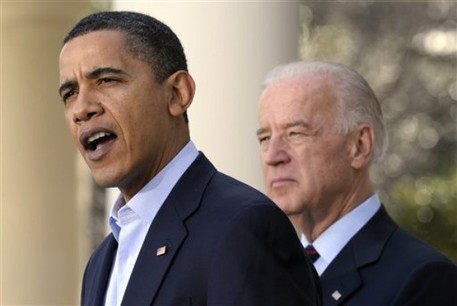
rsz_obamabiden031110.jpg

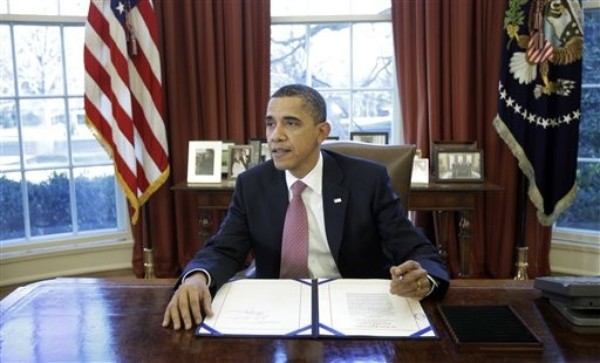
Danielle Pletka laments the end of American civilization as we know it:

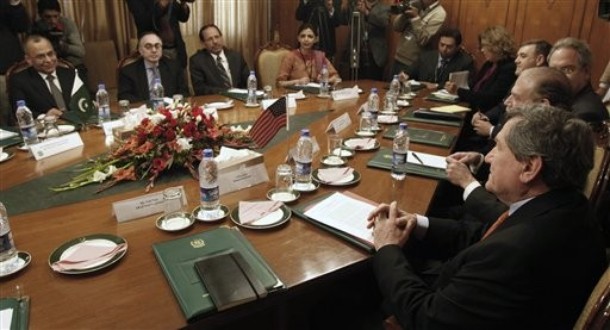
Consider that the president’s own staff can’t gin up a single special relationship with a foreign leader and that the once “special relationship” with the United Kingdom is in tatters (note the latest contretemps over Secretary of State Hillary Clinton’s bizarre intervention on the Falkland Islands); that neither China nor Russia will back the United States’s push for sanctions against Iran; that Iran, it seems, doesn’t want to “sit down” with the Obama administration and chat; that the “peace process” the president was determined to revive is limping pathetically, in no small amount due to missteps by the United States; that one of the key new relationships of the 21st century (advanced by the hated George W. Bush)—with India—is a total mess; that the hope kindled in the Arab world after Obama’s famous Cairo speech has dimmed; that hostility to America’s AfPak special envoy Richard Holbrooke is the only point of agreement between Delhi, Islamabad, and Kabul; that there isn’t a foreign ministry in Europe with a good word to say about working with the Obama White House; that there is a narrative afoot that began with the Obama apologia tour last year and will not go away: America is in decline.

Too many of these problems can be sourced back to the arrogance of the president and his top advisers. Many of Obama’s foreign policy soldiers are serious, keen, and experienced, but even they are afraid to speak to foreigners, to meet with Congress, or to trespass on the policy making politburo in the White House’s West Wing. Our allies are afraid of American retreat and our enemies are encouraged by that fear. George Bush was excoriated for suggesting that the nations of the world are either with us or against us. But there is something worse than that Manichean simplicity. Barack Obama doesn’t care whether they’re with us or against us.

And that's in just one year! Imagine how much he'll have ruined by 2012!

Needless to say, I find all of this to be a bit exaggerated, and even a bit disingenuous. Keep in mind that many once thought it cute or tough to alienate and insult allies; designating them as 'old' and 'new' Europe, for instance. When the Bush administration ruffled feathers it was decisive leadership; when Obama does it it's the collapse of Western society as we know it. Pick your hyperbole, I suppose.

After eight years in office, did President Bush actually leave us with a clear policy on ever-emerging China? How about the so-called road map for peace? How'd that work out? Did President Bush manage to halt Iranian nuclear enrichment, or did he simply leave Iran in a stronger geopolitical position vis-à-vis Iraq and Afghanistan?

Pletka attributes many of these perceived failings to "arrogance." But it has been well documented that the previous administration was also stubborn, resistant to consultation and set in its ways. How then, if Ms. Pletka is indeed correct, has this changed with administrations?

Pletka scoffs at the president's insistence that policy is "really hard," but he's right - as was George W. Bush when he said it. Perhaps, just perhaps, the problem isn't what our presidents have failed to do, but what we expect them to do in an increasingly multipolar, or even nonpolar world?

(AP Photo)

March 10, 2010

Just Like Syria?

A reader writes:

The Gulf States despite their endless rhetoric hold much more animus toward Iran than Israel by orders of magnitude.
2 years ago Israel took out another nuclear program in the region. Ask yourself what was the reaction? There was none. No Arab street, no Arab protestation, no Gulf outrage. All the American whipped up fears & punditry all out with a whimper. A few platitudes were issued here & there, to keep the fiddle sounding for outsiders ears.

A couple of points here. One, comparing a potential strike on Iran to the 2007 Syria strike is comparing apples and oranges. Damascus, for obvious reasons, had just as much reason to downplay the 2007 attack as Israel did, if not more so. As a result, the news trickled rather than gushing out. This allowed minimal impact on the region's economy. The same can't be said of Iran, which would likely be a protracted regional crisis played out in linear and asymmetric fashion. Under these conditions, Iran wouldn't need to 'win' in a conventional sense; not so long as it could turn off its energy spigots and hold the markets hostage during negotiations.

Secondly, I think the assumption that Arab leadership is secretly cheering for an attack on Iran is a terribly exaggerated, and often simplistic crutch relied on too heavily by Iran hawks. Would some Mideast regimes like to see the revolutionary regime in Tehran go away? Certainly, but at what cost? The Saudis might applaud, but they will not applaud an indefinite unilateral war, waged by Israel, on another Muslim country in the region. My guess is that they'd prefer the Iranian 'problem' be addressed by Washington, and not the regionally contentious and controversial government in Jerusalem. Washington can guarantee the Saudis against Iranian reprisal; Israel cannot. (Israel's ability to even attack Iran remains logistically unclear.)

Delving a bit deeper, I think there's something troubling about the idea that Israel can act with unchecked impunity throughout the region with minimal consequence. Turkey was a victim of that impunity in 2007, and its relationship with Israel has indeed taken a hit ever since. Israel needs friends in the region, and the fact that some consider this to be inconsequential should worry even its most ardent supporters.

As I've already argued, Washington in fact does a major disservice to Israel by offering so little oversight of aid and investment in the country. It's a problem if Jerusalem is as flippant about its behavior as this reader is, and that's ultimately a failure of American leadership in the Middle East.

March 9, 2010

The Costs of Dubai

Bob Baer, who knows a thing or two about covert operations, weighs in on the Dubai assassination and what it may have cost Israel:

If Netanyahu authorized the hit, though, the real question is whether he really considered the strategic implications. Look at the map. If Israel goes ahead and bombs Iran's nuclear facilities, it will need over-flight clearances from the Gulf Arabs. Antagonizing the U.A.E. in this way, leaving almost no doubt that Israel was behind Mabhouh's assassination, does not seem the best way to facilitate such clearances. Nor does it help build an Arab Sunni coalition against Iran and its Lebanese proxy, Hizballah.
The Islamic Republic imports about a third of its [gas] needs. And unfortunately, 75% of Iran's gasoline imports pass through the U.A.E. I would bet that, right now, Netanyahu is wishing that Mossad had been just a little better at covering its tracks.

As is Washington, no doubt. Again I ask, is this how allies allegedly fighting the same war behave?

Russia's Hollow Energy Empire

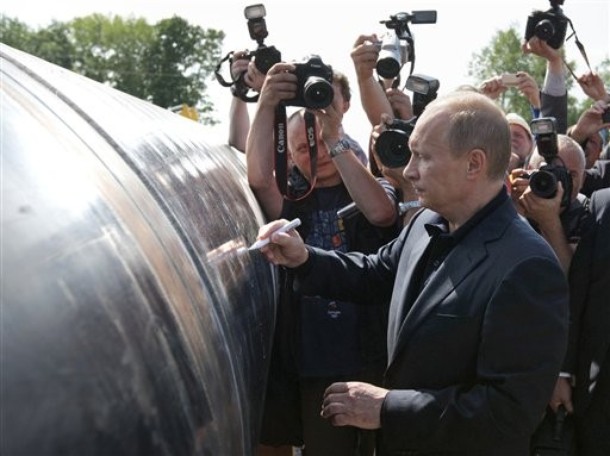
russiagasempire.jpg

The Wilson Center's Stacey Closson argues that Russia's energy empire isn't exactly the over-powering entity many in the West fear:

Some 85 percent of the EU-12 (newer inductees to the European Union from Central and East Europe) still rely on Russian gas imports but, Closson said, this figure is misleading. While 40 percent of all gas entering Europe is from Russia, only about 6 percent of it is used for primary energy consumption. In other words, some 94 percent of European energy consumption comes from non-Russian gas.

Closson argues that Russia is not an emerging energy empire. “People may think Russia is in control,” said Closson, “but Russia depends on energy sales to Europe for more than 60 percent of its hard cash earnings, so there is a strong degree of interdependence."

There is a similar dynamic - between the anxiety of consuming countries and the perceived power of the exporting countries - when it comes to Middle Eastern oil. But in that case, the exporter's power is even weaker than in the case of Russia. Middle Eastern economies are even less diverse than Russia's, making them far more dependent on the export of oil. There's a reason why the so-called "oil weapon" was used once and never wielded again.

So much of American policy in the Middle East is predicated on the fear that the oil will stop flowing, but there's no indication that the various leaders of the Middle East want to starve. And that includes the leaders of Iran.

(AP Photo)

March 2, 2010

China in the Mideast

Dan Drezner chimes in:

1) China is cozying up to a powerful country on the periphery of the Middle East;

2) Because of its religion and periodically bellicose foreign policy, that country that is viewed as an outsider by the Arab Middle East;

3) This country is pursuing internal security policies that would generously be described as "controversial" by the rest of the world;

4) It's Middle East policy can have pronounced effects on China's own domestic politics;

5) All the while, Chinese energy dependence on the region is increasing rapidly.

Welcome to the Middle East, China!!

Indeed, although thus far that growing presence has been done on the cheap.

March 1, 2010

China's Mideast Security Detail

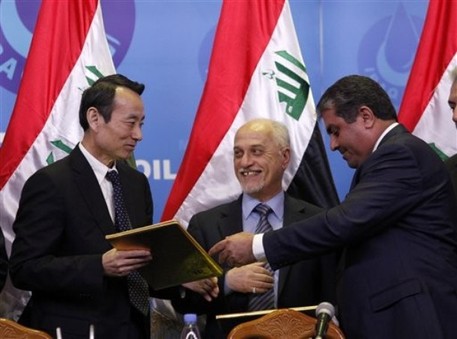
rsz_iraqchinaoil030110.jpg

Tom Barnett explains how China could reap the long-term benefits of the Iraq War:

Will the Chinese begin to assume the same kind of security role that the U.S. has historically played in the region anytime soon? Hardly. And yet China's increasing presence throughout the region already alters the correlation of forces. China's national oil company, Sinopec, is the only foreign firm to date to win oil access in both Iraq's Kurdish region and the south. Given Baghdad's ambition and Beijing's unquenchable thirst, the two are a match made in Big Oil heaven -- with Washington's blessing.

And more importantly, with Washington's security. China gets another energy source, minus the nasty byproducts and backlash that come with regional hegemony. Meanwhile, we will have spent approximately $2 Trillion to give China more markets in which they will attempt to supplant the dollar.

(AP Photo)

February 22, 2010

Targets and Tactics

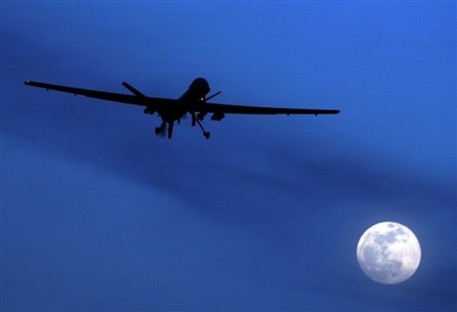
rsz_predator022210.jpg

Max Boot writes:

Funny how no one seriously objects when U.S. Predators carry out similar hits on al-Qaeda operatives but the whole world is in uproar when the Israelis target members of Hamas — an organization that is morally indistinguishable from al-Qaeda. The Dubai uproar only highlights once again the double standard to which Israel is constantly subjected. But Israel cannot and should not use that double standard as an excuse to avoid taking vital action in its self-defense. The leaders of terrorist organizations are legitimate military targets, and Israel should spare itself the agonizing and hand-wringing over this targeted killing.

Daniel Larison pounces:

As atrocious and appalling as their past and present conduct is, Hamas still retains in much of the non-American West some minimal legitimacy as a major faction in Palestinian politics. Hamas and Al Qaeda may be morally indistinguishable, but politically they have very different standings in the eyes of many other states. Israel’s major regional ally Turkey has a ruling party that is somewhat sympathetic to Hamas, while it is resolutely hostile to Al Qaeda and its affiliates. These are rather obvious political distinctions that Boot ought to understand, and the Israeli government must also understand these things. It is pointless to pretend that these distinctions don’t exist and to complain that the different reactions to drone strikes and the Dubai assassination prove a double standard. Whether or not there should be a double standard, Israel’s government has to take for granted that there is one. If Israel’s patron and the global superpower can get away with something, however misguided it may be, it does not always follow that it can act with the same impunity.

Well put, but let me take it a step further and dismiss the notion that any double standard exists at all in this case. It's a convenient rhetorical crutch I suppose to scream hypocrisy every time a critique is made of Israeli behavior, but this time around it just doesn't pass muster.

Since he doesn't say, I'm left to assume Mr. Boot means predator strikes in Pakistan, and not Afghanistan. These strikes are the product of U.S.-Pakistani coordination spanning two administrations and two regimes in both Washington and Islamabad, respectively. The predators are likely based inside Pakistan, and the strikes are carried out with approval - albeit quiet and reluctant - from Islamabad.

Larison disapproves of the drone strikes, and I certainly won't deny him that right. Personally, I consider them the least bad alternative to a bad policy of prolonged regional occupation. If we're going to maintain a military presence in the region, then we should be targeting specific al-Qaeda-Taliban operatives and taking them out with limited civilian casualties. The drones accomplish this, which is why Pakistani concerns have been less about the civilian casualties involved and more about who gets to pull the trigger.

And there certainly has been debate in the West over these attacks, both public and private ones within the administration itself. Moreover, I cannot think of one pro-drone argument in the last two years that didn't involve a kind of resigned acceptance of the program's relative effectiveness. Who are these predator pom-pom wavers Boot alludes to? Name names, please.

One could go on at length about the differences between drones and Dubai, but let me try to sum it up in one word: sovereignty. What actually makes the drones controversial is the political backlash they create for our allies in Pakistan. Our presence in the country is a shadowy one, and the cost/benefit balance is rather sensitive. Washington views Pakistan as an important ally in an important war, and thus can't do too much to create domestic tensions for said ally. But these are considerations made in conjunction with that government, just as the strikes are ultimately approved and enabled by that government. Just imagine how much harder it would be if Western operatives went into Pakistan, unapproved, and carried out such strikes. The backlash would be both tremendous and justified. Now imagine how the UAE must feel.

The targets in each case may be "morally indistinguishable," but the tactics are not, and that's why Israel - if responsible - is in the wrong here.

(AP Photo)

February 18, 2010

Fighting & Fanning the Flames of Terrorism

terrorism.jpg
Is the Obama administration working at cross purposes in its battle with Islamic terrorism?

On the one hand, we have U.S. forces battling the Taliban in Helmand Province as part of an overall strategy to stabilize Afghanistan before a U.S. draw down begins in 2011. Thus far, the operation appears successful and is being complimented by a number of high-profile Taliban arrests in cooperation with Pakistan. India and Pakistan are engaged in peace talks. By all appearances, the administration's approach to South Asia is bearing (provisional) fruit.

Yet move to the Middle East and the position looks quite different. The administration failed - spectacularly and publicly - in its early efforts to jump start the Israeli-Palestinian peace process. More importantly, it is moving to bulk up its forward military forces in the region in an effort to contain Iran.

It is a well documented fact that the presence of foreign military forces in the Middle East is a driver of terrorism. American forces stationed in Saudi Arabia to contain Iraq were a staple of al Qaeda propaganda throughout the 1990s so much so that former Deputy Defense Secretary Paul Wolfowitz (hardly one to "blame America") cited their removal as one of the salutary effects of the Iraq invasion (never mind that that move injected orders of magnitude more troops into the region). It would be foolish to believe that the U.S. could undertake a similar buildup to contain Iran and not court the same wrath. But that is what the Obama administration is doing. It is fighting and hopefully winning a tactical battle in Afghanistan (and perhaps more if it does reorient the geopolitics of Pakistan and India) while entrenching the dangerous status quo in the Middle East that has driven Arab jihadists into the Pakistani hinterlands in the first place.

Hopefully the terrorist threat is now small enough that even with the negative dynamic in place in the Middle East we can contain it through intelligence work and homeland security. But such a reactive posture is bound to fail on occasion.

(AP Photo)

February 5, 2010

Muslim World's View on Hamas and Hezbollah

Pew Research has a new study on the attitudes of majority Muslim nations on Hamas and Hezbollah:

Four years after its victory in Palestinian parliamentary elections, Hamas receives relatively positive ratings in Jordan (56% favorable) and Egypt (52%). However, Palestinians are more likely to give the group a negative (52%) than a positive (44%) rating. And reservations about Hamas are particularly common in the portion of the Palestinian territories it controls -- just 37% in Gaza express a favorable opinion, compared with 47% in the West Bank.

A survey conducted May 18 to June 16, 2009 by the Pew Research Center's Global Attitudes Project also finds limited support for the Lebanese Shia organization Hezbollah.1 While most Palestinians (61%) and about half of Jordanians (51%) have a favorable view of Hezbollah, elsewhere opinions are less positive, including Egypt (43%) and Lebanon (35%). As with many issues in Lebanon, views of Hezbollah are sharply divided along religious lines: nearly all of the country's Shia Muslims (97%) express a positive opinion of the organization, while only 18% of Christians and 2% of Sunni Muslims feel this way.

Meanwhile, Turks overwhelmingly reject both groups -- just 5% give Hamas a positive rating and only 3% say this about Hezbollah. There is also little support among Israel's Arab population for either Hamas (21% favorable) or Hezbollah (27%).

Perhaps more important from a U.S. perspective, the nations polled by Pew don't have a very high regard for Iran's leadership. No majority in any Muslim country had a high confidence in Mahmoud Ahmadinejad and the best he did was 45 percent in the Palestinian territories (and this data was generated before the June 12th election dispute). If Iran desires regional hegemony it appears there will be significant push-back from all of her neighbors.

February 2, 2010

What Really Matters in Arab Capitals?

Thomas Ricks writes:

I wonder if something fundamental is going on in the Middle East. That is, Iran is getting more powerful, and that scares the Arab states. So they seem to be turning away from worrying about Israel and focusing more on Iran as it moves toward becoming a nuclear power. The Bush administration actually helped strengthen Iran a lot by knocking down Iraq as the great bulwark against the expansion of Persian power westward. Also, by occupying Iraq, it effectively gave Iran tens of thousands of potential hostages, lessening Western leverage and so the West's ability to curtail Iran's nuclear ambitions. And so on.

Bottom line: Will AQ Khan and the Bush administration together inadvertently have brought Arab-Israeli peace to the Middle East?

Is this really a new trend? While it's certainly important for Arab regimes to publicly pay lip service to the Arab-Israeli conflict, I thought it was rather common knowledge that the true concern for many Arab states was the Islamic Republic. There's a reason, after all, that the GCC exists today. There's a reason these regimes backed Saddam Huessin's quasi-secular Baathist regime during the Iran-Iraq War. There's a reason Iran has at times been put in the middle of the Yemen conflict.

Iran conspired to topple several of these regimes throughout the 1980's, and a few - such as Bahrain - have their own Shia majorities to worry about. The nuclear debate is simply the latest chapter in a long geo-political tug of war in the Middle East. Some have argued that the regional power structure has already shifted, as Ricks suggests. I believe the "Shia Crescent" stuff is often exaggerated, however Ricks is right to peg the Iraq invasion as a strategic victory for Tehran.

As to whether or not this regional realignment could accelerate Mideast peace, I'm not so sure. Despite their missteps in the region, even the Bush administration understood that Palestine offered Iran a kind of public relations coup in the region - this was a driving force behind the 2007 Annapolis Conference. Iran, for its own part, always gets fidgety whenever the Arab capitals are brought together on the issue.

But these entrenched positions can only go so far. Ultimately, it's up to Israel - an Iranian enemy - and Hamas - an Iranian ally - to reach a settlement before we'll see a peace agreement of any kind. Arab input may not account for much in the end.

(h/t Andrew Sullivan)

January 25, 2010

Justice, Saudi Style

Via the Gulf Blog, another example of Saudi justice:

An overseas Filipino worker launguishing in a Saudi Arabian jail suffered miscarriage and now fears getting a hundred lashes before finally being freed.

Camille (not her real name) has been in prison since August last year after her employer turned her over to authorities because she got pregnant out of wedlock by a co-worker who raped her.


January 22, 2010

Saudi Prince Missing

The London Review of Books blog says that a Saudi prince has gone missing:

Saudi Arabia’s former ambassador to Washington, Prince Bandar bin Sultan bin Abdul Aziz, has disappeared. In the absence of any official news about his health or whereabouts, the rumour mill has been working overtime. As is often the case with Saudi affairs, the truth is elusive. Those who know won’t talk and those who don’t know talk a lot.

Last August the Iranian media reported that Bandar had been put under house arrest, allegedly for plotting a coup to try and ensure the Kingdom would continue under the rule of the Sudairi branch of the Al Saud family. But Iran isn’t the most reliable source: al-Arabiya, Saudi Arabia’s news network, gibes Iran hourly over its ongoing political turmoil; Iran’s al-Alam and Press TV hit back at Saudi Arabia whenever they can.

Others say that Bandar is depressed or has been ordered by King Abdullah to keep a low profile because he meddled in Syrian affairs, trying to stir up the tribes against the Assad regime, without the king’s approval.

According to Saudi opposition sources, Bandar is now in Dhaban Prison, in north west Jeddah, a high security jail where terrorist suspects and political opposition figures are held. Bandar is said to be in a special wing where the other prisoners are four senior generals: one from the army, one from the royal guard, one from the national guard and one from internal security. Bandar’s lawyer in the US denies he is in prison and says he has been seen out and about recently, although he wouldn’t divulge when, where or even in which country.

If you're interested in learning about the succession struggle in Saudi Arabia, the Washington Institute published a good study on it here.

January 21, 2010

Arab League Views of U.S.

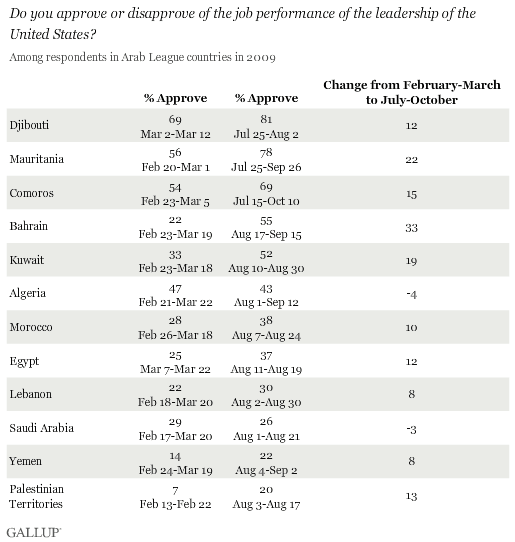
Mohamed Younis at Gallup surveys Arab League opinion of U.S. leadership:

1_yx1uokle6j8cl6oirfng.gif


Younis concludes:

While approval ratings of U.S. leadership alone cannot serve as a proxy for evaluating U.S.-Arab world relations, Gallup's latest polling in the Arab world suggested some improvement at the time of the survey. Surprises were found in Lebanon and the Palestinian Territories, where opinions improved for the first time since the Bush administration. However, in Saudi Arabia and Algeria, no statistical change in approval ratings of U.S. leadership took place between the two polling periods in 2009. While the president's focus on outreach to the Arab and Muslim worlds may have had a positive effect on the attitudes of many, his ability to follow through on many of the proposed programs for cooperation and development will be crucial to adding more Arab countries to the list of those where a majority approve of the leadership of the United States.

January 9, 2010

The Path to Tehran

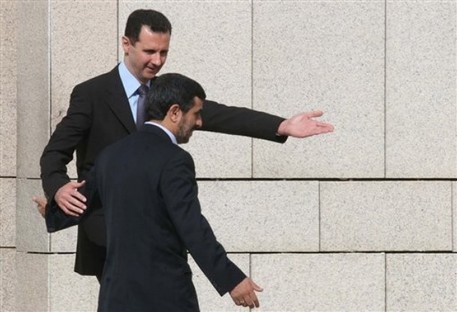
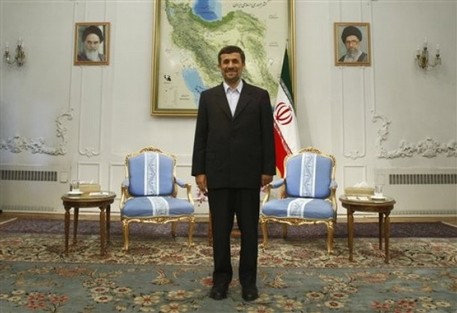
ahmadi_rsz_010910.jpg

I think Daniel Larison does a fine job of addressing one of Andrew Sullivan's readers regarding the Iranian Green Movement's future, so I would rather address some of the other points made by Sullivan in the same post. He writes:

It's a funny thing. Some neocons seem almost ambivalent about a revolution in Iran because it might lead to a nuclear-armed Iran not led by theo-fascists - which would complicate Israel's diplomatic and military position in the region. And many realists don't see a revolution because they remain wedded to the idea of the Iranian red staters rallying to their fundies the way Southerners rally to Cheney and Palin. Or perhaps because there's some kind of realist super-frisson in negotiating with the likes of Khamenei. I don't know. Skepticism is totally valid; but the measure of assurance that nothing has changed strikes me as off-base.

Dictionary.com tells me that frisson means "a sudden, passing sensation of excitement." I don't know that this is how I would describe the cold reality of negotiating with a regime's obvious leader -- much as we do with every other undemocratic or outright oppressive regime -- but how others get their kicks is really none of my business.

Moreover, is it a "realist super-frisson" when the United States does business with and/or engages China, Egypt, Russia, Jordan, Kuwait, Libya, Georgia and so on?

And who exactly are these neoconservatives doubting the spirit and efficacy of the Green Movement? Name names, please. As far as I can tell, most if not all of the leading neoconservative intellectuals and opinion makers have at the very least listed the unrest in Iran as one of several reasons for not engaging the Iranian regime. Their rhetoric sounds very similar to Andrew's, only we know what the former's intentions are: Regime change, be it through the support of revolution or outright attack.

But what does Sullivan hope to see in Iran? He goes on:

For what it's worth,I believe that a democratic revolution in Iran is both possible and would be the single most transformative event in global politics since the end of the Cold War. Especially for the US. I sure don't believe we should take it for granted; but I also see what is in front of us.

I happen to agree, but unlike Sullivan, I don't believe American policy toward Iran should be dramatically affected by the ebbs and flows of Iranian unrest. I've made the case before, so I'll keep it shorter here: if Iran gets the bomb I believe it will enable the regime to crackdown on dissidents with never before seen impunity. Thus, to accept a nuclear-armed Iran and hope for the best, as Andrew seems resigned to doing, strikes me as wrongheaded and harmful for everyone invested in a better Iran--both inside and outside of the country.

Meanwhile, we get a lot of pomp and punditry on Iran's pending Prague Spring, but few substantive policy suggestions for the United States. And I fear what we are seeing here is a repeat of the kind of rhetorical buildup that led to the 2003 invasion of Iraq. Many well-intentioned analysts and foreign policy wonks made strange bedfellows at the time with a longstanding neoconservative agenda to topple Saddam Hussein, thus providing cover for Democrats and otherwise skeptical officials to support the invasion.

I think what The Daily Dish has done to educate its many, many readers on Iran's rich history, culture and politics is an overall good thing (this, in part, is also why I believe it makes sense to engage him on the topic so often--if you care about Iran, Andrew Sullivan matters). My hope though is that they can temper some of that enthusiasm in 2010 with a more sober debate on American policy alternatives, and not, as Laura Rozen recently noted, enable a war policy concocted in part by those with the best of intentions.

(AP Photo)

January 4, 2010

Admitting You Have a Problem

obamayementerrorism.jpg

Stephen Walt sounds off on the crotch-bomber:

Second, most of the commentary about the attack focused on the breakdown in security procedures and possible intelligence failures, but for me the real issue is to ask why groups like al Qaeda want to attack us in the first place. With a few exceptions, this is a question that rarely gets much scrutiny anymore; pundits just assume "terrorists" are inherently evil and that’s why they do evil things. (And some American extremists recommend that suspects like the Gitmo detainees be summarily executed without trial. I kid you not). But we really do need to spend some time asking why terrorists are targeting us, and whether we could alleviate (though not eliminate) the problem by adjusting some aspects of U.S. foreign policy.

In particular, I'm struck by the inability of most Americans to connect the continued risk of global terrorism with America's highly interventionist global policy. One can have a serious debate about whether that policy is the right one or not; my point is that we are kidding ourselves if we think we can behave this way and remain immune from any adverse consequences.

This is a point I've harped on as well and it's important to emphasize that the "most Americans" Walt refers to also includes senior officials in the previous and current administrations responsible for counter-terrorism policy. From Peter Baker's big piece in the Times today:

And so perhaps the biggest change Obama has made is what one former adviser calls the “mood music” — choice of language, outreach to Muslims, rhetorical fidelity to the rule of law and a shift in tone from the all-or-nothing days of the Bush administration. He is committed to taking aggressive actions to disrupt terrorist cells, aides said, but he also considers his speech in Cairo to the Islamic world in June central to his efforts to combat terrorism. “If you asked him what are the most important things he’s done to fight terrorism in his first year, he would put Cairo in the top three,” Rahm Emanuel, his chief of staff, told me....

....Yet even some of the Bush appointees were ready for change, appealing to Obama to revamp the struggle. “Mr. President-elect, we’re doing things very well, but we’re losing the messaging war,” Michael Leiter, the director of the National Counterterrorism Center, told him a week after the election, according to an official informed about the session. A significant share of the global population thought America was at war against the rest of the world, Leiter maintained. “You have an opportunity to change that message, to change how the struggle is perceived,” he said.
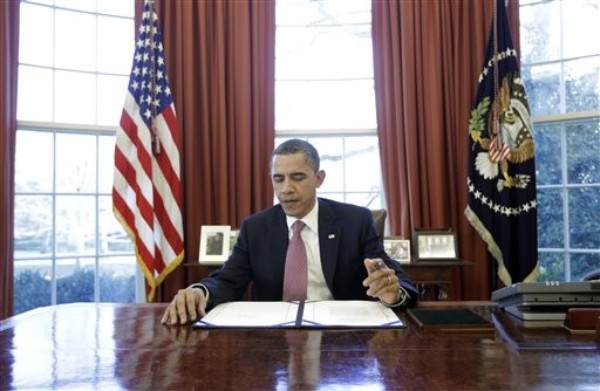
Obama was receptive to that mandate. “We’re going to do that,” he replied....

The entire subtext of the Obama administration argument is that the principle U.S. policies that catalyze Islamic terrorism were implemented circa 2001. True, those policies poured gasoline on the fire, but the fire was burning before George W. Bush took office. The kindling was American support for autocratic Middle Eastern governments, its support for Israel, and stationing of combat forces in the Middle East. Combine that with Islamic fundamentalism and you have the combustion that is the global terrorist threat. It is frankly delusional to think that a mere speech, however well intentioned, can suppress these flames.

The basic problem, as Walt eludes to, is that Washington has zero interest in re-examining these policies in light of the terrorist threat associated with them. And so instead we pretend that the two are fundamentally disconnected. It's not a matter of American policy making people angry, the Obama administration seems to be saying, it's a matter of them not understanding American intentions. We're "losing the messaging war" - and so a good speech can shore things up.

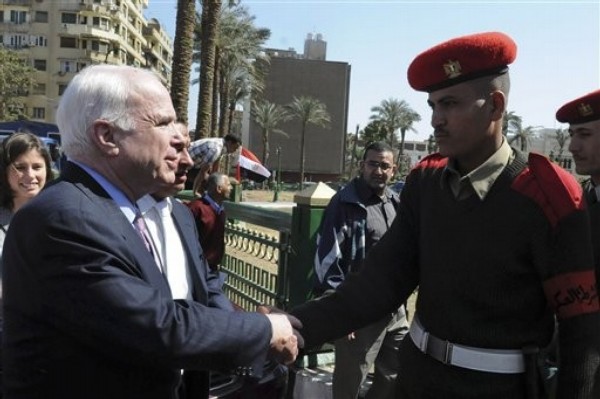
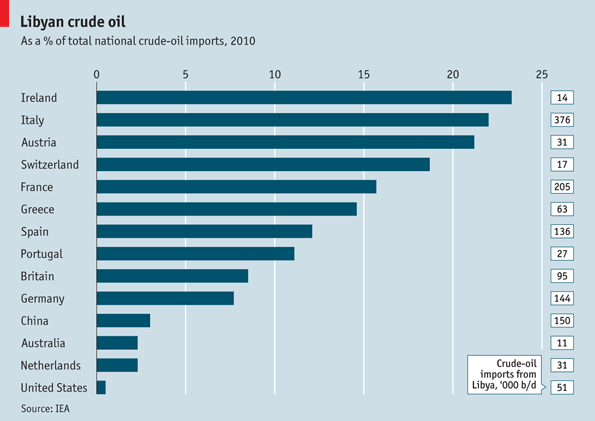
This mindset is not only patronizing to its intended subjects in the Arab and Muslim world, it's patronizing to Americans.

What the Obama administration cannot, apparently, do, is have an adult conversation with the American people about U.S. policy in the Middle East. Why not simply say that on balance the threat from international terrorism is a small price to pay to maintain American hegemony in the Middle East? It's what they obviously believe. And not without merit - American hegemony not only contributes to oil's safe transit to world markets but ensures that other states - particularly potential competitors such as China - have to rely on America to keep the flow going, thus giving us crucial leverage in the zero-sum world of international politics. They could argue that the costs imposed on the U.S. by terrorism are less than those that would result from a policy change in the Middle East. Given the mix of motivations that propel someone to actually become a terrorist, they could also argue that the causal links between American policy and Islamic terrorism are so diffuse (and the problem already so widespread) that an American policy change at this late stage wouldn't even work to reduce the threat.

None of that would be very difficult for President Obama, who is, if nothing else, an effective communicator. But instead, this is all ignored in favor of a self-serving and infantilizing narrative that it's all a big misunderstanding - that we have a "communications" problem.

(AP Photos)

December 30, 2009

Idle Hands Are the Terrorist's Tools

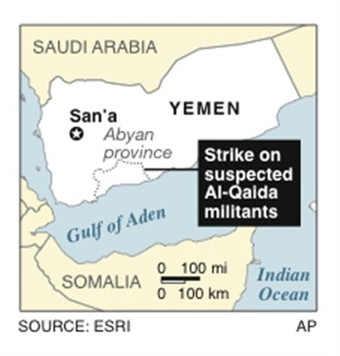
yemen_south.jpg

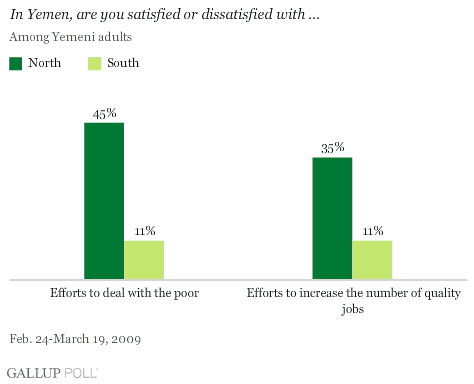
As we all put on our junior counter-terror decoder rings and attempt to sort out the news surrounding al-Qaeda in Yemen, I thought it might make some sense to step back and look at what makes Yemen attractive for terrorists in the first place.

This graph of data collected by Gallup earlier in the year offers a useful visual:

mi4onhyg-uyszjkemvu63g.gif

That's the same disgruntled south where al-Qaeda operatives are allegedly--and brazenly--staging public protests against Sana'a and the West; the same disgruntled south recently targeted by the Yemeni government with American assistance.

I think it makes strategic sense to work with an agreeable Yemeni government on counter-terrorism, but al-Qaeda finds an audience in Yemen for a litany of reasons. Geography and history are among them, but so are poverty and unemployment. Coupling military aid with multilateral assistance addressing jobs and, while we're at it, drought might make for a more well-rounded policy in the country.

(AP Photo)

December 29, 2009

The Good, the Bad and the Central

afgh_yemen.jpg

Max Boot discusses Yemen and its place in the greater War on Terror:

We cannot ignore the terrorist threat emanating from Yemen or other states but nor should we use this undoubted danger as an excuse to lose the war of the moment–the one NATO troops are fighting in Afghanistan. Winning the “war on terror” will require prevailing on multiple battlefields–Iraq, Afghanistan, Pakistan, Yemen, Somalia, the Philippines, and a host of other countries, including, for that matter, Western Europe and the United States. The methods and techniques we will use in each place have to be tailored to the individual circumstances. Few countries will require the kind of massive troop presence needed in Afghanistan or Iraq. In most places we will fight on a lesser scale, using Special Forces and security assistance programs. But because a lower-profile presence may work elsewhere doesn’t mean that it will work in Afghanistan–or would have worked in Iraq. We know this because the Bush administration already tried the small-footprint strategy in Afghanistan. It is this strategy that allowed the Taliban to recover so much ground lost after 9/11–territory that can only be retaken by an influx of additional Western troops. There is no reason why we can’t fight and prevail in Afghanistan even as we are fighting in different ways in different countries.[emphasis added]

The point on the Bush strategy in Afghanistan is simply inaccurate. What Boot calls a "small-footprint strategy" was in fact a rather ambitious, rhetoric-laden, albeit poorly resourced nation building agenda (we all remember the purple and blue fingers, right?). The goals didn't match the muscle, requiring a "reduction in objectives" by the Obama administration, as Richard Haass put it. In other words, President Bush spoke boisterously while carrying a tiny, tiny stick.

But Boot never explains why Afghanistan is such a vital front in the War on Terrorism, nor does he explain what Iraq has to do with that war at all. And why the Taliban--along with roughly 100 al-Qaeda operatives in the Af-Pak region--require a heavier troop presence than other threats (such as al-Shabaab in Somalia, for example) remains unclear to me.

I agree with Boot that the "good war, bad war" stuff is no good, and migrating the designation from one front to the next for political expedience is irresponsible. The real question--one I feel Boot never properly addresses--is why we even need a central front in order to conduct this war.

He writes that "one of the key advantages gained by our presence in Afghanistan is that it makes it easier to target terrorist lairs in Pakistan." But presence and escalation are clearly two different things, and targeting said "lairs" does not require the latter--as was demonstrated two weeks ago in Yemen.

(AP Photo)

December 27, 2009

Is Yemen Tomorrow's War?

Very likely, says Sen. Joseph Lieberman. Spencer Ackerman pounces:


What are the local dynamics in Yemen that a military strike would impact? What would the goals of such strikes be? What are the underlying political effects that have allowed al-Qaeda to establish itself in Yemen? What measures short of war might be better targeted to addressing those conditions? These are just a few of the many prior questions that have to be answered before such a thing is considered. Instead, Lieberman just gets to go on Fox and monger away, unchallenged. Such is life.

Good questions all, but I think this war of tomorrow idea deserves some further unpacking. To me, targeted assaults on al-Qaeda operatives--alongside agreeable host governments--makes for a good counter-terrorism strategy. My question: if this is a sufficient tactic for dealing with one al-Qaeda safe haven, why then does another require costly occupation?

I hope Senator Lieberman will elaborate on what preemptive action would look like in Yemen. Favoring a reserved and targeted war there would seemingly undercut his support for escalation and occupation in Afghanistan, but no one ever accused U.S. senators of consistency.

December 22, 2009

Obama, the Prime Mover

Syria%20Hariri.jpg

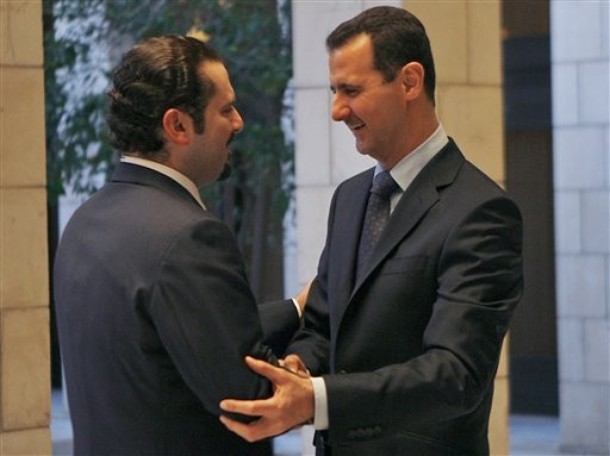
One of the chief criticisms I've read of President Obama is that he fancies himself the center of the universe. Funny, then, to read Jonathan Toobin confirm it, blaming President Obama for Syria's deepening hold over Lebanon:


All of which means that we can chalk up another defeat for the United States that can be put at the feet of Barack Obama’s fetish for diplomacy for its own sake. Like the opposition in Iran, the pro-independence Lebanese have been left in the lurch while Washington fecklessly pursues deals with dictators who have no intention of playing ball. And why should they, given the administration’s distaste for confrontations and its inability to rally international support for action on behalf of either a nuclear-free Iran or a free Lebanon?

Is it really the case that President Obama is the root cause of Syria's policy in Lebanon? That doesn't sound plausible to me. The Washington Institute's David Schenker offers a more nuanced take in the Weekly Standard:

Washington's increased diplomatic and military engagement with Damascus also appears to have had an effect, decreasing March 14 confidence in its most ardent supporter. Perhaps the leading factor in March 14 leadership's decision to return to Damascus, however, appears to be Saudi Arabia's equivocating. Riyadh had been a leading force in trying to dissuade Damascus from playing its traditionally pernicious role in Lebanon. Recently, however, Saudi appears to have made a concession on Lebanon in order to improve relations with Syria.

(AP Photos)

November 17, 2009

Meanwhile, in Yemen...

yemenbbbbb.jpg

From the AP:

Iran's chief of staff has warned Saudi Arabia over its military offensive against Shiite Yemeni rebels, saying it signals the start of "state terrorism" and endangers the entire region.

The official IRNA news agency Tuesday also quoted Gen. Hassan Firouzabadi as saying the actions of Yemen and Saudi Arabia would fuel militancy and spread violence to the rest of the Muslim world.

Shiite Iran is alarmed by the Yemeni and Saudi offensive against the rebels, whom the two Arab nations accuse of receiving arms and money from Iran.

The Saudi offensive began earlier this month, apparently to deny Iran a foothold on its doorsteps.

I wrote last month on the soft power opportunity this conflict offered Tehran. At that point, there was still a lot of pretense surrounding the actors involved, but that is deteriorating rapidly as a Saudi-Iranian proxy war is beginning to emerge.

The only problem is that it remains unclear just how much influence Iran genuinely has over the Houthis. Some allege an Iran-Eritrea- Houthi weapons triangle, but that evidence has thus far left me unconvinced.

But as I argued back in October, perception is key in this dispute. It serves Saudi-Yemeni interests to perpetuate the "Shia Crescent" theory, as it will no doubt draw Washington closer to both regimes.

As for Iran, these greatly exaggerated fears grant them a mostly undue influence in a conflict they may have little actual investment in. Tehran could leverage that paranoia into something positive--such as offering direct diplomatic and clerical mediation in north Yemen--and possibly improve its standing with the incredulous Arab world.

The Islamic Republic instead appears to be stirring the pot. Sticking it to the Saudis apparently never gets old.

(AP Photos)

Goldfarb on Obama on Jerusalem

Biting but true:

From the moment during the campaign that Obama declared "Jerusalem will remain the capital of Israel, and it must remain undivided," to the subsequent walkback, to the demand that all settlement construction in East Jerusalem come to an end, to the subsequent walkback on that. Nobody knows what this administration's position is on Jerusalem, least of all the parties involved in the peace process.

The only "achievement" this administration can claim is having driven the Israeli public into Bibi's arms, helping him solidify his support across party lines, and destroying President Obama's credibility with the Israeli public -- smart power.

Choosing Palestines

David Hazony makes a fair point on the thought of the PA unilaterally declaring statehood:

Many of the world’s most successful countries achieved internationally recognized independence without the benefit of a negotiated agreement between conflicted parties, the United States and Israel being two obvious cases. If Palestinian national aspirations were so legitimate and a two-state solution the only answer, why wouldn’t the great powers recognize this much? And in such a scenario, what unilateral retaliation could Israel reasonably get away with?

Rather, the real problem with Palestinian independence — the elephant in the room, if you will — is that there is no viable Palestinian regime that can claim to run a sovereign country. Right now, the Palestinian territories are divided, ruled by two different Palestinian regimes. The one in Gaza is led by an internationally recognized terror organization supported by Iran and dedicated to war against Israel and violent conflict with the West. The other, in the West Bank, is led by a revolutionary-style regime that is deeply corrupt and still fosters and harbors terrorist groups like the Fatah-Tanzim, Hamas, and Islamic Jihad. Efforts to negotiate a unification between the two sides have consistently failed, and one gets the sense that the only thing preventing an all-out civil war between Hamas and Fatah is the sliver of land that divides them (Israel, that is).

So the problem, it seems, is not between Israel and the Palestinians so much as among the Palestinians themselves.

True, however the legal establishment of a Palestinian state--hinging, of course, on UN approval-- would force world governments to be more selective in how they dole out their aid to the Palestinians. While much of the humanitarian aid flowing into Gaza would likely continue, the aid and support provided to Gaza--and by default Hamas--in the name of Palestinian statehood and support would become more complicated.

Furthermore, the asymmetric support provided to Hamas by Iran would lose a great deal of its validity. After all, to continue funneling weapons and resources toward Hamas at the expense of the Palestinian state would likely undercut Tehran's influence in the region.

In short, it could force Hamas' supporters to better justify and enumerate their investment in the territories. Even if dysfunction were to persist as Hazony suggests, at least the lines of culpability in that dysfunction would be made a little clearer.

November 12, 2009

Justice, Saudi Style, Ctd.

America's close ally demonstrates its enlightened justice system:


After a thorough trial consisting of 10 hearings spanning over 2 years, a Saudi court has reached the measured, judicious and – given the mounting evidence in the case – only reasonable course of action regarding a Lebanese man found guilty of practicing black magic: death....

The key evidence appears to have been finding the man in a hotel room with – people with a nervous disposition may wish to look away now – herbs, talismans and “some papers with strange drawings and writings”.

This follows the beheading and crucifixion of a Saudi found guilty of a considerably more serious crime.

September 1, 2009

Hariri's Hezbollah Decision Could Benefit Israel

Saad Hariri's pledge to include Hezbollah in his future cabinet, regardless of whether "Israel likes it or not" has raised some eyebrows in Jerusalem.

On the surface, such a decision is against the interests of Israel. Jerusalem was hoping that after Hezbollah's recent defeat in the Lebanese elections, the group's political power would dissipate, thus making it a marginalized political force. Eventually, the hope is that such marginalization would increase calls for the disarming of Hezbollah.

However, all is not lost. Inclusion of Hezbollah in Hariri's cabinet will mean that the organization will now be responsible not just for Shiites. In other words, as member of the cabinet it will now have other groups in Lebanon to answer to for its actions. This will make it more difficult for Hezbollah to start a new conflict with Israel, as the backlash will be much more widespread. More importantly, as well as its military arm, it would risk losing its political influence.

It has been suggested that Joe Biden's visit to Lebanon prior to the May elections was an important factor which helped Hariri win. By including Hezbollah in his cabinet, Israel's arch enemy Ayatollah Khamenei would be forgiven for worrying that his influence on Hezbollah may become diluted in the future. Such concern in Tehran, should be met with relief in Jerusalem. After all, taming Hezbollah politically by including it in Hariri's government is the most cost effective option of dissuading the organization from starting a new conflict against Israel. With Iran becoming increasingly isolated, this could provide a boost to Israel's efforts to maintain focus on Iran's nuclear program.

August 29, 2009

Admiral Mullen's Message

michaelmullen.jpg
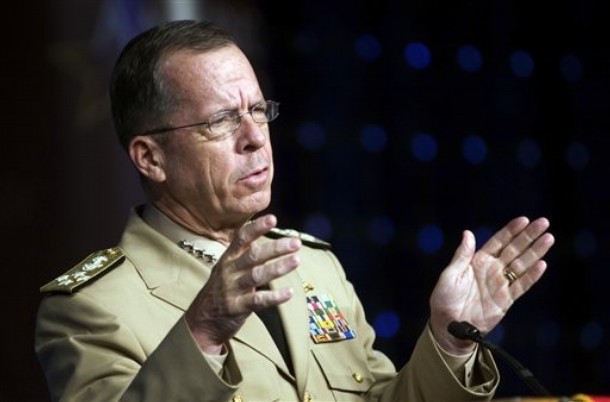
Admiral Michael Mullen, Chairman of the Joint Chiefs, has an interesting take on America's "strategic communications." He writes:


To put it simply, we need to worry a lot less about how to communicate our actions and much more about what our actions communicate. z

An excellent point. Policy and politics are what drives relations between states and people. America has a set of policies it has pursued in the Middle East. Those are, for the most part, deeply unpopular with most people in the Middle East. We know this. And obviously, we don't care (whether we should or not is a debate for another day). And yet, we engage in a very tedious, often expensive, kabuki dance pretending that we do, in fact, care.

It's a pointless exercise and one that Mullen is right to criticize. We're obviously not so concerned with our policies in the Middle East that we're going to, you know, change them. So why not just keep quiet and go about our business?

(AP Photos)

July 28, 2009

A Nuclear Arms Race in the Gulf? Not So Fast

umbrella.jpg

One of the legitimate worries about a nuclear Iran is that it will spark a regional arms race whereby Saudi Arabia and Egypt would seek their own nukes to deter Iran. This is in part the rationale behind Hillary Clinton's statement that the U.S. would put these nations and other allies in the gulf under the U.S. "defense umbrella" should Iran acquire a nuke.

Now Thomas Lipmann of the Middle East Institute is out with a report (pdf) on how Saudi Arabia might react to Iran's development of a nuclear weapon, and he pours some cold water on the idea that the Saudis would develop a weapon of their own (or import one "off the shelf" from Pakistan).

More broadly, aside from the fact that nuclear proliferation is a bad thing in and of itself, it's worth asking why we're particularly concerned with nuclear weapons in the hands of countries like Saudi Arabia and Egypt. Could it be that given the illegitimate nature of both governments and the anti-Americanism of both populations, we're worried about those weapons falling into the wrong hands? And shouldn't that give us pause before we rush in to defend these regimes from Iran?

--------
Photo credit: AP Photos

July 22, 2009

Remember 9/11

hillaryumbrella.jpg

So Hillary Clinton thinks the U.S. will have to extend its defense umbrella to the impoverished, democratic, liberal autocracies of the Middle East if Iran succeeds in obtaining a nuclear bomb. Which got me thinking:

Just to recap: On September 11, 2001, 15 Saudis, one Egyptian, one Lebanese and two citizens of the United Arab Emirates crashed hijacked airliners into American targets, murdering close to 3,000 people. All 19 were Sunni Muslims, followers of a puritanical strain of Islam developed in Saudi Arabia and Egypt. The ideology of jihad that lures recruits from the suburbs of London to the hinterlands of Waziristan is promulgated by Sunni Imams and financed overwhelmingly (if indirectly) by the Persian Gulf monarchies we're presently clamoring to reassure.

The two architects of 9/11 and the masterminds of the global jihadist movement - Osama bin Laden and Ayman al-Zawahiri - are Saudi and Egyptian, respectively. The captured "enemy combatants" in Guantanamo Bay hail from Saudi Arabia, Yemen, Pakistan, Afghanistan, Syria and even Australia. There is not a single Iranian among them. Nor have there been any Iranians implicated in the recent terrorist plots uncovered in Europe and the U.S.

In short, the global jihad that so directly threatens the American homeland and American interests around the world is not an outgrowth of Iranian-sponsored radicalism, but Saudi-sponsored Sunni fundamentalism. And one of the principle (though by no means exclusive) rallying cries behind this jihad is American support for the illiberal autocracies of the Gulf and, more broadly, American interference in the Middle East.

But maybe I'm missing something.

---
Photo credit: AP Photos

July 15, 2009

The Gums of War

Here's one for the conspiracy theory fans:

Hamas suspects that Israeli intelligence services are supplying its Gaza Strip stronghold with chewing gum that boosts the sex drive in order to "corrupt the young," an official has said.

I don't think the young need gum for this.

June 15, 2009

Israel's Attitude Toward Iran's Nuclear Weapons

Interesting polling reported by Haaretz:

Only one in five Israeli Jews believes a nuclear-armed Iran would try to destroy Israel and most see life continuing as normal should the Islamic Republic get the bomb, an opinion poll published on Sunday found.

The survey, commissioned by a Tel Aviv University think-tank, appeared to challenge the argument of successive Israeli governments that Iran must be denied the means to make atomic weapons lest it threaten Israel's existence.

Asked how a nuclear-armed Iran would affect their lives, 80 percent of respondents said they expected no change. Eleven percent said they would consider emigrating and 9 percent said they would consider relocating inside Israel.

June 4, 2009

Map of Middle Eastern Oil Flow

The Washington Institute has an interesting map (pdf) tracking where Middle Eastern oil goes.

Speaking of cool maps, don't forget these greatest hits:

* Map of Middle East empires through the ages.
* Map of the global Internet.
* Map of world alcohol consumption.
* Map of global proliferation.

And last but certainly not least, the interactive RCW World Map.

May 27, 2009

The French in the Gulf

Sarkozy.jpg


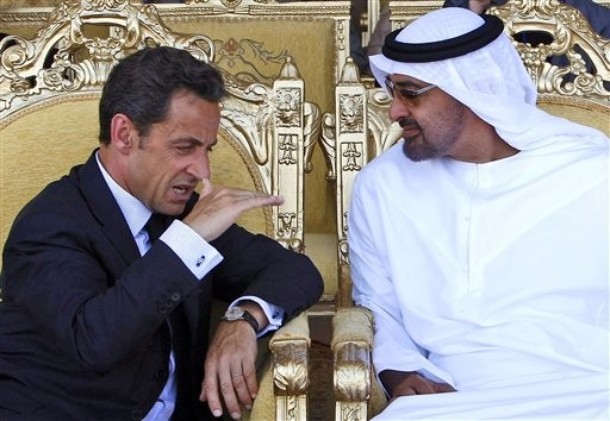
France has officially opened its first overseas military base in the Persian Gulf:

“The permanent French military installation in Abu Dhabi shows the responsibility that France, as a global power, agrees to assume with its closest partners, in a region that is a fault line for the whole world,” Mr. Sarkozy said in the text of a speech delivered in the Emirate.

The new military presence comprises a French facility at the Emirate’s Al Dhafra air base, which can accommodate Mirage and Rafale jets; a naval base of eight hectares, or about 20 acres, at the port of Mina Zayed, which can handle any French naval vessels except aircraft carriers, though these can berth in a nearby port; and an army camp at Zayed, specializing in urban combat training. There are also intelligence-gathering facilities.

Eventually, about 500 French military personnel will be permanently stationed at the sites.

This is a good step, in my view. If the Gulf needs policing, best to share the burden with allied nations.
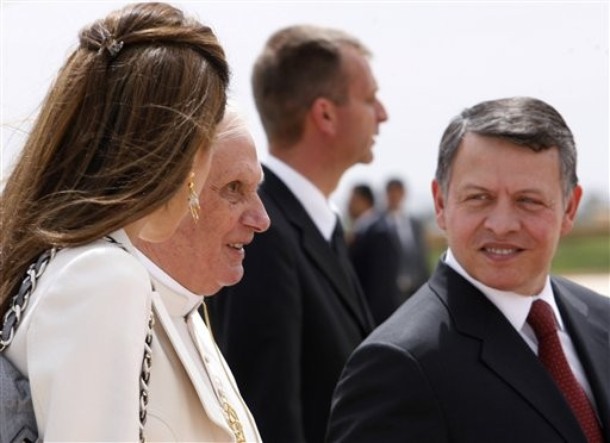
--
Photo credit: AP Photos

May 19, 2009

Defining Peace in Palestine

Jim Arkedis is frustrated with Israeli PM Benjamin Netanyahu:

How do you define peace? My hunch is that Israeli Prime Minister Netanyahu defines it quite differently from President Obama.

When multiple parties are trying to solve a problem, it’s perhaps common to talk about examining differing means to achieve the singular end. Netanyahu’s visit to the White House yesterday (transcript here) was a study in the exact opposite: using the same means to achieve quite different ends.
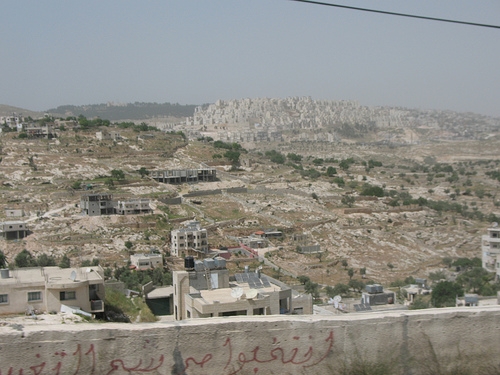
Netanyahu talks of peace; he says he doesn’t want to “govern the Palestinians”; he says he wants to “resume negotiations”. This is what he’s supposed to say, words that play well on cable news and convey a sense of “common goals” with the American administration. But they mask the fact that Netanyahu has very little intent - if any - of granting the Palestinians a state of their own.

[...]

A sovereign state is never absent any power. A sovereign Palestinian state can do as they please - raise an army, ally, trade, and and negotiate as they see fit. Which of these (or other) powers would Netanyahu like to withhold from the Palestinians? Netanyahu’s version of living “side by side in dignity” is far different from granting a sovereign state.

I'd prefer to give Bibi the benefit of the doubt, and hope he has enough sense to realize that his country faces an untenable demographic imbalance that will only weaken the Israeli state if left unaddressed.

On Arkedis' first point: I think this is an interesting question, and it makes sense to sort out what does or does not constitute a 'peace' in the region. I'm not sure how statehood = peace in this equation, as there are obviously failed and failing states all over the globe at war with external and internal enemies.
Israel, I think quite understandably, prefers to reach agreement on identity and understanding before agreeing on land. These identity concessions preceded territorial concessions in Israel's peace treaty with Egypt, for example.

Withdrawal to pre-1967 borders will be an expensive and sticky endeavor. Many of these people are Israeli citizens who filled out all of the appropriate paperwork and did everything their government seemingly asked of them. Relocating these settlers will require compensation packages, and could be political suicide in Jerusalem. Doing this before the Palestinians have a unified, coherent government, or before they even have any semblance of an economy, could prove disastrous.

Around 8,000 settlers were removed from Gaza in 2005; there are roughly 250,000 settlers currently in the West Bank. There is no Israeli precedent for such an operation, making Israeli hesitance to such a plan - minus certain security and stability guarantees - somewhat understandable.

May 11, 2009

A 57 State Solution

king%20abdullah.jpg
Jordan's King Abdullah says big things are afoot in the peace process business:

Jordan's King Abdullah has said the US is preparing an ambitious Middle East peace plan between Israel, the Palestinians, Syria and Lebanon in return for diplomatic recognition of Israel from the world's Muslim nations.

Abdullah told the Times that on offer for Israel was a "57-state solution" in which the entire Arab and Muslim world would recognise its existence.

"We are offering a third of the world to meet them with open arms," he said.

"The future is not the Jordan river or the Golan Heights or the Sinai, the future is Morocco in the Atlantic and Indonesia in the Pacific. That is the prize."

We'll see.

---
Photo credit: AP Photo

April 1, 2009

Iraqi History Repeats Itself

Before the Iraq war, liberals tended to argue against the invasion on the grounds that it would result in a quagmire, a humanitarian catastrophe and potentially a regional meltdown. Conservatives said the invasion would be a cakewalk and that we'd be greeted as liberators. Both turned out to be right.

Conservatives were right that deposing Saddam was, by historical standards, a swift operation with minimal casualties. Many Iraqis did welcome American troops as liberators. In the immediate aftermath of the invasion, conservatives claimed vindication.

But then liberals turned out to be correct about the longer-term prospects - U.S. forces became bogged down in an insurgency and sectarian civil war. Refugees poured from the country. Civilian deaths soared.

History appears to be repeating itself with respect to the surge. Many conservatives said additional forces were needed to quell the insurgency while liberals said it would be insufficient to forge the political accommodations necessary to ensure long-term peace and stability. And, lo and behold, violence is down and conservatives are proclaiming victory on the basis of several months of calm.

Now, the New York Times and Time are reporting that elements of al Qaeda in Iraq are infiltrating many of the Sunni militia groups the U.S. had managed to flip. Alissa Rubin in the Times reports that the hard core remnants of the Baath party are partnered up with al Qaeda and still represent a potentially potent source of violence as the U.S. begins to depart.

Does this mean that liberals will ultimately be vindicated again? I hope not. We will know more about the durability of the current calm in Iraq as the U.S. begins to withdraw. But it's not simply partisan peevishness that makes some people reluctant to declare victory.

March 27, 2009

If You Build It

Bethlehem.jpg
Haaretz reports that Israeli Prime Minister Benjamin Netanyahu wooed Avigdor Lieberman with a promise to expand a controversial settlement block:

A source close to the negotiations between the pair told Army Radio that the plan had been agreed upon even though it did not appear in the official document detailing the coalition deal between Yisrael Beiteinu and Netanyahu's Likud.

The plan is for the West Bank settlement of Ma'aleh Adumim to build 3000 new housing units on the territory, which stretches between it and Jerusalem, the source was quoted as saying.

Construction in the area is particularly sensitive because it would create contiguity between the settlement and the capital, which in turn would prevent Palestinian construction between East Jerusalem and Ramallah.

This would also make it difficult to reach agreement between Israel and the Palestinians on the question of permanent borders.

If this is indeed true, it would seem to be a good test-case for the Obama administration regarding its position on Israel. If the Netanyahu government does proceed with these settlements, which the U.S. opposes, will there be meaningful consequences? Should there be?

---
Photo via Hoyasmeg under a CC License.

March 3, 2009

Red Lines

I believe Steve Clemons is overreacting here:

Now Israel has gone one better and is issuing instructions to the United States on what America's red lines with Iran should be. The implication of course is that Israel will take matters into its own hands if these lines are crossed -- whether America does or not.

According to a piece that will appear in tomorrow's Haaretz, Barak Ravid writes that these red lines and instructions of Israel to the U.S. will be presented to Secretary of State Hillary Clinton:

1. Any dialogue must be both preceded by and accompanied by harsher sanctions against Iran, both within the framework of the UN Security Council and outside it. Otherwise, the talks are liable to be perceived by both Iran and the international community as acceptance of Iran's nuclear program.

2. Before the dialogue begins, the U.S. should formulate an action plan with Russia, China, France, Germany and Britain regarding what to do if the talks fail. Specifically, there must be an agreement that the talks' failure will prompt extremely harsh international sanctions on Iran.

3. A time limit must be set for the talks, to prevent Iran from merely buying time to complete its nuclear development. The talks should also be defined as a "one-time opportunity" for Tehran.

4. Timing is critical, and the U.S. should consider whether it makes sense to begin the talks before Iran's presidential election in June.

Iran's pretensions in the region are a problem in my view -- but Iran, which fears regime change efforts by the US and other of its neighbors, is responding to an "ecosystem" that many around the world have complicity in building.

Israel should be rebuffed by Hillary Clinton. She should listen to Israel's views on the region of course -- and consider proposals. But this kind of instruction manual on what red lines can be tolerated or not is pretty outrageous -- and borders on the type of irresponsibilty and consequences of what a Taiwanese declaration of independence from China would mean.

I find Clemons' argument a little bit odd here, especially since he's a rather vocal supporter of Flynt Leverett and the so-called Grand Bargain approach to settling US-Iranian differences.

I've expressed my own concerns with this approach, but for Clemons, it would seem to make sense to get the Israelis on board with discussions, as Iran's often deleterious role in the Mideast peace process would undoubtedly be a component in these negotiations. Indeed, the article in question even says as much - Israel's defense apparatus is establishing an open position on US-Iranian negotiations, yet they wish to insert their own specifications for said negotiations.

This is pretty much par for the course stuff here. If part of the discussion is going to be about creating a more positive role for the Iranians in the region, than the Israelis will need to be considered in those discussions. If the US - after reaching some sort of agreement with Tehran - hopes to measure the efficacy of their negotiations, it'll require assistance from Israel, Egypt and a few other neighboring countries to monitor and make sure that Iranian weapons aren't ending up in Gaza or elsewhere.

Israel clearly has a stake in these negotiations, as do the Gulf states surrounding Iran. The GCC outlines its stated desires for the region all the time, so why is it so egregious for Israel to do the same?

And these suggestions, by the way, are rather sensible! Maybe The United States could benefit from hearing the suggestions of a country that rebuffed the pressures to pursue their own version of a Grand Bargain; opting instead for direct, but narrow, negotiations with enemy states.

February 28, 2009

A Recipe For Staying

John Barry's analysis in Newsweek on President Obama's withdrawal announcement strikes me as a pitch-perfect summation of the conventional wisdom on the subject. Which is why statements like this are so troubling:

The December elections aren't a sure thing, which is why the continuing presence of U.S. troops is essential. A U.S. military presence is, and will be for some years to come, the ultimate guarantor that the factions within this new state have to settle their political differences by argument and compromise rather than firepower.

But that's simply not true. Violence exploded under the nose of nearly 130,000 U.S. troops during 2006. The most significant political development in Iraq was the decision by Sunni tribes to turn on al Qaeda in Iraq - a decision that predated the influx of "surge" forces. If Iraq's political factions decide to return to violence, then Iraq will become a very violent place again regardless of how many U.S. troops are in the country.

The current dynamic that Obama has put in place - and Barry lauds - surrenders the decision about the disposition of U.S. military forces to Iraq's various political actors. We are withdrawing but for the grace of their quiescence.

February 25, 2009

Elliott Abrams on the Mideast

I had the opportunity earlier today to sit in on a CFR-sponsored media call with former White House Deputy National Security Advisor Elliott Abrams. Currently a senior fellow with the Council, Abrams talked briefly on the elections in Israel, settlements, Iran's nuclear capabilities and Dennis Ross' position in the Obama White House.

Here are some of the takeaway points:

* Abrams expects the government forming process in Israel to go on for several weeks. Netanyahu understands the position he's in, and he has no desire to lead a Rightist government without Kadima and Labor.

* Don't expect the U.S. government to pressure Livni and Kadima. American administrations have been tied too often to political outcomes in the region, so it's unlikely that the Obama team will meddle in Israeli politics at this time.

* 2009 won't be the year for any kind of "final status" agreement between Israel and the Palestinians. Abrams believes Israeli efforts would go much further if they improved the daily lives of Palestinians in the West Bank; close check points, help build up institutions and help them further improve upon economic conditions.

* A Palestinian unity government is unlikely, although the idea of a "technocratic" government - that is, one excluding both Hamas and the Fatah elements - has been floated.

* Abrams dismisses the popular argument that settlements in the West Bank have grown uncontrollably, and he doesn't see them being the primary obstacle to negotiations.

* A strike on Iran remains unlikely, but he would prefer that the Obama administration keep the threat of a strike on the negotiating table for leverage.

* Abrams called the situation on Dennis Ross a little peculiar, and said that the lack of clarity in Ross' position was for a couple of reasons. One was the "collapsing" of "available turf" to figures like George Mitchell and Richard Holbrooke. The second problem may be the Obama administration's own uncertainty on a uniform Iran policy. Negotiating now, for instance, could empower current President Mahmoud Ahmadinejad. White House officials, according to Abrams, have remained ambiguous on Ross, stating that he will still likely travel and serve in some sort of "insider" envoy capacity.

MY THOUGHTS: Abrams, in my view, takes a rather nonchalant view of the impact Israeli settlements have had on the so-called peace process. The actual geography they consume, according to Abrams, hasn't expanded much in recent years. He does however note that there is a perceptual difference between settlers who commute to Tel Aviv and settlers with ideological motives for living beyond the wall. It's these settlers who are ganging up on, and in some cases even beating Palestinians. It's a bit myopic of Abrams to ignore the soft power implications of such incidents and demote it to a mere question of land taken and returned.

Abrams is equally casual when discussing a possible strike on Iran. By his estimate, an asymmetric response against American soldiers in the region would be unlikely because it would potentially place the Iranians in direct confrontation with the United States. But wouldn't an American air strike already constitute as a direct confrontation with the Americans? What would Tehran have to lose at this point? Isn't the point of asymmetric warfare, at least partly, to hide the handyman?

In Iran's case this is certainly true. It took President Clinton years to pin the Khobar Towers bombing on the Iranians, and even then the American response was unclear. The Iranians can hit the U.S. or Israel in several different countries, using any number of proxy organizations. You can count on this if Israel and/or Washington were to bomb Iran.

February 24, 2009

The Return of Rafsanjani

According to the Tehran based Parsine News Agency, Ayatollah Rafsanjani is preparing to embark next week on a seven day foreign trip. This is the longest foreign trip taken by any senior Iranian official. What is even more interesting is the destination: Iraq.

One of the main reasons behind the trip are the expected negotiations between Tehran and Washington. It is thought that Rafsanjani's trip will be used for consultations with Iran's allies there.

Whilst there, Rafsanjani is expected to outline Iran's position and to coordinate them with Iran's allies, whose influence is an important component in an array of bargaining chips which Tehran aims to present during its negotiations with Washington.

What is even more interesting is the fact that Supreme Leader Khamenei is dispatching Rafsanjani on this important mission, and not Ahmadinejad, nor any of his allies such as Saeed Jalili.

Can this be a sign that by excluding Ahmadinejad and his allies, Khamenei is already preparing Iran's foreign policy for his removal at the next elections? Or is this a sign that Khamenei is preparing to make Rafsanjani a major player in the all important US-Iran negotiations?

For now, the likeliest possibility is the latter. One should not forget that between all of Iran's senior politicians, when it comes to dealing with the US and the West, Rafsanjani is one of the most experienced. He was involved in the Iran-Contra affair. Furthermore, as president, he was responsible for approaching the West and getting Hezbollah to release American hostages. Last but not least, through his vast business empire, Rafsanjani and his sons have come to deal with Western officials and businessmen on numerous occasions, and thus have extensive contacts.

Such qualifications seem to make Rafsanjani an ideal contributor. Now that the “Shark” is too old to run for president, he is likely to embrace his new role with much enthusiasm.

Meir Javedanfar runs the Middle East Analyst Blog

February 13, 2009

Bar Refaeli: Draft Dodger, IDF Recruiter

Sports Illustrated's vaunted swimsuit issue came out this week. Typically, it's greeted with mild protest, something about exploitation of women who make about eight figures. But this year, SI could not have picked a more politically controversial figure to grace its cover.

090210-siswimwuit-hlrg-5a.widec.jpg
(In case your mailman swiped your copy)

The 2009 cover girl is Bar Refaeli, an Israeli Jewish supermodel also known for her courtship with Leonardo DiCaprio. But Refaeli got to where she is today by cunningly dodging the draft in Israel and now, serving as a recruiter for the IDF to atone for it.

Refaeli arranged a sham marriage to evade conscription (mandatory for almost everyone in Israel when one turns 18, male or female) and made no apologies for it:

I really wanted to serve in the IDF, but I don’t regret not enlisting, because it paid off big time. That’s just the way it is, celebrities have other needs. I hope my case has influenced the army.

Israel or Uganda, what difference does it make? It makes no difference to me. Why is it good to die for our country? What, isn’t it better to live in New York? Why should 18-year-old kids have to die? It’s dumb that people have to die so that I can live in Israel.


It seems capitalism caught up with Refaeli before the IDF did. After signing a $300,000 deal with the Fox clothing chain, she became a target of enraged Israeli parents who lost children serving their country. Under pressure, Fox made an arrangement so that Refaeli would "voluntarily" visit injured Israeli soldiers and encourage others to enlist.

Seems fair. You can live like Gilad Schalit or Bar Refaeli. Hey, celebrities have other needs.

February 12, 2009

Winning Iran, Losing Israel

David Sanger highlights a possible conundrum in the potential thaw in U.S.-Iranian relations:

But there is no question a new dynamic is afoot, one that seems likely to become even more complicated after today’s election in Israel is settled. If the government that emerges is even more determined to end the Iranian nuclear program by any means necessary, Mr. Obama may find himself trying to negotiate with one of America’s most determined adversaries while restraining one of its closest allies.

“I could draw you a scenario in which this new combination of players leads to the first real talks with Iran in three decades,” one of the key players on the issue for President Obama said last week, declining to speak on the record because the new administration has not even named its team, much less its strategy. “And I could draw you one in which the first big foreign crisis of the Obama presidency is a really nasty confrontation, either because the Israelis strike or because we won’t let them.”

This strikes me as a perfect rendering of Washington's famous admonition against "entangling alliances" - and it cuts both ways.

Ultimately, it would be easier for the U.S. to live with a nuclear Iran than it would be for Israel. The Iranian regime is a thorn in our side in Iraq and Afghanistan and a potential threat to the free transit of oil through the Persian Gulf (although one that I think is overblown), but there is no chance that the Iranians are going to destroy the fabric of American society. Hegemony in the Gulf looks a lot less imposing when oil is at $40 a barrel and the risks of a regional nuclear arms race - while real and frightening - could be mitigated. Hence, the downside risks of an American attack - as Robert Gates elucidated - are pretty steep compared to the payoff.

Not so with Israel. Even if you accept the argument that Iran is not going to launch a genocidal nuclear assault against the Jewish state, it's very easy to imagine them stepping up a campaign of conventional terrorism secured by a nuclear deterrent. So some kind of military action on the part of Israel would be warranted if all else fails.

Yet because of the nature of the relationship and because of the extensive presence of American power in the region, it's impossible for the U.S. and Israel to go their separate ways on this. It is difficult (perhaps impossible) for the Israelis to act on what they perceive as their best interests, and it is likewise impossible for the U.S. not to be seen as implicated in an Israeli decision.

Wouldn't both parties benefit from greater freedom of action?

February 10, 2009

We've Seen This Movie Before

President Ahmadinejad, no doubt scrambling to counter the emergence of Mohammad Khatami in the presidential race later this year, is now offering the United States a chance for ‘Dialogue With Respect’:

“The new U.S. administration has said that it wants change and it wants to hold talks with Iran,” Mr. Ahmadinejad said.

“It is clear that change should be fundamental, not tactical, and our people welcome real changes,” he said. “Our nation is ready to hold talks based on mutual respect and in a fair atmosphere.”

Mr. Ahmadinejad went on to say that Iran could cooperate with the United States to uproot terrorism in the region. “The Iranian nation is the biggest victim of terrorism,” he said.

But he referred to former President Bush as one of reasons for insecurity in the region and said, “Bush and his allies should be tried and punished.”

“If you really want to uproot terrorism, let’s cooperate to find the initiators of the recent wars in the Middle East and the Persian Gulf region, try them and punish them,” he said.

His comments seemed to move away from an earlier call by Mr. Ahmadinejad for the United States to apologize for actions in the relationship with Iran dating back 60 years.

If all of this sounds vaguely familiar, it's because we've seen this song and dance before - from Khatami. Coming off of his resounding electoral win in 1997, then President Khatami spoke rather boldly of a dialogue between Iran and the United States as a gradual means to thaw the two nations' icy relationship.

Khatami's message and platform were both ultimately undermined by hardliners in the Majlis, and despite efforts at rapprochement from the Clinton administration, relations remain just as icy today as ever. Following Khatami's overtures, Clinton eased visa restrictions, pushed for ILSA waivers so that trade between Europe and Iran could loosen up, and in 1999, even came within a hair of outright apologizing to the Iranians for the coup of '53.

This has been a routine hangup between the two nations. Notions of mutual respect and dialogue are great and all, but they need to be measurable. You have to be able to list out substantive gestures so that items may be traded off in tit-for-tat fashion. Without that, all you get is empty grandstanding and talk.

As I've said many times here in the past, both sides are to blame for the current diplomatic mess we're in. But of the two sides involved, the least serious of the two has almost always been the Iranians.

Forget ''dialogue." Show me action.

February 9, 2009

Can We "Helsinki" The Iranians?

Michael Leeden writes in the Wall Street Journal that any negotiations with Iran over its nuclear program must also include a demand that the government in Tehran dismantle itself:

The Obama administration wants to talk to the Iranians, and some reports suggest they have been talking for months. American negotiators should take every opportunity to call for respect for human rights -- on behalf of the labor leaders demanding that salaries be paid, women demanding equal rights, students asserting their freedom to criticize, and even dissident ayatollahs, such as Montazeri and Boroujedi, who have branded the regime as heretical. Secretary of State Hillary Clinton would seem an ideal champion for these victims.

Above all, the U.S. must not make the mistake of limiting demands to the nuclear program. A free Iran must be the objective.

Given how much success past negotiations have had on the more limited issue of Iran's nuclear program, it strikes me that this, more far-reaching (and from the Mullahs' point of view, suicidal) condition is eminently reasonable.

That said, I take Leeden to mean that the U.S. should try to embed human rights conditions within its negotiating framework to ultimately undermine the regime from within, much as the Helsinki Accords provided Eastern Europeans with the moral ammo necessary to take down the Soviet Union.

This isn't necessarily a bad idea in general, but as I understand it, Helsinki occurred after there was already a long history of negotiations between the Soviet Union and the West, and after work was underway on nuclear arms control (SALT). There is no formal dialogue yet between Iran and the U.S. so wouldn't a more incremental approach serve us better?

February 4, 2009

Winning the War, Losing the Battle

Responding to reports that the CIA has "decimated" al Qaeda in Pakistan via repeated air assaults, Blake Hounshell says that before we take any victory laps, "native Pakistani and Afghan militants appear to be getting stronger, not weaker, just as Pakistani analysts have been warning for months." He concludes that we're winning the battle but losing the war.

While I think caution is certainly warranted, I think this is ultimately the wrong way to look at it.

We are never going to win the "war" if the war is defined as making the native Pashtun tribes astride the Durand Line come to accept a foreign military presence on their soil - particularly one that frequently drops bombs on and around them. Insisting on that objective will ensure America's defeat.

However, destroying the transnational terrorist organization inside Afghanistan and Pakistan is a crucial objective. And one that, if the reports are to be believed, we are achieving.

That means that once we have thoroughly decimated al Qaeda we should leave. We should leave before the war morphs still further from a battle against people intent on coming here to kill Americans, to a war against people who are fighting because we are over there. As we saw in Iraq with the Anbar Awakening, the two are not the same.

It's surprising how often you'll hear commentators complaining that we "abandoned" Afghanistan in the 1980s, as if anyone had a remotely plausible plan for building an Afghan state in the wake of the Soviet retreat. We didn't then. We don't now.

February 2, 2009

All Apologies

Mahmoud Ahmadinejad wants the Obama administration to apologize for "crimes" committed against Iran as prelude to any serious dialogue between the two countries.

The American people, however, don't seem to be feeling much contrition, as Rasmussen Reports offers the following polling data:


Just 11% of U.S. voters think America should apologize to Iran for “crimes” against the Islamic country – one of the prerequisites demanded by the Iranian president before he will agree to meet with President Barack Obama.

The latest Rasmussen Reports national telephone survey found that 73% oppose such an apology.

Personally I don't think an apology is in the cards, for a variety of reasons. First among them is a practical point: the Clinton administration already apologized to Iran. Twice. It didn't exactly usher in a golden age of good relations.

Watch the Kurds

Juan Cole says the early take away from Iraq's election was that parties backing a strong central government, and a unified Iraqi state, won. If Cole is correct, and the centralizers won the day, what does this mean for Kurdish ambitions?

(I think the mere fact that both Cole and the Nation's Robert Dreyfuss have not waxed overly pessimistic about the elections says something encouraging about the state of affairs in Iraq as neither can be accused of being boosters of the effort.)

January 31, 2009

Can Iraq be South Korea?

Alissa Rubin writes in the New York Times about America's disengagement from Iraq on the heels of what looks like a very peaceful election:


Still, the American era in Iraq is nowhere near a final act. If this were an opera, it would be just past midway in the libretto. While both sides are disconnecting, neither can let go entirely.

The Iraqis need the Americans not just to dampen terrorist activities within the country but to protect them from rapacious neighbors. Syria and Iran have interfered here since the invasion, and while the Iraqis are often uncomfortable with how the American have reined in these powers, they are reluctant to stop them because they fear their neighbors more.

When American forces pursued insurgents over the Iraqi border into Syria in late October, it was an international incident. Iraq was embarrassed in front of the Arab world. Such incidents are likely to recur and could become much more fraught.

For the United States, Iraq remains a strategic prize close to the Middle East flash points of Israel, Lebanon and Syria as well as Iran and the oil-rich Persian Gulf countries. It is not by chance that the Central Intelligence Agency has its largest station in the world in Baghdad.

I think one of the major unanswered questions facing the U.S. in Iraq is whether the country is ultimately willing to tolerate a "South Korea" like encampment of U.S. forces for years and perhaps decades to come.

January 30, 2009

Is Iran Suicidal?

abomb.jpg
Michael Yon suggests that, despite 30 years of evidence to the contrary, what the Mullahs of Iran really want to do is commit mass suicide:

And when Iran has the capacity to launch rockets over to Europe or the United States, one can count on it happening. If they can manage to hatch nuclear weapons, we could see Israeli cities annihilated, leaving Israelis with little choice other than to respond with nuclear weapons, which could leave millions dead....If you want to see World War III unfold, just sit quietly about Iran. Iran could be the opening chapter of an apocalyptic era.

One should not discount the possibility that if Iran does acquire a nuclear weapon (and it's still an "if" at this point, as Stephen Walt explains here) the world will be dramatically less secure. We could very well have an arms race in the Gulf and a stepped up campaign of conventional terrorism by Hezbollah and Hamas against U.S., Israeli and Arab targets.

But the notion that Iran will, out of the blue, launch rockets at the U.S. or Europe or, worse, launch a nuclear-tipped rocket into Israel strains credulity.

As I've written earlier, Iran is widely suspected of having a chemical and biological weapons program for nearly 20 years. They have possessed the capacity to launch a mass casualty strike against Israel for a while now - and one that would be far harder to trace back to Iran than a nuclear bomb. And yet, they haven't launched one. Presumably because, contra Yon, they're not willing to sacrifice their entire country to strike a blow at Israel.

It is a mistake to treat Iran as an irrational state when they are in fact a belligerent one (which is bad enough).

Photo via Richard John Jones under a Creative Commons license.

January 28, 2009

The Myth of the Freedom Agenda

holding_hands_with_evil.jpeg

Fouad Ajami and Peter Wehner argue that President Bush boldly broke with precedent to align the U.S. with liberty in the Middle East. Here's Ajami in the Wall Street Journal:

Say what you will about the style -- and practice -- of the Bush years, the autocracies were on notice for the first five or six years of George W. Bush's presidency. America had toppled Taliban rule and the tyranny of Saddam Hussein; it had frightened the Libyan ruler that a similar fate lay in store for him. It was not sweet persuasion that drove Syria out of Lebanon in 2005. That dominion of plunder and terror was given up under duress.

And Wehner:

President Obama may be eager to return us to the days of Jimmy Carter, when we spoke about human rights on the one hand and bowed before autocrats and despots on the other; or the days of Bill Clinton, with Madeleine Albright frantically chasing after Yasir Arafat. Such an approach may appear to be less burdensome than advocating freedom, but it comes at a high cost - to the Arab world and, eventually, to our own.

To briefly review the record: the regimes directly responsible for fomenting radical Islamism - Pakistan and Saudi Arabia - were not "put on notice" by the Bush Administration after 9/11. They were embraced. The illiberal/autocratic/monarchical states of Egypt, Jordan, Kuwait, and the UAE weren't exactly given a cold shoulder either. Qaddafi's Libya was embraced not after political reforms but after a change in WMD policy. He still runs his country along the same despotic, cult-of-personality lines as before. And do we really have to say anything about Pakistan and General Musharraf?

So long as the Middle East produces oil in sufficient quantity to impact global markets (i.e. for as long as industrial economies rely on the stuff) and so long as the U.S. places the security of Israel among its key regional interests, the U.S. is not going to be on the side of liberty in the Middle East. Instead, it will be on the side of stability of the regimes that support the U.S. and Israel (however quietly) regardless of how they comport themselves internally. Indeed, as the containment of Iran becomes ever-more pressing, we will pay even less attention to the internal repressions of the various Sunni autocracies provided they align their foreign policies with ours. Why else did the Bush administration offer $20 billion in arms to Saudi Arabia and other Gulf states? For their human rights records?

This is Middle Eastern geo-politics 101 and the notion that President Bush broke from it simply won't wash. Yet at some point during the Bush years, certain segments of the conservative establishment decided they wanted to bathe America's machtpolitic in the region in a miasma of do-gooderism and hokum. President Bush did indeed break from past U.S. practice by invading and militarily occupying a Middle Eastern country, but liberty had (and continues to have) very little to do with that particular endeavor, even if Iraq does consolidate its democratic gains into an enduring liberal government.

Stepping back, it's clear that what the George Bush presidency accomplished was not so much the advance of liberty in the Middle East but to shine a glaring spot-light on U.S. hypocrisy. This hypocrisy isn't a bad thing: the U.S. needs to cooperate with autocracies. But seeking that cooperation while proclaiming loudly that we are freedom's standard bearer in the Middle East is, at a minimum, counter productive.

There will always be a disconnect between a nation's professed values and its conduct abroad. The ideal is to minimize that disconnect where possible, and when not, to stop drawing attention to it with lavish rhetoric and hollow promises.

January 26, 2009

Iran, America & the Great Game

In the course of an interesting post on U.S.-Iran dialoging, Hillary Mann Leverett writes:

It will take not only sustained effort but also clear strategic vision for the Obama Administration to repair the damage to U.S. interests done by the Bush Administration's mishandling of relations with Iran.

Defining that clear strategic vision will require a willingness to question the all-too-prevalent image of Iran as an ideologically-driven and categorical supporter of an undifferentiated array of terrorist groups--from Hizballah to HAMAS to Al Qaida. Fundamentally, the Islamic Republic is a state that acts on the basis of what it perceives as its national interests.

This is all well and good, but what are Iran's national interests? Mann doesn't say, which is unfortunate because ultimately this is the whole enchilada.

We could very well find ourselves in a situation where the basic interests of the U.S. and Iran are simply never going align. The U.S. position on the Gulf is clear: no single power (save the U.S.) can dominate the region. Iran, we're told, similarly seeks to be the single power that dominates the Gulf.

No matter how conciliatory the Obama administration is toward Iran, this baseline divergence of interests is going to rear its head. Unless, of course, the U.S. or Iran renounces their hegemonic ambitions in the region. But what are the odds of that?

January 21, 2009

Learning the Wrong Lessons from Iraq

Thomas Ricks touts the brilliance of this article by Col. McMaster (the "brain behind Petraeus") in World Affairs Journal. It is essentially an extended attack on the technological hubris of American defense planners and well worth a read.

However, McMasters offers up this as a conclusion:


In the last paragraphs of his book, A Better War, Lewis Sorley relates a story from December 1975, about seven months after the fall of Saigon. New Secretary of Defense Donald Rumsfeld was away from the Pentagon. Workmen took advantage of the opportunity to refurbish the secretary’s office. In doing so, they removed a large relief map of Southeast Asia that had hung on the wall during much of the Vietnam War. Perhaps if the map were still hanging there when Secretary Rumsfeld returned to the Pentagon more than thirty years later, it might have inspired a healthy dose of skepticism about the latest orthodoxy predicting how U.S. technological advantages would make war fast, efficient, and decisive. That skepticism, in turn, might have generated a deeper understanding of the nature of the conflicts in which the United States and its partners remain engaged today.

I think McMaster's point about the dangerously seductive quality of defense technology, while valid, is being taken altogether too far. If we collectively decide that the problem with the Iraq war was that Donald Rumsfeld and company were insufficiently mindful of population security and overly optimistic about high-tech warfare, then we haven't actually learned anything. It never ceases to amaze me that critics of the invasion - such as the New York Times editorial board - nevertheless insist that we build an Army to wage future Iraq-style wars.

But why? If the war was a strategic mistake, as people such as Brent Scowcroft argued at the time, then the flaws that it exposed in our defense establishment are actually not flaws of force structure or doctrine, etc. but flaws in the strategic decision making of our civilian policy makers. The lesson we should learn from Iraq is not that we need to do a better job "next time" but that there should be no next time. I mean, what's easier: replacing strategically inept bureaucrats with astute ones, or reorienting the entire defense establishment on the theory that future blunders are simply inevitable?

Moreover there is nothing about the "nature of the threat that we face" that necessitates building a constabulary Army capable of pacifying unruly natives. Indeed, the nature of the threat of Islamic terrorism warns specifically against such a move, on the grounds that it would vindicate bin Laden's propaganda, tie down a disproportionate amount of U.S. combat power, and drain the economy of needed resources. The surest way to keep the threat of Islamic terrorism alive deep into the 21st century is to garrison ever larger contingents of U.S. troops on Muslim soil.

Yet the very people one would expect to acknowledge that fact are the same people insisting that we build an Army to do just that. It's very frustrating.

One further quibble. McMasters writes that "the way the United States went to war influenced everything that followed. A fixation on American technological superiority and an associated neglect of the human, psychological and political dimensions of war doomed one effort and very nearly the other."

The problem with "how we went to war" wasn't the undue focus on technological superiority, it was the legitimacy of the enterprise. A war without an obvious and compelling casus belli - a war viewed globally as grossly illegitimate - was going to have a much higher hurdle associated with the end state than one (like Afghanistan) where U.S. action was widely viewed as urgent and compelling. We simply couldn't leave behind an Iraq that was demonstrably worse than we found it.

That, again, suggests that the answer isn't to pay more attention to the human aspects of waging war, but to the legitimacy of initiating military conflict. I would argue that the more legitimacy the U.S. has in taking military action against a state, the less will be expected of us by way of nation building.

January 16, 2009

American Attitudes Toward Gaza Fighting

Pew Research finds remarkable similarity between American attitudes towards Israel's 2006 war in Lebanon and the current fighting in Gaza.

As in 2006, most Americans express a fairly non-interventionist sentiment regarding the fighting:

There is little support for a greater U.S. role in resolving the Gaza crisis. Just 17% believe the United States should be more involved than it is currently, 27% say the United States should be less involved, and nearly half (48%) say it is about as involved as it should be. Again, these opinions closely replicate views of U.S. involvement in the war in Lebanon in 2006.

Pew also found a partisan break-out, with Republicans identifying themselves more closely with government activism:

A majority of Republicans (56%) say that the United States should publicly support Israel, compared with 37% of independents and 34% of Democrats. The plurality view among independents and Democrats, shared by roughly four-in-ten in each group (42% of independents, 40% of Democrats) is that the United States should say or do nothing in this conflict.

There are smaller partisan differences in views about the U.S. role in resolving the conflict. Fewer than one-in-five Democrats (18%), independents (17%) and Republicans (15%) say that the United States should be more involved than it is now in resolving the conflict. However, more Democrats (31%) and independents (26%) than Republicans (20%) say the United States should be less involved than it is now.

Chart after the jump:

Continue reading "American Attitudes Toward Gaza Fighting" »

January 15, 2009

How to Judge (And Not to Judge) the Iraq War

US%20Military.jpg
I hope to have a lot more to say on this shortly, but suffice it to say that I think this is the wrong way to judge the merits of the invasion of Iraq:

To understand properly what the Bush administration’s legacy will be with regard to Iraq, one must comprehend the conditions Saddam Hussein subjected Iraq’s citizenry to prior to the country’s liberation in 2003. Moreover, one must compare those past conditions to the current condition of the newly forming democracy in the Middle East.

I would suggest that those questions are, in fact, irrelevant (not in an absolute moral sense, of course, but to the question at hand). Bush's legacy hinges on the question of whether the invasion improved American security at an acceptable cost. If President Bush had stood before the American people in 2002 and suggested we invade Iraq to improve the lives of Iraqis, there would be no war.

The war's remaining supporters have to answer a simple question, without recourse to absurd hypotheticals about what Saddam Hussein "might" have done (because any leader anywhere might do something crazy): has the invasion made us safer?

U.S. Army Staff Sgt. Nick Crosby helps an Iraqi woman cross a water-filled street during a cordon and search mission in Al Risalah, Iraq, May 8, 2007. Crosby is assigned to Alpha Company, 2nd Battalion, 3rd Infantry Regiment. DoD photo by Staff Sgt. Bennie Corbett, U.S. Army

January 14, 2009

"Death to Obama"

The President-elect has truly arrived.

January 13, 2009

History of U.S./Iranian Nuclear Talks

385760123_0147021219.jpg

Much of the popular debate over Iran's nuclear program seems to neglect an important historical fact: Iran's nuclear ambitions predate the Islamic revolution. For all the apocalyptic talk that attends their nuclear pursuits, the Iranians were at work on nuclear technology while they were allied with the United States. This shouldn't necessarily make us breath any easier, but it should make us a bit more skeptical of assertions that Iran has been developing a doomsday weapon with the explicit purpose of eradicating Israel.

Either way, the National Security Archive has just published some recently declassified material on U.S./Iranian nuclear talks from the 1970s that makes for interesting reading.

Photo via Kebria used under a Creative Commons license.

January 12, 2009

Iran's Hamas Support: Reality or Rhetoric?

As the conflict between Israel and Hamas continues, some analysts are addressing a valid concern, and that is whether Iran's relationship with Hamas is based on rhetoric or reality.

In his most recent Newsweek editorial, Fareez Zakaria stated that "Hamas is not Iran's pawn."

He goes on to quote the much respected Iran scholar Professor Vali Nasr as saying "Iran does not have tangible assets in Gaza or the Palestinian territories…It's a misunderstanding to think of its strength in that way. Its real influence in the Arab world comes from its soft power, the reputation it has built as the defender of the great Arab cause of Palestine."

If we look closely at the situation however we see that this analysis misses some extremely important evidence, which shows that Iran does indeed have tangible assets in Gaza, which includes the influence it wields over the Hamas leadership. And the evidence is not from Washington or Jerusalem. It is from the most powerful man in Iran, Supreme Leader Ayatollah Khamenei.

In his 2003 Grand Bargain offer to the United States, Khamenei specifically talked about ceasing support for Hamas as part of the bargain he was offering to the U.S. This was confirmed by Flynt Leverett, the former Middle East director of the U.S. National Security Council who received the offer from the Iranians in 2003. In an interview with PBS he specifically said:

"On the Iranian side, they acknowledged that they would need to be prepared to deal with our concerns about their WMD activities, their links to terrorist groups like Hezbollah and Hamas, and they said in there that they would be prepared to eliminate military support for these organizations and to work to turn Hezbollah, for example, into a purely political and social organization in Lebanon."

Khamenei did not offer his influence over Shiites in Pakistan, because he has very little or none. The fact that he included support for Hamas as part of the bargain shows that he has something at his disposal. When the words "military support" are included as part of the bargain, it clearly shows that there is something more than Iran's image in Gaza or merely its reputation as "defender of Palestine."

Nor would that be enough for Hamas. It would be illogical for Hamas - an Arab Sunni organization with political as well as military aspirations - to side with increasingly isolated Persian Shiite Iran, solely for the sake of living under its reputation and no financial or military support in return. The losses in relations to rewards would make such a decision completely irrational and counter productive. Hamas' leaders may be good at sending their soldiers on suicide missions. It is very unlikely that they would do that with their own political aspirations.

The current conflict in Gaza does not only serve Israel's interests and goals to reduce Iran's influence. It also serves U/S. interests, which is why Washington is not intervening in a forceful manner in the current conflict. Washington wants Jerusalem to weaken Hamas, not because of the deep love which Joe Biden professed for Israel during his vice presidential debate with Sarah Palin. Its because the Americans know that sooner or later they will have to sit at the negotiation table with Ayatollah Khamenei. If Israel can reduce the value of Hamas, then the Iranians will have one less bargaining chip at their disposal, and that will not be so bad for Obama. Especially since - much like Iran - the U.S. attained its goal through proxy; which, in this case, happens to be Israel.

Meir Javedanfar runs the Middle East Analyst blog.

January 7, 2009

Iraq War Timeline

Mother Jones has put together an interesting (and somewhat biased) "lie by lie" interactive timeline of the Iraq War. Check it out.

Who Are Israel's Friends?

Stephen Walt picks up a line you hear frequently in the debate over Israeli military action – that those who oppose the action are actually Israel’s true friends, because stopping a friend from making a mistake is better than reflex cheer leading (which our political leaders engage in unrepentantly).

It’s a valid sentiment to be sure, but it strikes me as essentially conceding the argument to Israel’s reflex boosters. The question isn’t fundamentally “what is or is not good for Israel” because Walt – like me – is not a citizen of Israel. Nor are members of Congress. The proper question is, is their course of action good for American interests. That – and not questions of relative degrees of fidelity to Israel – needs to the be locus of the debate.

Indeed, framing your criticism as coming from a friend of Israel, already concedes the important premise that the proper lens to view these events are Israel’s – not America’s. It makes the important assumption that American and Israeli interests (and enemies) are identical.

Better Realists, Please

Not content to hurt my brain the first time around, Stephen Walt presents us with another "thought experiment":

But if you don't like that "thought experiment," here's another, offered by philosophy professor Joseph Levine at University of Massachusetts: what if Hamas was hiding out among the civilian population of Tel Aviv, and attacking Israel from within? Would the IDF be using massive force to eradicate them? Unless you think that Palestinian and Israeli civilian lives are not equal, what justifies the current policy?

Israel is hardly unique in placing a higher value on its own citizens' lives than it places on the lives of others, and we should not forget that U.S. forces have caused plenty of civilian casualties in places like Iraq and Afghanistan. "The strong do what they can, and the weak suffer what they must." But that doesn't make it right, and there are good reasons to question whether it will even be effective in this instance.

There's so much that's very wrong with this hypothetical scenario. First, as a well regarded realist, you'd think Walt could appreciate the fact that the Israeli government - or any government, for that matter - is first and foremost responsible for the well-being of its own citizenry. If Hamas were embedded within an Israeli city it would of course change the retaliatory options. The IDF is charged with the security of Israelis, not the citizens of the world. Walt admits as much.

I'm inclined to agree with Ross Douthat on this, who rightly argues for a new kind of realism in the realm of foreign policy. What often passes as such in contemporary forums is nothing more than misplaced and misguided contrarianism.

January 6, 2009

Israel's 'Right' to Defend Herself

Israel's "right to defend herself" has taken the lives of over 500 Palestinians and up to 120 (roughly over 20 percent) of those are children. Home-made rockets from Hamas have killed 20 Israelis in eight years and approximately four Israelis have been killed during the current conflict. Robert Fisk sums it up nicely in his piece for the Independent:

We've got so used to the carnage of the Middle East that we don't care any more – providing we don't offend the Israelis. It's not clear how many of the Gaza dead are civilians, but the response of the Bush administration, not to mention the pusillanimous reaction of Gordon Brown, reaffirm for Arabs what they have known for decades: however they struggle against their antagonists, the West will take Israel's side. As usual, the bloodbath was the fault of the Arabs – who, as we all know, only understand force. ... And we demand security for Israel – rightly – but overlook this massive and utterly disproportionate slaughter by Israel. It was Madeleine Albright who once said that Israel was "under siege" – as if Palestinian tanks were in the streets of Tel Aviv.

The fact remains that Israel has carried out its response to Hamas rocket fire with unbridled brutality and it is the Gazans who bear the brunt of this response. Those same Gazans who have been suffering under Israel's economic and aid embargo over the past year. It is safe to say that the Palestinians in Gaza have known nothing but misery over the past year and the so-called "international community" has remained impotent in the face of suffering. During the past few days, according to a Palestinian legislator on CNN's Rick Sanchez, 17 entire families have been wiped out in Gaza.

Continue reading "Israel's 'Right' to Defend Herself" »

January 5, 2009

Stephen Walt Confuses Me

Stephen Walt - sporting his new blog over at Foreign Policy - asks his readers to consider the following:

Imagine that Egypt, Jordan, and Syria had won the Six Day War, leading to a massive exodus of Jews from the territory of Israel. Imagine that the victorious Arab states had eventually decided to permit the Palestinians to establish a state of their own on the territory of the former Jewish state. (That's unlikely, of course, but this is a thought experiment). Imagine that a million or so Jews had ended up as stateless refugees confined to that narrow enclave known as the Gaza Strip. Then imagine that a group of hardline Orthodox Jews took over control of that territory and organized a resistance movement. They also steadfastly refused to recognize the new Palestinian state, arguing that its creation was illegal and that their expulsion from Israel was unjust. Imagine that they obtained backing from sympathizers around the world and that they began to smuggle weapons into the territory. Then imagine that they started firing at Palestinian towns and villages and refused to stop despite continued reprisals and civilian casualties.

Here's the question: would the United States be denouncing those Jews in Gaza as "terrorists" and encouraging the Palestinian state to use overwhelming force against them?

Here's another: would the United States have even allowed such a situation to arise and persist in the first place?

This hypothetical strikes me as a bit odd and simplistic. First off, we needn't start with an unrealistic mental experiment in 1967, since there had always been a group of "hardline Orthodox Jews" living in the Gaza Strip. This small, ancient group - which preceded the first Aliyah (major wave of Jewish immigration) by many, many years - didn't form large militias and kill innocent civilians (this is, of course, a cursory glance at the history, but we're already dealing with a rather unlikely and sweeping hypothetical anyway).

There's too much historical oversight to even begin considering Walt's questions. If the Palestinians were handed all of the land then they'd have been in violation of multiple UN edicts and mandates. Why would the international community even let it get to the point where a group of "hardline Orthodox Jews" were conducting acts of terror against the ruling state? Wouldn't said state be made illegitimate by the partition of 1947? Doesn't the UN seek a return to the '67 borders, thus acknowledging a sovereign Israeli state?

I'm at a loss, maybe Professor Walt can help me out here ...

UPDATE: Even Ezra Klein (kind of) agrees!

Israel's Ticking Clock

I suspect Max Boot and Juan Cole don't agree on much, but reading their respective takes on Israel's war in Gaza does bring you to the same conclusion: Israel is in a deep bind, both in the short term but especially over the long term.

There has been talk lately that Israel was doing the incoming Obama administration a "favor" by taking Hamas out of the equation, thereby paving the road to a renewed peace process. It could be the exact opposite. By taking military action now, Israel may be demonstrating how untenable its long term prospects are and affirming in the minds of her enemies that time is on their side (see Cole on the demographic details).

Israel cannot extirpate every Hamas member in Gaza without, as Boot writes, resorting to tactics that it and the world would rightly find abhorrent. But they can cause enough damage to ensure that the residents of Gaza are even less amenable to a negotiated settlement than before - a settlement that everyone recognizes is the ultimate path toward security for Israel and statehood for the Palestinians. Gaza - the security problem for Israel and the governance problem for the 1.5 million Palestinians that reside there - does not go away when (or if) the IDF withdraws.

It's the Administration, Stupid

Matthew Yglesias considers a post-Hamas Gaza:

something you need to look at here is the risk that weakening Hamas will only lead to the rise of more extreme groups. The high level of power that Hamas had achieved as of last week was, after all, precisely the result of a deliberate Israeli campaign to weaken Fatah. The hope was that this would bring some more accommodationist Palestinians to the fore, but instead the reverse happened. And now that Israel is going about trying the same thing with Hamas, one needs to worry that Hamas will be displaced by Salafist groups who think Hamas is too weak-kneed.

This is a fair concern, but I find this Salafist argument to be highly unlikely. Hamas, after all, was put in power for very pragmatic purposes. The idea that Gazans elected Hamas to power as one component in the reinstatement of a creeping 'global caliphate' has been grossly exaggerated. At the end of the day, it's a question of administration and honesty. Hamas is a vast network of politicians, militants and social servants. They were ultimately given power because Fatah had proven too corrupt and too divisive to govern (which, incidentally, they are).

This is what differentiates Hamas from Palestinian Islamic Jihad (PIJ), and PIJ from radical Salafists hellbent on strict Koranic doctrine. They all share a level of extremism, but Hamas is the only one of the three that has presented a governing platform that actually enjoyed popular support.

As we've learned in Afghanistan, Iraq, and even Somalia, it's stability and steady governance that often make Islamic radicals an attractive option to their usually more corrupt and autocratic alternatives. But radical groups without legitimate means to administer such government are doomed to failure (as we saw in the horrid form of "governance" Al-Qaeda implemented in Ramadi).

Israel has held to pretty limited goals since initiating the Gaza assault, and I've seen no indication that it expects to completely scrub Hamas from the territory. Clearly, there will be leaders and militants left behind to pick up the pieces and rebuild. I highly doubt, however, that Gaza will be left to an even further fringe.

For a more thoughtful analysis on the political implications of supplanting Hamas, please check out our friend and RCW contributor Meir Javedanfar.

January 3, 2009

Gaza Conjecture

Matt Yglesias on the Gaza ground invasion:

Whatever you think of the merits of this step, I think we can take it as implicit acknowledgment by the IDF that the past week’s worth of air strikes were, though deadly to the people killed or maimed by high explosive and flying rubble, basically useless and undertaken without real strategy.

Except that the ground invasion was in fact approved last week.

January 2, 2009

Iran's Gaza Strategy

The recent flare up in Gaza is causing more anger in the Iranian government. There have been several demonstrations, including the burning down of the Benetton shop in Tehran and recruitment of suicide bombers. The Iranian government has also embarked on setting up a tribunal to try Israeli officials and has called for more stringent boycotting of companies who do business with Israel.

These demonstrations and calls for help are directed by Iran's Supreme Leader, Ayatollah Khamenei. He is ultimately in charge of Iran's policy, and as such acts would not be under taken without his permission. There are a number of reasons behind his current strategy:

1. To pressure Western governments to put an end to Hamas's destruction. Khamenei is trying to say to them that we don't have a border with Israel, but our anger should be taken into consideration, because we are a new power in the region and our opinion should be taken seriously.

2. There is also the question of Egypt and Saudi Arabia. Iran sees both of them as trying to muscle in on Gaza, an area which Tehran considers as its sole sphere of influence. To Tehran's anger, the Egyptians are not budging. Khamenei is hoping that through public gestures such as setting up courts to try Israeli officials, the Egyptian public would feel encouraged, and thus would place pressure on Mubarak to help Hamas.

3. Iran is an Islamic Republic. Compared to all of the chants we used to shout as children (Death to America, USSR, Saddam,) the only one Iran is still holding true to is 'Death to Israel.' Without it, the regime would lose the last revolutionary DNA which holds its identity together.

4. Iran is trying to be the leader of the Islamic world. Khamenei believes that the majority of the Islamic world is angry about what is happening in Gaza, and he is right. He sees the Muslim government's silence as being against the wishes of locals. By saying what he believes Muslims feel world wide, he is trying to be their representative. There is of course no free lunch. In return his hope is that they will get their government to back Iran's nuclear program.

The one person who has the most to gain is President Ahmadinejad. He has just submitted a controversial bill to the Majlis to cut state subsidies. This will make him even more unpopular. The Gaza affair is a gift to him, which he will use to distract the Iranian people from the economic pain which is about to hit them.

Meir Javedanfar also blogs at The Middle East Analyst.

December 31, 2008

The 2008 Numbers in Iraq & Afghanistan

AP has the details:


According to a tally by The Associated Press, at least 314 U.S. soldiers died in Iraq in 2008, down from 904 in the previous year. In all, at least 4,221 U.S. soldiers have died in Iraq since the war began in 2003.

For Iraqis, the plunge was also marked: During 2008, at least 7,496 Iraqis died in war-related violence according to an AP count, including 6,068 civilians and 1,428 security personnel, down 60 percent from 2007...

...In Afghanistan, 151 U.S. soldiers died in 2008, compared with 111 in the previous year, according to an AP tally. The count recorded 1,160 civilians killed in insurgency-related violence, up from 875.

At least 625 U.S. soldiers have died because of the war in Afghanistan since the fighting began in 2001.

The AP count is based on figures from Afghan, U.S. and NATO officials.

The combined total of at least 465 U.S. deaths in both Iraq and Afghanistan for 2008 is the lowest combined total for both wars since 2003, when the U.S. invaded Iraq.

Here's hoping for further improvements in 2009.

Public Opinion on Gaza War

Rasmussen Reports has some numbers:


Forty-four percent (44%) say Israel should have taken military action against the Palestinians, but 41% say it should have tried to find a diplomatic solution to the problems there, according to a new Rasmussen Reports national telephone survey. Fifteen percent (15%) are undecided.

Fifty-five percent (55%) of adults, however, believe the Palestinians are to blame for the current situation in Gaza, while 13% point the finger at the Israelis. Nearly one-third (32%) aren’t sure.

The American public seems much more closely divided on this issue than I would have thought.

December 30, 2008

Who Is Hamas Targeting?

The end of the Gaza ceasefire brought an intensification of rocket fire by Hamas, and subsequent air strikes by Israel. A ground incursion into Gaza over the next few days is more than likely as Israel has already stated that this is an "all-out war." The Bush administration is urging Hamas to cease its rocket attacks if it wants peace, while France and the EU have condemned Israel's disproportionate use of force. And where are the Arab leaders? Same place as usual--no man's land.

But at the end of the day, what does Hamas really want to get out of this? I agree with those who believe that Israel's response has been heavy-handed as usual; with what seems to be a disregard for basic human rights. I can also understand why people feel the same way about Hamas firing rockets into Israeli territory. Hamas knows to expect severe retaliation from Israel, but at the same time Israel's reaction seemed premeditated.

Hamas' actions are legitimized by its supporters because of Israel's perceived inhumane treatment of the Palestinian people. Israel's supporters legitimize their behavior because of Hamas' and other Palestinian factions' desperate attacks on Israel's civilian population.

Continue reading "Who Is Hamas Targeting?" »

December 29, 2008

Does Israel Serve America's Interests?

507838145_3440d7cf1a.jpg

In the course of an interesting back and forth between Matthew Yglesias and Jonathan Zasloff (starting here, then here, and here), Zasloff writes:

I would take the position that it is important enough for the United States to support liberal democratic Zionism even if it hurts us in other aspects of foreign policy, and they would argue that throwing Israel over the side might be regrettable, but it would be worth it. We could even have an honest debate about whether Israel's existence supports concrete, non-ideological American interests.
Leaving aside the loaded formulation, Zasloff is certainly raising the right question. But this begs another - what is the proper level of support? Right now, Israel is the largest recipient of U.S. foreign aid, with the fewest restrictions on its use. Do the "concrete, non-ideological" interests served by our relationship (to say nothing of the costs, which Zasloff himself alludes to) justify such unprecedented generosity? Does Israel's strategic importance to the U.S. trump that of, say, India?

One serious, sustained attempt to construct an argument that America's patronage of Israel serves her non-ideological interests is Martin Kramer's. The short version: it helps us sustain a "Pax Americana" over the Middle East.

Of course, if you don't think sustaining a "Pax Americana" over the Middle East is the proper use of American power, this is rather thin beer.

Photo by Hoyasmeg used under a Creative Commons license.