Main

February 6, 2012

Poll: If Israel Attacks Iran, 48% of Americans Want U.S. to Help

That's the headline from the latest Rasmussen poll:

The latest Rasmussen Reports national telephone survey of Likely U.S. Voters shows that 83% believe it is at least somewhat likely Iran will develop a nuclear weapon in the near future, including 50% who say that is Very Likely to happen. Only 11% say it’s Not Very or Not At All Likely Iran will develop a nuclear weapon soon.

Israel & Iran

Daniel Larison thinks I'm wrong to guess that Israel will launch an attack against Iran's nuclear facilities. I think his response conflates a question of efficacy (is it a good idea?) and probability (would they do it?). I tend to agree that a strike is probably on balance a bad idea for many of the reasons highlighted in Larison's post.

But I also think that when push comes to shove Israel is willing to tolerate the risks associated with a strike much more than they are willing to tolerate the risks (as they see them) of not attacking.

Update: Noah Millman offers his take:

I think it’s safe to say that there is, essentially, a near-universal consensus in Israel that Iran is developing nuclear weapons, that such a development would be profoundly threatening, and that Iran is unlikely to change course in response to diplomatic pressure. That doesn’t mean the Israeli consensus is right, but that is the overwhelming consensus. That being the case, the political risks to trying and failing are smaller than they might otherwise appear.

February 3, 2012

Three Reasons Why Israel Will Attack Iran

israeliranattack.jpg

According to a number of published sources, Israel is nearing a moment of truth with respect to military action against Iran's nuclear facilities. No one knows, of course, what action Israel will take (neither, I suspect, do most of Israel's leadership, which appears to be openly debating the proposition as well).

The wisdom of such a move aside, I may as well proffer up my own wild guess as to whether Israel will take military action against Iran's nuclear program. As the title of the post suggests, I'm guessing they will. My reasoning:

1. They've done it before: Both Syria and Iraq have seen how jealously Israel guards its regional nuclear monopoly.

2. They don't believe President Obama will do it: Despite copious threats from U.S. officials, a number of reports indicate that Israel's prime minister does not believe that the U.S. will take military action against Iran.

3. The Arab Spring has made the regional environment worse: Israel's security used to rest on the acquiescence of regional dictators like Egypt's Hosni Mubarak. As the "Arab Spring" produces governments more representative of their public's attitudes, the regional environment is going to get more hostile to Israel. And while Israel can't do much about those developments, they can take a stab at addressing Iran's nuclear program via a military attack - at least in the short term.

As I said, just a guess really, but I'd be more surprised if 2012 (or 2013) passes without an Israeli attack than if one were to occur. What do you think?

(AP Photo)

January 23, 2012

Is Iran an Existential Threat?

Bruce Reidel claims that Iran is not an existential threat to Israel or America:

Iran, in contrast, has no major power providing it with financial help. Its arms relationships with Russia and China have been severed by Security Council Resolution 1929. Its only military ally is Syria, not exactly a powerhouse. And Syria is now in the midst of a civil war, its army dissolving. If President Bashar Assad falls, Iran is the biggest loser in the “Arab Spring.” Hezbollah will be the second largest loser. The deputy secretary general of Hezbollah and one of its founders, Sheikh Naim Qassem, wrote in 2007 that Syria is “the cornerstone” of Hezbollah’s survival in the region. While Syria and Hezbollah have their differences, the relationship is a “necessity” for Hezbollah.

January 13, 2012

What Would the British Do?

To be honest, I don't know how huge a deal the revelations are in this Foreign Policy piece (and needless to say, these are allegations, not established facts). The short version - agents from Israel's intelligence service are alleged to have disguised themselves as American CIA agents to hire terrorists to kill people inside Iran.

I think a good way to frame this is to ask: would Britain's intelligence service do something like this? If the answer is yes, then Israel's actions are in keeping with how international spy craft and subversion work among allies. If the answer is no, then the argument that Israel is key strategic asset for the United States becomes a lot less credible.

Update: Larison suggests this isn't the right way to frame the news:

I suppose that agents of any government that wanted to employ foreign terrorists to blow up civilians in another country might be inclined to pretend to be working for a different government, since they wouldn’t want to implicate their government in such crimes, but that doesn’t tell us very much. It’s not just the false flag nature of the operation that is bothersome. If the report is true, this operation involved a terrorist group that blows up civilians in mosques, and the perception that the U.S. was behind the group that did these things invited attacks on Americans. In addition to encouraging atrocities against civilians, the operation made it seem as if the U.S. were complicit in those atrocities.
My point was simply that it's difficult to tell how far over the line Israel's alleged actions were if similar stunts had been pulled by other allied intelligence services in the past. In their own right, these allegations are obviously troubling.

Update II: Evelyn Gordon says there's reason to be skeptical of the charges:

Israel termed the report “absolute nonsense,” explaining that had it been true, then-Mossad chief Meir Dagan would have been declared persona non grata in Washington rather than being a welcome visitor. Nor is that idle speculation: Those same two presidents forced the ouster of three other senior Israeli defense officials over other issues; why would they have given Dagan a pass?

Just last year, Uzi Arad was forced to resign as chairman of Israel’s National Security Council due to Washington’s anger over leaked information from U.S.-Israeli talks on nuclear issues. And in 2005, two senior Defense Ministry officials – director general Amos Yaron and chief of security Yehiel Horev – were forced out due to Washington’s anger over Israel’s agreement to upgrade Harpy drones for China, following a year in which the Pentagon boycotted Yaron entirely. Thus, had Dagan committed an offense as egregious as Perry claimed, it’s inconceivable that he would have continued for years to be not only a welcome guest, but even one of Washington’s preferred Israeli interlocutors.

December 28, 2011

An Israeli Strike on Sudan?

Perhaps:

Officials in Israel are refusing to confirm claims by the Sudanese press that Israeli planes recently attacked weapons convoys crossing the desert in Sudan. The attacks reportedly took place between Dec. 15 and 20. Media in Sudan say Israeli jets pulverized at least two convoys headed toward Egypt. The convoys were reportedly transporting arms destined for the Gaza strip.

Not everyone in Israel is so tight-lipped. A former Israeli Air Force head told the army radio station Galeï Tsahal on Monday that “whoever carried out [the attack] should be congratulated.” He added: “Our information was accurate as were our strikes.”

Sudanese press claims the attacks killed at least five contraband traffickers. The first convoy involved six trucks packed with weapons. The second attack, which occurred Dec. 18 and involved just a single vehicle, may have been a mistake. The first raid took place while Salva Kiir, the president of the newly created Southern Sudan, was on an “historic” 24-hour visit to Jerusalem.


December 14, 2011

Anti-Semitism and the Iran War Debate

I have read many an article making a reasoned case for why the U.S. should, as a last resort, take military action against Iran's nuclear facilities. In all those pieces I admit I have never encountered the argument that David Mamet makes here. To wit: that a failure to take military action against Iran is akin to practicing "human sacrifice" with the state of Israel (and, by the way, is anti-Semitic):

In abandonment of the state of Israel, the West reverts to pagan sacrifice, once again, making a burnt offering not of that which one possesses, but of that which is another's. As Realpolitik, the Liberal West's anti-Semitism can be understood as like Chamberlain's offering of Czechoslovakia to Hitler, a sop thrown to terrorism. On the level of conscience, it is a renewal of the debate on human sacrifice.

This is not the first time the idea has been raised that it is anti-Semitic to warn against the dangers of a war against Iran. Mitchell Bard asserted that there were "disturbing anti-Semitic undertones" in Defense Secretary Leon Panetta's observations that an attack on Iran would have negative consequences.

November 14, 2011

If Israel Bombed Iran...

Jackson Diehl makes the case that an Iranian nuclear weapon poses a different kind of threat to Israel than it does to the United States, then suggests that an Israeli strike is being constrained by concern about America's reaction:

The most interesting calculations of all concern U.S-Israeli relations. The rupture of the U.S.-Israeli alliance arguably would be as large a blow to Israel’s security as Iran completing a bomb — and a unilateral attack might just risk that. The Pentagon might suspend what is now close cooperation; in Congress and in public opinion, Israel might be blamed for any U.S. casualties in Iranian counterattacks. I’ve always supposed that there will be no Israeli attack without a green light from Washington.

Israel, however, has a history of ignoring U.S. opinion at moments like this.

I doubt very much that any of the above would play out like this. Imagine a scenario wherein Israel bombs a number of Iranian nuclear sites and Iran retaliates by blowing up an American civilian airliner. Would the response in the United States be to blame Israel or blame Iran?

I suspect that, to the extent an Israeli attack on Iran does anger Washington, such anger would be localized in the executive branch and wouldn't have any real ripple effects beyond that, even if Iran did respond to such an attack with strikes of its own against American targets.

November 8, 2011

The Sarko-Obama Flap

Oops:

French President Nicolas Sarkozy branded Israeli Prime Minister Benjamin Netanyahu "a liar" in a private conversation with President Barack Obama that was accidentally broadcast to journalists during last week's G20 summit in Cannes.

"I cannot bear Netanyahu, he's a liar," Sarkozy told Obama, unaware that the microphones in their meeting room had been switched on, enabling reporters in a separate location to listen in to a simultaneous translation.

"You're fed up with him, but I have to deal with him even more often than you," Obama replied, according to the French interpreter.

The technical gaffe is likely to cause great embarrassment to all three leaders as they look to work together to intensify international pressure on Iran over its nuclear ambitions.

Suffice it to say this is likely going to be seized on by the administration's critics as proof of Obama's insufficient fidelity to the state of Israel, but it shouldn't be: Netanyahu is not the state of Israel. He's a politician. No one is under any obligation to like him. I suspect Netanyahu would have a less-than-flattering appraisal of President Obama were the mic on the other lapel.

November 3, 2011

What Would Bombing Iran Accomplish?

The Daily Telegraph's reporting on the IAEA's Iranian nuclear report is worth a read. In it, we learn that the Stuxnet Virus which earlier had wreaked havoc on Iran's nuclear facilities, only succeeded in slowing down their nuclear quest:

Hopes that the Stuxnet computer virus attack by Western powers on Iran’s nuclear technology would prove crippling have faded. The virus succeeded in crippling a number of Iranian centrifuges but analysts now think the effects have worn off and production of highly enriched uranium has accelerated again.

The IAEA will provide indications that enriched uranium production is moving from the long-established Natanz facility to Fordow, an underground plant that is regarded by Iran as bomb-proof near the holy city of Qom. Iran has produced more than 70kg of 20 per cent enriched uranium and would easily increase its output if production shifts to the mountain plant. Scientists say that 20 per cent enriched uranium can be refined to the 90 per cent weapons grade level without design changes in the production lines.

I think this underscores the basic problem with any military option against Iranian facilities short of a ground invasion - it will only delay Tehran, not derail them.

October 20, 2011

Should the U.S. Trim Aid to Israel?

Via Andrew Sullivan, Walter Pincus makes the case:

Nine days ago, the Israeli cabinet reacted to months of demonstrations against the high cost of living there and agreed to raise taxes on corporations and people with high incomes ($130,000 a year). It also approved cutting more than $850 million, or about 5 percent, from its roughly $16 billion defense budget in each of the next two years.

If Israel can reduce its defense spending because of its domestic economic problems, shouldn’t the United States — which must cut military costs because of its major budget deficit — consider reducing its aid to Israel?...

I think this is the wrong way to look at this question. The overall costs of U.S. aid to Israel is, in dollar terms, tiny relative to the very large budget holes that eventually need to be filled if the U.S. is to balance its books. And some of that money circulates back into the U.S. economy (specifically to the most needy of recipients, U.S. arms manufacturers), so it's not really having a material impact on the American balance sheet in the same way that entitlements, tax policy or big-ticket nation building missions do.

You can make the case that Israel no longer deserves to be the largest recipient of U.S. aid due to strategic reasons - either Israel's declining strategic value to the U.S. or the elevation of another country's value relative to Israel - but that's not a case Pincus makes.

October 18, 2011

Did Israel Pay Too High a Price?

giladshalit.jpg

The release of Gilad Shalit has been greeted with mixed emotions in Israel and for good reason. To secure his release, Israel has agreed to free close to 1,000 members of Hamas and other Palestinian militant groups, although many of them will be sent into exile. A 1,000:1 ratio would seem to encourage further hostage taking, which has led some Israeli analysts to speculate that Netanyahu agreed to the deal so that he would have a free hand to strike at Iran, since Hamas could not retaliate by murdering Shalit.

(AP Photo)

October 4, 2011

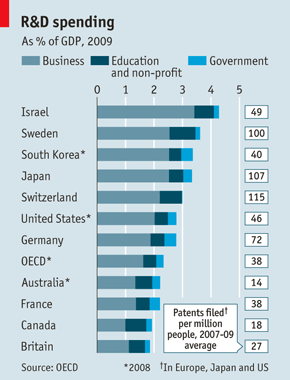
Which Countries Invest the Most in R&D?

rd%20spend.gif

According to new figures from the OECD, Israel leads the way in investing in research and development, while Switzerland earns the most patents-per-percentage of GDP spent on research efforts.

September 21, 2011

The Strategic Case for Israel

Rick Perry did indeed give a more strategic argument on behalf of Israel during his speech yesterday, saying "Israel’s security is critical to America’s security."

Daniel Larison says it ain't so:

If we went through all of the allies deemed “critical” to our security, we would find that a large number of them could be fairly described as “a very small country that simply isn’t very important.” Indeed, many of our allies have become our allies because they hope to enhance their security at U.S. expense, and oddly enough many Americans have convinced themselves that it is imperative that we cooperate. These alliances and patron-client relationships often make sense for the other party, but very few of them make sense for the U.S. any longer.
I think the key phrase here is "any longer." It made sense to stack up a series of dependencies in the Cold War, when there was a reasonable chance of an all-out war with the Soviet Union. In today's world, the odds of a major great power war have diminished and where there is a heightened chance, it's in Asia, not the Middle East. Of course, the Middle East would be important in such an instance, since its natural resources would fuel the belligerents, but that doesn't mean a Cold War-era template should do the heavy lifting of protecting America's interests.

See also Andrew Exum.

September 20, 2011

This Just In: The U.S. Was Never an Honest Broker

I don't mean to make light of the gravity of the Palestinian UN-gambit, but some of the coverage and analysis strikes me as just a bit too breathless. Take this:

Fran Townsend, a CNN contributor on national security issues, said the potential U.N. vote "puts the United States in a very awkward position."

"It is a veto that will most certainly undermine U.S. credibility as an honest broker in the peace process," at least in the eyes of the Arab world, Townsend said.

Really? The Arab world thinks the United States is an honest broker? Since when?

The frenzy of diplomatic activity around the Palestinian statehood bid is also a reminder of what an immensely unproductive endeavor it is for the United States to insert itself into the middle of an intractable standoff.

September 19, 2011

Turkish Hackers Hit Wrong Target

Oops:


Turkish hackers attacked dozens of Israeli websites over the weekend, only to find out that the sites belonged to Palestinians.

The confusion was caused due to the fact that the Palestinian sites, which have a .ps web suffix, use Israeli web servers.

September 16, 2011

Powell Doctrine and the Gaza Flotilla

Michael Rubin thinks the Israeli response to the Mavi Marmara flotilla incident, where nine civilians were killed attempting to break the blockade of Gaza, is reminiscent of the Powell Doctrine:

Now let’s consider the Powell Doctrine through the same lens. Part of the Powell Doctrine declares, “When a nation is engaging in war, every resource and tool should be used to achieve decisive force against the enemy, minimizing U.S. casualties and ending the conflict quickly by forcing the weaker force to capitulate.”

Certainly, the Powell Doctrine formed the basis of the decisive and overwhelming victory against Saddam Hussein in 1991. The idea that when engaging militarily, once should calibrate military power to the weakest combatant is one of the most curious—and stupid—conclusions of armchair international law advocates and human rights experts. It’s time to put the proportionality arguments where they belong—in the dustbin of bad ideas.

I'm not sure how this is analogous. First, this is a very narrow reading of the Powell Doctrine, whose tenets Powell sketched out in Foreign Affairs as a series of questions:

Is a vital national security interest threatened? Do we have a clear, attainable objective? Have the risks and costs been fully and frankly analysed? Have all other non-violent policy means been exhausted? Is there a plausible exit strategy? Have the consequences been fully considered? Is the action supported by the American people? Does the US have broad international support?

The Powell Doctrine was also concerned with the use of military force against a rival military in a war - not against civilian protesters engaged in a reckless protest/provocation. If Rubin thinks calibrating military power to the weakest combatant is a stupid argument, he's entitled to that contention (and in the case of an outright war I would not disagree). But by invoking the Powell Doctrine here he's asserting that the participants in the blockade running were combatants engaged in a war. That is, I think, an untenable assertion. By that logic, Israel would have been justified in sinking the entire ship outright and then bombing the Turkish port from which it sailed, or even striking at the offices of the flotilla organizers in Turkey.

The Powell Doctrine is a serviceable idea when the U.S. engages another military, but I can't imagine its authors would endorse the concept for use against civilian protesters - no matter how belligerent said protesters were. (And, for the record, I think the Israeli commandos that stormed the ship were justified in defending themselves against club-wielding protesters.)

September 8, 2011

Should the U.S. Dump Turkey Over Israel?

Bloomberg argues that the U.S. should reassess its alliance with Turkey. Here's the logic:

For Turkey the impact of a rupture with Israel may be less direct. Both the Obama and Bush administrations have made constructive relations with Turkey a priority. The U.S. strongly supported Turkey’s accession to the European Union and lobbied EU members on its behalf. Turkey’s positive image in the U.S., including in Congress, is largely based on its reputation as a democratic, tolerant nation that is a force for moderation in the Middle East. This image has shielded Turkey from criticism for its 37-year occupation of northern Cyprus and its denial of the Armenian genocide. But Turkey’s diplomatic flap with Israel could lead Americans and others to take a second look at where Erdogan is headed. Such a policy review is overdue.

I can understand why Israel would want to take a hard look at relations with Turkey - after all, the diplomatic flap involves them, not the United States. But the question is - how much should Turkey's behavior toward Israel count in the U.S.-Turkey relationship?

September 7, 2011

Learning from the Netanyahu Dust-Up

netanyahu%20aid.jpg

Reading Jeffrey Goldberg's piece on the Obama administration's frustrations with Israeli Prime Minister Benjamin Netanyahu, I'm reminded of the opening of Leslie Gelb's book Power Rules. Gelb starts the book by detailing how, even at the height of its Cold War power and influence, the U.S. couldn't push around tiny Cuba.

And I think that's the lesson to take from this. It's not that the Netanyahu government is particularly intransigent but that there is a limit to U.S. power. As Drezner observes, the U.S. carries a lot of water for Israel and yet can't get its cooperation. Conversely, the U.S. sanctions and seeks to isolate Iran, and still can't get its cooperation. The U.S. often has a very hard time getting anyone to toe the line.

(AP Photo)

August 22, 2011

The Middle East, Democracy and Israel

israel%20egypt.jpg

James Traub defends his enthusiasm for the Arab Spring against the pessimists:

There are, I suppose, two reasons to dump cold water on the Arab Spring. The first is that you think the enthusiasm is overblown, and you enjoying taunting the romantic spirit that sees reflections of America and its democratic values in every popular uprising across the globe. Go ahead and jeer; I would only note that even the grumpy and skeptical John Quincy Adams, who famously abjured crusades to destroy foreign "monsters," added that the American people are "well-wishers" to those everywhere who seek freedom.

The second reason is that you believe that while it may be good for them, it's bad for us. But in the long term, that cannot be so. Illegitimate government in the Arab world has been a disaster for the neighborhood, and for the world. Legitimate government provides the only narrative powerful enough to prevail over the appeal of extremism. We have every reason to be well-wishers.

The trouble with this formula is that, from Washington's perspective, the "us" is not simply the United States but Israel as well. After all, a key American interest in the Middle East has been creating a benign security environment for the state of Israel. Reconciling that interest with an interest in the flourishing of Middle East democracy is going to be difficult indeed. Take the recent news from the Egypt-Israeli border:

"Egyptian blood is not cheap and the government will not accept that Egyptian blood gets shed for nothing," state news agency MENA quoted a cabinet statement as saying.

Egypt's Information Minister Osama Heikal told state TV: "The assurance that Egypt is committed to the peace treaty with Israel ... should be reciprocated by an equivalent commitment and an adjustment of Israeli statements and behavior regarding various issues between both countries."

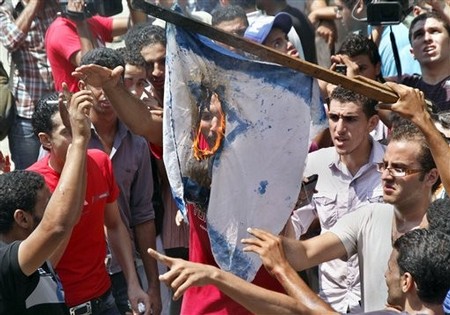
As crowds of Egyptians protested angrily at the Israeli embassy in Cairo through Saturday night, burning Israeli flags in scenes that would never be allowed during the Mubarak era, both countries were trying to defuse the diplomatic crisis.

But restraint was in short supply among the contenders to become Egypt's future leader in elections due by year-end.

"Israel must realize that the day when Egypt's sons are killed without an appropriate and strong reaction are over," wrote presidential hopeful Amr Moussa -- former secretary-general of the Arab League -- on his website.

Another contender for the leadership, Hamdeen Sabahy, hailed a protester who scrambled atop the Israel embassy in Cairo in the early hours of Saturday to remove and burn the Israeli flag as a "public hero."

The Obama administration is obviously going to work hard to paper over this immediate dispute and wield whatever leverage it has left in Egypt to kept the country at peace with Israel. It's also clear that, at least initially, the goal will be for the U.S. to have its cake (a secure Israel) and eat it too (a democratizing Middle East). But what if those two goals become, at least for a time, mutually exclusive?

(AP Photo)

May 26, 2011

Bibi Boosted

According to a new poll, Israeli Prime Minister Benjamin Netanyahu has seen a surge of support following his trip to the United States:

The poll, conducted by the Dialog organization, under the supervision of Prof. Camil Fuchs of the Tel Aviv University Statistics Department, showed that 47 percent of the Israeli public believes the U.S. trip was a success, while only 10 percent viewed it as a failure.

Nearly half of the public felt "pride" at seeing Netanyahu address the joint session of Congress on Tuesday, while only 5 percent deemed it a "missed opportunity." The rest expressed no opinion, while 20 percent of those questioned said they hadn't watched the speech.

Israelis also don't believe that U.S.-Israel relations have been harmed by the visit despite its attendant problems, tensions and disputes.

Some 27 percent of those polled said they believe relations between the two countries will actually improve as a result of the visit, while only 13 percent thought relations would deteriorate. Nearly half of those questioned don't think there will be any change.

From the poll, it emerged that Netanyahu's trip not only put a brake on the drop in his popularity ratings, but actually reversed the trend.

May 24, 2011

What Are Defensible Borders?

israel%20borders.jpg

Paul Pillar parses the dust-up between President Obama and Prime Minister Netanyahu:

The United States has an interest in assuring the security of Israel. In his AIPAC speech, President Obama properly referred to this aspect of U.S.-Israeli relations as “ironclad.” But the United States has no positive interest in either party to the Israeli-Palestinian conflict acquiring title to land not because it is needed for security but instead for historical or religious reasons, or simply to acquire living space. The only U.S. interest is the negative one of being associated in the minds of much of the rest of the world with the Israeli occupation. So Netanyahu couched his denunciation of the 1967 boundary in security terms, saying (again ignoring what President Obama said about land swaps) that the boundary was “indefensible.”

Pillar goes on to insist that these borders are indeed defensible:

Let's see—even if we ignore, as Netanyahu has, what would be needed for the Palestinians' security—how has that boundary figured into Israeli security in the past? In the one war that was fought across the boundary—the one in 1967—the Israeli Defense Forces conquered the entire West Bank in less than a week (while they also were taking the Golan Heights away from Syria and the Sinai away from Egypt). Since that war, the differential between Israel's military capability and that of its Arab neighbors has become if anything even greater (even just at the conventional level, without considering Israel's acquisition of nuclear weapons beginning in the 1970s). Who would threaten Israel across that 1967 border? A demilitarized Palestinian “state”? Some rusty post-Cold War army from some other Arab country that somehow made it into the West Bank? For many years the biggest threat to Israelis' security has come not across a border beyond which Israel lacked control but instead from angry Palestinians in land that Israel does control. The idea of the 1967 border as indefensible is—given military realities in the Middle East—itself indefensible.

I think the concern today is not Arab armies but rocket fire from groups like Hamas and Hezbollah. The closer these groups can get to Israel, the easier it will be to accurately guide rockets at civilian targets. Unfortunately, the ranges these rockets can travel will improve over time, no matter where a final borderline is drawn, so what constitutes a "defensible" border is something of a moving target.

(AP Photo)

May 23, 2011

Who Has the Time?

israel%20time.jpg

To understand why this latest batch of peace process enthusiasm is likely to end in disappointment, it's important to examine two competing and contradictory tensions at the heart of the effort. Both involve time.

The first is a concern, raised by White House adviser Dennis Ross, that rushing into an agreement when neither party is ready could make things worse. The argument is that peace requires trust-building and efforts to prepare the respective publics for a deal. Suffice it to say the Palestinians haven't quite pushed a narrative of compromise (witness the reaction to the leak of the Palestinian Papers and the rush of PA officials to disavow their contents). That goes double now that Hamas is a part of the Palestinian government.

The counter argument is that absent a deal the Palestinians will be further disadvantaged in future negotiations. In making the case for the "1967 lines" as a starting point for negotiations, President Obama conceded during his AIPAC speech that those lines would of course be adjusted to accommodate "facts on the ground." And what are those facts? Continued Israeli settlements. Indeed, successive Israeli administrations have pursued a settlement policy precisely to create "facts on the ground" that would ensure more and more land would fall under Israel's ostensible control.

The longer negotiations and a lack of an accord continues, the more "facts on the ground" may change, and in Israel's favor.

This circle is really impossible to square, which explains why all U.S. efforts to resolve this crisis have consistently ended in failure. This time will likely be no different.

(AP Photo)

May 20, 2011

There's a Test?

Evidently Republican Gov. Mitch Daniels failed the "Israel test." Here are his offending remarks:

What is going on in the Arab world these days has little or nothing to do with Israel or Palestine, it has to do with tyrannical regimes which have really stifled prospects for their people who are now restless for a better life. . . . I don’t think right now it pays very much of a dividend to try to cut the Gordian Knot of Israel and Palestine.

How Did Israel/Palestine Become Central?

If we learned one thing from the "Arab Spring" thus far it's that outrage over a lack of domestic political freedoms and economic opportunity - not Israel or the West Bank - has the power to bring large numbers into the "Arab street" and even topple regimes. And yet, in the aftermath of President Obama's speech on the Arab Spring, all anyone is talking about is Israel and the Palestinians.

This frame of reference is ultimately counter-productive. Whatever else one says about the Israeli-Palestinian conflict, it's only a strategic liability for the U.S. insofar as Washington insists on subsidizing the combatants and trying - in a ham-handed and incompetent fashion - to solve it.

May 18, 2011

Non-Violent Resistance

So now we have an opportunity to see how Americans will react. We've asked the Palestinians to lay down their arms. We've told them their lack of a state is their own fault; if only they would embrace non-violence, a reasonable and unprejudiced world would see the merit of their claims. Over the weekend, tens of thousands of them did just that, and it seems likely to continue. If crowds of tens of thousands of non-violent Palestinian protestors continue to march, and if Israel continues to shoot at them, what will we do? Will we make good on our rhetoric, and press Israel to give them their state? - Matt Steinglass

One of the problems with inserting ourselves into this issue is that somehow the onus is on America - not the parties to the conflict - to resolve this issue. What if, following Steinglass' advice, the U.S. "presses" Israel to give the Palestinians a state - and Israel refuses? Or the Palestinians make demands that Israel can't accept?

April 28, 2011

Which Country Does America Want to Defend the Most?

According to a new poll from Rasmussen, Canada tops the list of countries that Americans say they would defend militarily, followed by Great Britain, Australia, Israel and ... the Bahamas.

At the bottom of the list: Bulgaria, Albania, North Korea and Iran. Interesting to note: Albania is in NATO and ranks below Russia as a country Americans want to defend.

April 27, 2011

The Last 30 Years

Last July, in a debate with another realist making the case for Israel-as-a-liability (Chas W. Freeman), I argued that "what we really need in the Middle East are more 'Israels' -- not more Jewish states, of course, but more strong, reliable, democratic, pro-American allies.... The absence of those sorts of allies is precisely what has gotten us into such deep trouble over the past 30 years." - Robert Satloff

It's not clear whether the "30 years" here refers to the beginning of the Carter Doctrine or the Nixon/Kissinger tilt toward Israel during the Yom Kippur War. I'm assuming it can't be the latter, as that would undermine Satloff's argument. As for the Carter Doctrine, I think a more straightforward explanation for America's "deep trouble" in the Middle East over the past 30 years is that it has tried to micromanage countries and cultures that it doesn't understand and that ultimately resent outside interference.

Sure, it would be nice to have pro-American, free market democracies in the region but we can satisfy ourselves with the next best thing: less meddling.

April 25, 2011

Do Realists Threaten Israel?

Israel's Ambassador to the U.S. Michael Oren takes after realists in a piece in Foreign Policy. His basic position is that realists don't appreciate that Israel is in fact the ultimate American ally and a net-plus for America's security and economy.

The one odd element to the piece is that it's devoted to debunking arguments that are essentially irrelevant. Sure, there are realist analysts and academics who do not believe Israel is as strategically valuable to the U.S. today as it was during the Cold War - but so what? One could understand the impetus to Oren's piece if the realist argument were actually gaining traction and threatening ties between the two countries in some material way - but as far as I can tell, it is not.

Indeed, the actual debate over Israel in the United States has nothing to do with first order questions (whether we should be allies) or second order questions (whether Israel is a net-plus for the U.S. strategic ledger) but third order questions about whether we should pressure Israel to make concessions to the Palestinians to further peace negotiations - and that debate was settled a year ago.

March 27, 2011

A Ground Level View from the IDF

At Coffee and Markets this week, Brad Jackson had a fascinating interview with Captain Neta Gerri of the Israeli Defense Force, who talked about the possibility of a new Gaza war, the conflict with the Palestinians and more.

Gerri is a doctor stationed within a combat unit, focused on treating Palestinians, and she has several interesting things to say. The interview starts around the 13 minute mark and is worth a listen.

February 21, 2011

Will Israel Strike Iran?

israel%20iran.jpg

Not likely, according to David Gordon and Cliff Kupchan:

References to Iran as an existential threat or to the country's nuclear program as raising the specter of another Holocaust have been typical among Israeli officials. But on a recent research trip to Israel, we heard surprisingly little anxiety. No official spoke about a threshold beyond which Iran's program would be unstoppable -- a deadline that in the past was always one year off. And elites across the political spectrum for now favor sanctions and covert action, rather than military force, to deter Iran. As a result, the chance of Israeli strikes in the next eighteen months is very low.

This makes sense - given all the regional unrest, why would Israel want to change the story? And while Iran's regime may not fall in the short term, it's definitely on shaky ground.

(AP Photo)

February 3, 2011

Foreign Policy Credentials

RCP's Scott Conroy reports on where GOP presidential hopefuls are burnishing their foreign policy credentials:

For the prospective field of Republican presidential candidates, a trip to Israel is quickly becoming a near prerequisite as top-tier contenders with little direct foreign policy experience look to brandish their credentials on the international stage before the demands of a grueling campaign keep them tied up domestically.

It seems to me that if you were a candidate hoping to get up to speed on the country's foreign policy challenges, countries like Afghanistan, Iraq and China would top the list.

January 31, 2011

Will Egypt Split the U.S. & Israel?

egypt%20israel.jpg

Walter Russell Mead argues that the current tumult in Egypt may bring the U.S. and Israel closer together:

If a radical regime emerges in Egypt that repudiates the peace treaty, supports violence by Hamas or in other ways threatens Israel’s security, the United States is unlikely to leave Israel twisting in the wind.

At the same time, a vocal American minority — ranging from the “truther” far left through parts of the respectable foreign policy establishment and extending out into the Buchananite far right — asserts that strong U.S. support for Israel endangers our vital interests throughout the Middle East....

The Egyptian upheaval could be an important turning point in world history. The consolidation of a reasonably moderate and democratic government in the cultural capital of the Arab world could put the region, and the world, on the road to a more durable peace. A radical victory could drive a wedge not only between Israel and the Arab world, but deepen the divide between the West and the whole Islamic world.

The problem with this analysis is that something other than a "radical" regime could nonetheless embrace policies that Israel would characterize as harming its security. Egypt plays a critical role in enforcing the blockade in Gaza. It's not unreasonable to think that a new, 'moderate' government would want to loosen that cordon or take a more vocal stance against some Israeli policies on the international stage (much like Turkey). That's a long way away from waging open war on Israel, but moves to strengthen Hamas in Gaza would rightfully be viewed fearfully by Israel.

That would complicate things for the United States, as it would put its interests in Israeli security in direct conflict with its desire for Egyptian (and Middle East) democracy. Mead seems to argue that if these two interests were to collide, America's support for Israel would trump democratic reforms in the Middle East - and he's right. But the problem is that the U.S. may not be able to stop those reforms, or revolutions, even if it wanted to. Then what?

(AP Photo)

January 17, 2011

Stuxnet & Cyber War

stuxnet.jpg

It will be years before the full implications of the Stuxnet cyber attack on Iran's nuclear facilities are known and appreciated, but the LA Times reports that cyber security experts are already worried that others will be able to duplicate the worm's code:

Now that Stuxnet is in the public domain, experts are deeply concerned that hackers, criminals or terrorist groups could use some of the vulnerabilities it reveals to attack systems that control power grids, chemical plants and air traffic control.

"The attackers created a weapon that they used in a very specific way, but you can copy the attack technology and use it in a very generic way," said Sebastian Linko, spokesman for Finland's Vacon, whose power control units, which are used in Iran's nuclear program, are sought out by the worm. "This is the most scary part about Stuxnet."

From the long New York Times piece on Stuxnet, it seems very, very unlikely that a terrorist organization the likes of al-Qaeda could deploy Stuxnet. The reason the virus was apparently so effective was because its authors had detailed knowledge of the specifics of Iran's facilities and centrifuge technology - even creating a mock cascade to test the virus on. If al-Qaeda could build a uranium enrichment facility, they wouldn't be testing computer viruses on it.

(AP Photo)

January 16, 2011

Obama's Israel Hatred

The New York Times reports on another egregious example of the Obama administration coddling America's enemies while throwing a close ally under the bus:

By the accounts of a number of computer scientists, nuclear enrichment experts and former officials, the covert race to create Stuxnet was a joint project between the Americans and the Israelis, with some help, knowing or unknowing, from the Germans and the British.

The project’s political origins can be found in the last months of the Bush administration. In January 2009, The New York Times reported that Mr. Bush authorized a covert program to undermine the electrical and computer systems around Natanz, Iran’s major enrichment center. President Obama, first briefed on the program even before taking office, sped it up, according to officials familiar with the administration’s Iran strategy. So did the Israelis, other officials said.

December 28, 2010

The Jonathan Pollard Boomlet

PH2010092105071.jpg

Another presidency, another push for the release of spy Jonathan Pollard. Presidents Clinton, Bush and Obama have ignored the entreaties over the years, and I have a hard time seeing why this situation is any different. The current boomlet for Pollard is being advanced by a collection of respectable people - Jennifer Rubin at the Washington Post, former George W. Bush Attorney General Michael Mukasey and of course Prime Minister Benjamin Netanyahu - but it seems to have little basis in any actual changed information on Pollard's espionage activities in the service of Israel, South Africa and Pakistan.

Martin Peretz, who exists as a figure of permanent controversy (and loving every minute of it!), has come out solidly against the idea of release, writing that President Obama would be "encouraging the kind of ideological blackmail" that we have seen in Middle Eastern politics for decades. Peretz maintains that supporters of Pollard are unintentionally giving Obama an opportunity to offer a small victory to Israel's right wing in exchange for "squeez[ing] Israel on its real security interests which are to guarantee a peace with the Palestinians who do not really want peace."

This may or may not be true. But what is true is that Pollard handed over to Israel secrets which were traded to, or otherwise obtained by, the Soviet Union. As former FBI and Navy lawyer M.E. Bowman writes at the U.S. Intelligence Studies journal Intelligencer, in a piece anyone advocating for Pollard's release really ought to read, Pollard leaked "the daily report from the Navy’s Sixth Fleet Ocean Surveillance Information Facility (FOSIF) in Rota, Spain, a top-secret document filed every morning reporting all that had occurred in the Middle East during the previous twenty-four hours, as recorded by the NSA’s most sophisticated monitoring devices." He also handed over "the TOP SECRET NSA RAISIN manual which lists the physical parameters of every known signal, notes how we collect signals around the world, and lists all the known communications links then used by the Soviet Union."

Typically, this sort of verified espionage ends the conversation about clemency of any kind. So why does Pollard keep popping up as a candidate for such consideration? Bowman leads off his piece by addressing the question of why Pollard's defenders have received so little in terms of public push back:

There have been few rebuttals of this escalation of calls for Pollard’s release. Mainly because so few were cognizant of the scope of Pollard’s disclosures, or the misuses of those disclosures, and the damage they did to our own operations and sources; and even fewer, of the policy implications of these unauthorized releases to a foreign power. Finally, when a plea agreement was reached, it was no longer necessary to litigate issues that could have exposed the scope of Pollard’s treachery – and the exposure of classified systems.

This explanation makes sense. Of course, it will do little to stop the push by Pollard's supporters. Let's see if Obama will ignore them, as Bowman advises, or if he'll use the opportunity to his advantage, as Peretz fears.

(AP Photo)

December 27, 2010

The Mideast's Other Border Dispute

With the discovery of massive gas fields in the Mediterranean Sea, Batsheva Sobelman reports on the maneuvering of Israel, Cyprus, Turkey and Lebanon for maritime claims:

The deposits extend into areas controlled by Lebanon, and it has accused Israel of moving in on its natural resources. Not so, says Israel, which maintains that the fields lie between its territory and Cyprus. Israel's minister of national infrastructures, Uzi Landau, even said Israel would "not hesitate to use force" to protect the fields and uphold international maritime law.

Then there's the Lebanese militia, Hezbollah. Israeli officials have expressed concern that gas rigs off its northern coast would make an attractive target for rockets and terrorist attacks.

Maritime borders are a fluid affair. There are several methods for calculating these in lieu of a direct bilateral agreement, which is not an option for Israel and Lebanon.

Israel had neglected to sort this out with Cyprus, which "owns" the other end of the Mediterranean. Now the two countries have divvied up the roughly 200 nautical miles between them and the maritime border was demarcated in a recent agreement signed in Nicosia by Cypriot Foreign Minister Markos Kyprianou and Landau. Israeli diplomats say the agreement should secure Israel's economic interests in the Mediterranean. Cyprus says this doesn't conflict with a similar agreement signed with Lebanon, still awaiting ratification in parliament.

Now Egypt is watching, to ensure the agreement doesn't infringe on Egyptian maritime territories and its interests. It too has signed a deal with Cyprus.

Agreement in the region is a short blanket; cover one side, and someone else's feet stick out. Now Turkey is angry.

The gas find is significant: Israel estimates it could boost the country's GDP by 4 or 5 percent in 2013.

December 20, 2010

American Views of U.S.-Israeli Ties

Via Rasmussen:

A new Rasmussen Reports national telephone survey finds that just 13% of Likely U.S. Voters think America's relationship with Israel will be better in a year's time, the lowest level measure since July. Twenty-nine percent (29%) expect that relationship to get worse over the next year, while 49% say it will remain about the same.

In November, 27% expected U.S.-Israeli relations to get worse in the next year, while in August, 34% felt that way, a level of pessimism comparable to voters' views about America's relationship with the Muslim world.

Now, 37% say the U.S. relationship with the Muslim world will be worse in a year's time.


December 15, 2010

Should the UN Recognize a Palestinian State?

Robert Wright thinks the UN Security Council should create a Palestinian state:

The United Nations created a Jewish state six decades ago, and it can create a Palestinian state now. It can define the borders, set the timetable and lay down the rules for Palestinian elections (specifying, for example, that the winners must swear allegiance to a constitution that acknowledges Israel’s right to exist).

Establishing such a state would involve more tricky issues than can be addressed in this space. (I take a stab at some of them at www.progressiverealist.org/UN2states.) But, however messy this solution may seem, it looks pretty good when you realize how hopeless the current process is.

It's worth remembering that while the UN may have recognized the division of British mandate territory, some of which was to become the state of Israel, it was Israeli arms that truly secured the country's existence and independence. A UN declaration of a Palestinian state today would be utterly toothless absent some ability to enforce the terms on both Israel and rejectionist elements among the Palestinians (and just Tuesday the leader of Hamas said in no uncertain terms that the group would "never recognize Israel"). Needless to say, that's simply not conceivable.

December 13, 2010

Can America Walk Away from the Middle East?

east%20jerusalem.jpg

Thomas Friedman says America should wash her hands of the peace process and cut aid to both the Israelis and Palestinians until they're ready to be serious about peace. Blake Hounshell says the U.S. can't just walk away:

But unfortunately, it's not so easy to just walk away. Not only has the United States given billions in military and economic aid to Israel over the last three decades -- and provided Israel diplomatic cover at the United Nations and other fora -- it has also propped up the Palestinian Authority while Arab leaders have broken promise after promise to help. U.S. bases dot the region, and U.S. troops are currently occupying two Muslim countries. American money goes to build settlements in the West Bank.

Seems like all the more reason to begin searching for another strategy. Hounshell argues that rather than pull back, the U.S. should double down and "propose" its own solution (and then what?) or do something really clever and unseat Netanyahu to put in the supposedly more pliable Livni. At which point, the Obama administration, Arab world, Palestinian Authority and Israel will make peace.

Sound plausible?

Of course it isn't. In fact, sustaining the peace process and America's broad and increasingly untenable definition of its interests in the Middle East is just as unrealistic as the notion that we can simply pull up stumps and leave tomorrow. I think even the most earnest proponent of "off-shore balancing" or non-interventionism understands that changes to American policy couldn't happen instantly. But there is a vital question of trajectory. For thirty years - since the Carter Doctrine - the U.S. has taken a path of deepening involvement in Middle Easttern affairs. It was a slow but steady accumulation of interests, military bases, commitments and a sense among Washington elites that concepts like "American prestige" had become inseparable from whether or not it could keep its arms wrapped around this unwieldy bundle.

In an era where the great power competition that compelled the Carter Doctrine is over and one in which America is menaced by a transnational radicalism, sustaining or even deepening our ownership of various Middle Eastern conflicts seems lethally counter-productive. That American commitments can't be unwound overnight is no argument against the proposition that we should at least get started.

(AP Photo)

December 9, 2010

A Realist Case for Israel, Ctd.

israel%20protests.jpg


In the past I've noted with some skepticism whether there was a 'realist' case for the U.S.-Israeli alliance in its current form. But Stephen Walt, unintentionally, I think, actually makes one:

It is increasingly likely that a genuine two-state solution isn't going to be reached, and as I've noted before, the United States will be in a very awkward position once mainstream writers and politicians begin to recognize that fact. Once it becomes clear that "two states for two people" just ain't gonna happen, the United States will have to choose between backing a one-state, binational democracy, embracing ethnic cleansing, or supporting permanent apartheid. Those are the only alternatives to a two-state solution, and no future president will relish having to choose between them. But once the two-state solution is off the table, that is precisely the choice a future President would face.

Leave aside whether this characterization is accurate and focus instead on why a realist - of all people - should care. The United States supports states with far more egregious human rights records than anything sketched above. A realist is supposed to give less weight to a state's internal flaws and focus instead on its geopolitical orientation, right?

Update: Larison demurs:

...I would say that a realist wouldn’t worry as much about Israel’s “internal flaws” if they were simply internal. We have other allies that still occupy territory seized during wartime decades ago, but the rest of them are not client states to the same degree that Israel is and the rest of them do not receive such generous aid. It is because of the extent of the relationship and the complications it creates for the U.S. with most other countries in the region that the realist cares about the implications for U.S. interests if the two-state solution is indeed beyond saving.

It is also the realist’s concern that much of the rest of the world claims to see the resolution of this conflict as a high priority, and it is the realist’s concern that much of the rest of the world focuses, fairly or not, on Israel’s conduct in the occupied territories more than it does on the worse internal repressions of numerous dictatorships. My preference would be to acknowledge that both the Israeli-Palestinian conflict and the U.S.-Israel relationship are vastly less strategically important than most people claim that they are, but a realist has to work with the world as it is rather than how one would like it to be.

(AP Photo)

November 24, 2010

Did an Israeli Referendum Kill the Peace Process?

israeliknesset.jpg

In a recent column, Jackson Diehl mocked the Obama administration's supposedly retrograde fixation on stopping Israeli settlement building on behalf of the peace process:

The same might be said about Obama's preoccupation with stopping Israel's settlement expansion in the West Bank and Jerusalem - a campaign that even Palestinian and Arab leaders have watched with bafflement. True, almost everyone outside Israel regards the construction as counterproductive, and only a minority supports it inside Israel.

But that is just the point: The dream of a "greater Israel" died more than 15 years ago. Even the Israeli right now accepts that a Palestinian state will be created in the West Bank.

Perhaps, but the Israelis don't appear particularly eager to negotiate over annexed territory:

The Knesset passed the National Referendum Law during a late-night session Monday, approving legislation that will fundamentally alter Israeli negotiators’ ability to offer concrete peace deals involving the Golan Heights or east Jerusalem.

The law, which was approved by a vote of 65-33, will require either a Knesset super-majority or a national referendum in order to hand over any annexed territories as part of a future peace deal.

This law does not implicate the West Bank, so technically it's not aimed at protecting "Greater Israel" from whatever form of sovereignty the Palestinians are eventually granted over the remaining territory. But no country - including the United States - recognizes the annexation of either the Golan or East Jerusalem and the referendum is explicitly designed to forestall a settlement of those issues. Several commentators have argued that this vote has essentially killed the two state solution. I'm not sure, I think it effectively died when Hamas took over Gaza. But in any event, it would be wise for the Obama administration to dramatically rethink it's approach, as neither party to the conflict appears ready, willing or able to make peace.

(AP Photo)

November 23, 2010

Israel's Preemptive Strike?

iranstux.jpg

I think the Atlantic's Jeffrey Goldberg may need to revise his prediction that there's a 50 percent chance that Israel will bomb Iran in the next twelve months:

Iran's nuclear program has suffered a recent setback, with major technical problems forcing the temporary shutdown of thousands of centrifuges enriching uranium, diplomats told The Associated Press on Monday.

The diplomats said they had no specifics on the nature of the problem that in recent months led Iranian experts to briefly power down the machines they use for enrichment — a nuclear technology that has both civilian and military uses.

But suspicions focused on the Stuxnet worm, the computer virus thought to be aimed at Iran's nuclear program, which experts last week identified as being calibrated to destroy centrifuges by sending them spinning out of control.

North Korea might want to remove the USB ports from any computers inside their uranium enrichment facility.

(AP Photo)

November 11, 2010

Is Bibi Screwing Up?

bibi.jpg

Jeffrey Goldberg thinks he might be:

On a related subject, the building of new apartments in the settlement city of Ariel only underscores another central fact of the conflict, that settlements are in many ways a diversion from a more basic issue, which is the issue of borders. Instead of talking about settlements, the parties should be talking about the future borders of Palestine. The borders will define which settlements remain, and which ones have to go. This is why it was a mistake of the Obama Administration to fetishize settlements, and make a freeze a pre-condition of negotiations. Of course, this was merely a tactical mistake. Netanyahu, I fear, is making a strategic mistake, by refusing to frame, out loud, and in a way that, yes, might threaten the stability of his governing coalition, his vision for an eventual peace. This is a mistake for any number of reasons -- his refusal to act with vision means that Israel continues to be on defensive in the court of international public opinion; it continues to create friction with the Obama Administration; it inadvertently brings the Palestinians closer to a unilateral declaration of independence; and it denies the Israeli people their right to hear their leaders speak honestly about the precariousness of their situation in the world.

I don't think any of these count as some kind of serious setback for Netanyahu. Israel has been defensive in the court of international public opinion (such as it is) for years now. Presumably it could take a few more months or years of bad press.

Creating friction with the Obama administration has been a political winner for Netanyahu. It hasn't hurt his standing at home and hasn't harmed Israel's relationship with the U.S. The aid, and diplomatic support, will continue to flow no matter how peeved some officials inside the Obama administration get. There have been a number of Israeli commentators urging Netanyahu to become even more intransigent with Obama now that the GOP has control of the House. This does not bespeak a strategy that is failing.


(AP Photo)

November 4, 2010

The U.S. and Israel

netanyahu%20aid.jpg

Andrew Sullivan has an extensive post on how the U.S. should push Israel to make a settlement with the Palestinians to head-off the threat from Iran and to safe-guard U.S. interests, which Sullivan argues are endangered by the continuation of the Israeli-Palestinian conflict.

I'm skeptical about this "linkage" argument and think that even if there was a kind of comprehensive peace settlement between the Israelis and Palestinians, al-Qaeda-style terrorism would remain a potent threat and the insurgencies in Afghanistan and Iraq would continue to bedevil the United States.

But let's say, for the sake of argument, that you accept, as Sullivan does, that linkage exists. Here's his proposed solution:

My own view is that, under these circumstances, if Israel continues to refuse to budge on the West Bank, US interests are affected enough to lay out its own preferred final status boundaries and conditions for a Palestinian state, and press forward on those lines at the UN, regardless of the position of the Israeli government. At some point, the U.S. has to stand up for itself and its own interests if an ally refuses to be reasonable in lending a hand.

Isn't this a bit circuitous? The basic problem here isn't that the U.S. has a huge stake in who lives where in the West Bank. It doesn't. The problem seems to be that American interests are endangered by Israeli behavior. But America is only implicated in Israel's behavior because of its generous financial, military and diplomatic support for the country. If you insist that this behavior is endangering American interests, and previous efforts to stop that behavior have failed, why not cease subsidizing it?

It's easier (in theory, at least) for the United States to change its own policies than to have the United States try to change another country's policy.

Again, I'm not saying I endorse cutting off aid, but just that this seems to be the logical denouement of Sullivan's argument.

(AP Photo)

October 28, 2010

Foreign Aid, No Strings Attached

Douglas Bloomfield considers Eric Cantor's proposal to shift U.S. aid to Israel into the defense budget:

One possibility I doubt Cantor considered, and the most troubling for Israel, is that his proposal risks sparking a debate over whether Israel actually needs that $3 billion every year, especially when its economy is performing better than ours.

Israel was just graduated from “developing” to “developed” nation by its unanimous acceptance into the Organization for Economic Cooperation and Development. Will deficit hawks and Tea Party followers in Cantor’s own party insist that Israel be graduated” from the US foreign aid program as well? The OECD praised Israel’s economic reforms and its scientific/technological leadership. Wikipedia called Israel “one of the most advanced countries in Southwest Asia in economic and industrial development.”

The independent Swiss Institute for Management Development ranks its economy as first in the world for resilience to economic cycles, and first for its R&D spending as a percentage of GDP.

Thirty billion dollars and growing – the amount the Obama administration has pledged over the next decade – buys a lot of hardware for the IDF, but it also comes with obligations that limit freedom of action.

Israelis have long debated whether US aid hampers their government’s ability to take actions Washington dislikes. Leverage is the flip side of any aid package.

I'm not sure how many obligations U.S. aid actually comes with, outside of requirements that it be spent on U.S. suppliers. The Obama administration asked Prime Minister Netanyahu to stop building settlements. He refused, then agreed to merely pause building, then said he'd consider pausing for another two months after Obama made a generous set of security guarantees. The administration hasn't cut off aid and hasn't, I believed, even raised the possibility that it would (in fact, just the opposite).

And this is in no way unique to Israel. Egypt gets boatloads of taxpayer cash without many demands on their government. American and NATO soldiers are dying to protect Hamid "Plastic Bag" Karzai despite his flagrant disregard for American wishes. Only if you're a country of little strategic or political significance will the U.S. maybe make you jump through some hoops before doling out the taxpayer cash.

October 21, 2010

Palestinian Views on State Recognition, Intifada

A new poll was released today measuring Palestinian views on the peace process:

Most Palestinians support asking the United Nations Security Council to recognize an independent state if peace talks fail, while two out of five favor an armed uprising against Israel, a poll showed.

Asked to respond “yes” or “no” to a range of options, 69 percent endorsed seeking Security Council recognition, while 54 percent favored the unilateral declaration of a state. The Harry S. Truman Research Institute for the Advancement of Peace at the Hebrew University in Jerusalem and the Palestinian Center for Policy and Survey Research in the West Bank city of Ramallah interviewed 1,270 Palestinians for the poll, published today.

October 11, 2010

EU Distracted, Powerless

Struck by how rarely European Union foreign ministers focus on strategy during their monthly meetings, the Finnish foreign minister Alex Stubb asked officials to check how often he and his counterparts had discussed the role of China as a foreign policy power.

The answer was just once in the past four years....

On Thursday, Ms. Ashton, who recently returned from a visit to China, is expected to urge the Union to integrate its contacts with big powers — which range from the environment to trade — to gain more leverage.

This could help shift the focus from short-term problems. Mr. Stubb’s research shows how foreign ministers tend to devote their discussions to crises, and to issues where Europe has limited influence.

For example, in 2009 and 2010, European foreign ministers discussed the Middle East peace process 12 times. - Stephen Castle, New York Times

That's via Evelyn Gordon, who contends that this "obsession" with Israel has led the EU to rapidly lose its global power. I'm not sure that's completely correct not least because it's clear from the Castle piece that the EU never had all that much global power to begin with.

U.S. Views on Israel, Iran

McLaughlin and Associates conducted a poll (pdf) for the Emergency Committee for Israel to measure U.S. sentiment toward Israel. Some findings:

* 51 percent of respondents believe that President Obama has been "less friendly" to Israel than previous presidents;

* 50.8 percent approve of the president's handling of defense and foreign policy matters;

* 44 percent disapproved of the president's handling of U.S.-Israeli relations;

* 50.9 percent believe that Israel's enemies are America's enemies;

* 50.6 percent of respondents agree with the statement: “The Israeli-Arab conflict is the key to improving America's standing and interests in the region."

* 81 percent of respondents agreed with the statement: "Enemies of America use the Palestinian-Israeli conflict as an excuse to create anti-American sentiment. Even if the dispute is settled, they would find another way to justify their hostility toward America."

* 52 percent disagree with this statement: “I am strongly opposed to the use of military force by Israel or the United States to attack Iran.”

* 75 percent said the U.S. cannot be safe with a nuclear Iran

* 85 percent said Iran would provide a nuclear weapon to a terrorist organization;

* 59 percent of respondents would approve of military action against Iran's nuclear facilities if sanctions did not work.

September 29, 2010

Wanting it More

hillary%20netanyahu.jpg

Matthew Yglesias argues that the reason Israeli Prime Minister Netanyahu hasn't embraced an extended freeze on settlement building is because he is committed to settlement building. A bit simplistic, yes, but I wonder if we haven't gotten so far off into the peace process trees that we're overlooking (or ignoring) the forest.

The U.S. tends to behave as if the desire for peace is so self-evident and that perpetuating the status quo is so obviously intolerable to both parties that they'll eventually concede to the wisdom of a negotiated settlement, however painful some concessions may be.

But at a certain point we may have to accept that the fact that the parties want something else (settlements, right of return, control of Jerusalem, etc.) more than whatever compromise peace Washington can conceive of.

September 27, 2010

Zakaria: Israel Can't Afford a Rival Turkey

Zakaria, in his final column for Newsweek, elaborates on Turkey's new foreign policy.

September 23, 2010

Palestinian Views on Peace

A new poll from the Jerusalem Media and Communications Centre offers a glimpse into Palestinian attitudes toward the peace process:

A public opinion poll released Thursday suggests that just over half of Palestinians support negotiations with Israel.

But a larger majority, 59 percent, say Palestinians were coerced into entering the talks, the first since 2008. Only one-third of respondents believe the negotiations will succeed, according to the poll conducted by the Jerusalem Media and Communications Center.

Similarly slim majorities (52.9 percent) believe negotiations are the most effective strategy to achieve their national goals, compared with 25.7 percent who say violent resistance is a better route and 15.7 percent preferring non-violent resistance.

A willingness to negotiate rather than resist is a positive, but it would have been just as useful to get numbers on what Palestinians see as the "national goals" that they wish to negotiate toward.

UPDATE: Scratch that last part, the poll did put the question of national goals on the table. Slim majorities in the West Bank (54.7 percent) and Gaza (51.3 percent) favor a two state solution vs. 30 percent in both territories that favor a bi-national state and a further 4 percent in the West Bank and 9.6 percent in Gaza who would prefer single Palestinian state encompassing all the territory. Thanks to commenter HDarrow for pointing this out in comments.

September 21, 2010

Views on Mideast Peace Talks

peace%20process.jpg

Angus Reid surveyed British, American and Canadian views of the peace process:

A large proportion of respondents in the three countries do not express sympathy for either of the two sides in the Middle East dispute. Americans favour Israel over the Palestinians (27% to 5%), while Britons pick the Palestinians ahead of Israel (19% to 10%). Canadians are evenly divided in their assessment (13% for Israel; 13% for the Palestinians).

Respondents in the three countries were also asked about the sympathies of their respective heads of government. Canadians clearly think of Stephen Harper as pro-Israel (36%) and Britons feel the same way about David Cameron (21%). In the United States, 18 per cent of respondents think Barack Obama sympathizes more with the Palestinians, while 15 per cent believe he is more considerate to the Israelis.

A large majority in all three countries feel the talks won't be successful and at least a third in all three nations feel a solution will never be reached. Optimistic bunch. Full results here. (pdf)

(AP Photo)

Should Israel Be in NATO?

Bruce Riedel argues that unless Israel is reassured by the U.S. that its nuclear deterrent remains unmatched in the region, it will attack Iran. Such an attack, he writes, would be a "disaster in the making" and so he recommends extending the U.S. nuclear umbrella over Israel and admitting them into NATO.

The purpose of the U.S. "nuclear umbrella" was to 1. protect weaker countries from a nuclear threat; 2. prevent proliferation. Neither of these applies to Israel which is stronger than Iran and already has its own, vastly superior, nuclear arsenal. If Iran is not going to be deterred by Israel's arsenal, which could, according to Anthony Cordesman, likely kill between 16 and 28 million Iranians and end Iran as a functional political entity, then they're not going to be deterred by the U.S. either. Still, you could make the case that the U.S. should nonetheless extend the nuclear umbrella to Israel as an expression of support and a further warning to Iran not to push it.

NATO admission, though, is much more problematic, not least because it's hard to envision a single Western European member country (or, um, Turkey) being enthusiastic about the prospect. NATO was formed for a specific purpose, to defend Western Europe from a Soviet attack. The borders in this instance were clear, as were the combatants. NATO offered protection to nations that were, individually, weak before a much stronger conventional enemy. None of this applies to Israel. It is the stronger party - both vis-a-vis Iran and its non-state adversaries (Hamas, Hezbollah) - its borders are unsettled, and the combatants are not fixed armies but armed guerilla groups that blend into the populace of Israel's neighbors.

Admitting Israel to NATO would open up a host of questions. How, for instance, would NATO interpret Article V of its charter which stipulates that an armed attack on one will be deemed an attack on all? The language was invoked only once in the organization's history: on 9/11. Yet Israel suffers serious terrorist attacks on a more routine basis. Would NATO be bound to attack Hamas in Gaza or Hezbollah in Lebanon? Given how NATO has performed in Afghanistan, it's difficult to see them rushing into the Levant.

September 20, 2010

Linkage, Containment and the 'Shia Crescent'

rsz_bahrain.jpg

Linkage - the idea that there is a direct correlation between the Mideast peace process and the successful isolation of the Islamic Republic - has been the source of much debate in recent months in pundit and policy making circles, especially as Iran has eclipsed Israel's other security concerns in the Middle East.

Arab sheikdoms and autocrats, or so the argument goes, would naturally fall in line behind any U.S.-Israeli security regime in the region, as most of these actors - once pressed on the matter behind closed doors - would readily list Iran as their top regional concern, much as the Israelis already do. There's plenty of reason to believe that such a model for isolating Iran might emerge, evidenced more recently by the goody bags of weapons systems being doled out throughout the region.

But one of the pitfalls in creating such a regional dynamic, whereby the United States essentially guarantees the security and stability of the surrounding autocrats and monarchs, is what we're witnessing this week in Bahrain and Kuwait. When America's top diplomat calls Iran an emerging Junta, and the West repeatedly calls Tehran a regional threat, it gives the region's other not-democracies - you know, the friendly ones - carte blanche to suppress and discriminate against their Shia minorities and, in the case of Bahrain, majorities.

This certainly isn't breaking news, and Iran is by no means innocent of fanning the flames of sectarian division; and Secretary Clinton is, by the way, probably correct in her assessment of the Iranian leadership. But I question whether or not pandering to what are very old ethnic and religious differences is the best way to foster a 'cold' containment in the Middle East, or if it will only backfire and solidify Iran's place as champion of the global anti-American.

(AP Photo)

Tracking Settlements on Your iPhone

Haaretz reports on a new iPhone app that will track building in the West Bank:

Settlements are symbolized by little blue houses on the map. Clicking once on the icon gives its land area. A second click brings up a window with more details: the year it was established, population, ideology (or lack of), character (secular or religious), amount of 'private Palestinian land' it occupies, and a graph that tracks its population growth.

iPhone users can also zoom in on outposts marked in red. The map includes the route of the Green Line, Jerusalem's municipal boundaries, and the various zones under different security arrangements, Area A and Area B.

September 8, 2010

Israel's Military Deal with Russia

israel%20russia.jpg

Earlier in the year, France was poised to sell its Mistral amphibious assault ship to Russia (negotiations are still ongoing). The U.S. was not pleased. Secretary Gates voiced his concern about the deal. In the media, the reaction was more robust. Writing in the Weekly Standard, Reuben Johnson went so far as to declare the NATO alliance itself was a threat to peace:

If Europe is now only for Europeans -- and NATO is a threat rather than guarantor of peace -- then the U.S. needs to rethink how it handles its own military sales arrangements with those European nations who express these sentiments either by words or deeds. If these deal goes through, perhaps it might be time to reset the U.S. military relationship with France.

So maybe Johnson cares to comment about this:

Israel and Russia made history on Monday, signing for the first time a military agreement that will increase cooperation on combating terrorism and the proliferation of nuclear weapons, but also could lead to the sale of Israeli weaponry to the Russian military...

Russia is particularly interested in acquiring Israeli unmanned aerial vehicles (UAVs). In 2009, Russia bought 12 drones from Israel Aerospace Industries, following its war with Georgia, during which Georgian military forces used Israeli Elbit Systems Hermes 450 UAVs.

(AP Photo)

September 7, 2010

U.S. Views on Middle East Peace Treaty

Via Rasmussen:

With Israeli-Palestinian peace talks on the front-burner again, voters continue to believe strongly that any agreement must include recognition by Palestinian leaders of Israel’s right to exist. But most voters think that recognition is unlikely.

A new Rasmussen Reports national telephone survey finds that 77% of U.S. voters think Palestinian leaders must acknowledge Israel’s right to exist....

However, only 25% of voters think it is even somewhat likely that the Palestinian leadership will recognize Israel’s right to exist, while 64% say it is unlikely. This includes six percent (6%) who say recognition is Very Likely and 19% who say it’s Not At All Likely. These findings are unchanged from June 2009.

Voters remain less enthusiastic about requiring Israel to accept the creation of a Palestinian state as part of a peace agreement between the two sides. Fifty-one percent (51%) say Israel should be required to do so, down six points from the previous survey. Twenty-seven percent (27%) disagree, and 22% more are not sure.

September 4, 2010

Peace Processing

peace.jpg

Steve Clemons (via David Schorr) waxes ambitious about the peace process currently underway:

The United States and its core allies have decided to try and remake parts of the world and as might be expected, much of the Arab Middle East and the global Muslim community have institutionalized grievances about their place in the modern world and wonder if the West values their lives and societies. The Palestinian mess is for many of these people the packaged microcosm of their anger about exploitation and humiliation by the West and by their own governments.

Solving the Israel-Palestine conflict will not solve all the political and identity tensions which will continue to boil in Arab and Muslim-dominant states -- but the echo effect of resolving the conflict between Israel and the Palestinians will knock down many walls in these societies that have been resisting change.

This strikes me as eerily similar to neoconservative promises of "regional transformation" following the overthrow of Saddam Hussein. Just as those proved to be bunk, I think it's safe to assume that any "echo effect" caused by resolving the Israeli-Palestinian dispute will be similarly insignificant. We should have learned by now that individual societies have their own grievances and their own dynamics and that basing U.S. policy on sweeping predictions about how they'll react to changes in other countries is a recipe for trouble.

Rather than pin our hopes on radical historical pivot points, I'd argue that it would be better to dial back - just a little! - the idea that we need to "remake parts of the world" to be secure. We also need to be thinking quite seriously about what happens when these talks fail - as they almost certainly will.

UPDATE: Daniel Larison has some additional thoughts about linkage and Iran.
(AP Photo)

August 19, 2010

Americans Would Aid Israel in Iran Attack

According to Rasmussen:

Fifty-one percent (51%) of U.S. voters believe the United States should help Israel if it attacks Iran.

A new Rasmussen Reports national telephone survey finds that 35% say the United States should do nothing in the event of an Israeli attack on Iran, and two percent (2%) think America should help the Iranians.

Support for helping Israel is up nine points from two years ago when just 42% believed the United States should help the Jewish state if it launched an attack on Iran.

It's unclear, when looking at the question Rasmussen posed, what people take "help" to mean - is it intelligence cooperation, diplomatic cover or an actual joint military operation to strike Iran's nuclear facilities? I would assume it's the last one. A joint Israeli-U.S. military operation against Iran would certainly send many hearts aflutter in Washington, and enrage many in the Middle East. I'd have to think, absent an act of direct Iranian aggression against Israel (of the conventional military kind), such an outcome is all but impossible. It's more likely that the if the U.S. or Israel were to strike Iran, they will do so alone.

July 21, 2010

The Strategic Case for Israel

The Nixon Center recently hosted a debate between the Washington Institute's Robert Satloff and Chas Freeman on the question of whether Israel is a strategic asset or liability to the United States.

Only Satloff's opening remarks are available at this point (here, pdf). Satloff speaks in favor of the relationship and argues it has been a boon, strategically, to the U.S. I think Satloff skips rather lightly over the costs, and anchors his analysis in a view of American interests in the Middle East that isn't nearly as tenable (or desirable) as it was during the Cold War. Nevertheless, it's a good defense of the case on strictly realist grounds and is worth a read.

UPDATE: Freeman's remarks are here. Also worth a look.

I think the debate is a bit too "either/or" - either Israel is a strategic asset or they aren't. I think the better context would be: is Israel a strategic ally commensurate with the level of aid they receive. (Freeman and Satloff may address this in a subsequent exchange, the full transcript is not available yet.)

UPDATE II: I think this exchange, excerpted by Josh Rogin, sets the stage nicely:

RS: Do a cost-benefit analysis; I invite you to do this. Over the last 30 years, 30-plus years of the U.S. relationship with Israel and the U.S. relationship with our Arab friends in the Gulf -- what do you find? To secure our interests in the Arab-Israeli arena, the U.S. has spent $100 billion in economic assistance to Israel, plus another $30 billion to Egypt and small change to a couple of other places. Our losses in human terms: 255 Americans in the Beirut Embassy barracks bombings and a handful of others in terrorism in that part of the region. On a state-to-state basis, I would argue that investment has paid off very handsomely. Now compare that with the Gulf. Look at the massive costs we have endured to ensure our interests there.

CF: Identifiable U.S. government subsidies to Israel total in $140 billion since 1949 ... in either case, Israel is by far the largest recipient of American giveaways since WWII and the total would be much higher if aid to Egypt and Jordan, Lebanon, and support for displaced Palestinians in refugee camps and the occupied territories were included. These programs have complex purposes but are justified in large measure in terms of their contribution to the security of the Jewish state. Per capita income in Israel is now around $37,000, on par with the UK. Israel is nonetheless the largest recipient of U.S. foreign assistance, accounting for well over one-fifth of it. Annual U.S. government transfers run at well over $500 per Israeli, not counting cost of tax breaks for private donations and loans that are not available in any other country.

July 16, 2010

Obama & Israel

bibi%20and%20obama.jpg

Earlier in the month, a new lobbying group dubbed the Emergency Committee for Israel was organized to promote a strong U.S.-Israel partnership and attack politicians who do not show sufficient fidelity to that vision. The premise of the group is that the Obama administration is the most "anti-Israel" administration in the history of the United States.

Let's stipulate for the sake of argument that this is indeed the case. What to make of this:

This week, Israel successfully conducted a test of a new mobile missile-defense system designed to shield Israeli towns from small rockets launched from the Gaza Strip. When the "Iron Dome" system is fully deployed in the next year, about half the cost -- $205 million -- will be borne by U.S. taxpayers under a plan advanced by the Obama administration and broadly supported in Congress.

While public attention has focused on the fierce diplomatic disputes between Israel and the United States over settlement expansion in Palestinian territories, security and military ties between the two nations have grown ever closer during the Obama administration


There are several explanations for this. The first is that despite the charge against him, President Obama is not anti-Israel. He may disagree with the current leadership over how (or whether) to pursue a peace agreement with the Palestinians, and he may deny the occasional photo op in a fit of pique, but he is not changing the fundamental basis of the partnership.

The second explanation is that the president is indeed anti-Israel but dares not move against the country lest he court an electoral rebuke in November. We are told to believe on faith that deep down the president dislikes "Israel" writ-large (and not its current leadership), despite allowing his defense secretary to bolster military-to-military cooperation (with said leadership). As Congress controls the flow of funds, the president knows he'd lose a showdown over cutting military aid, and so he's decided to increase it. Diabolical!

Personally, I think the first explanation makes the most sense.

(AP Photo)

July 9, 2010

Will Israel Catch Obama By Surprise?

obam%20pressure%20on%20israel.jpg

President Obama doesn't think so:


U.S. President Barack Obama told Channel 2 News on Wednesday that he believed Israel would not try to surprise the U.S. with a unilateral attack on Iran.

In an interview aired Thursday evening, Obama was asked whether he was concerned Prime Minister Benjamin Netanyahu would try to attack Iran without clearing the move with the U.S., to which the president replied "I think the relationship between Israel and the U.S. is sufficiently strong that neither of us try to surprise each other, but we try to coordinate on issues of mutual concern."


A lot of the advice that was offered up during Prime Minister Netanyahu's visit to the U.S. was that President Obama should affirm America's unshakable commitment to Israel's security. Only a secure Israel, they argued, would take the steps necessary to make peace with the Palestinians.

But Iran's nuclear program has thrown this commitment into sharper relief. What if Israel feels that its security needs can only be met by attacking Iran, whereas the U.S. believes that such an attack would put other American interests at intolerable risk? One party would be forced to live with greater insecurity as a result.

(AP Photo)

July 8, 2010

Bibi in America: A View from Israel

rsz_bibi070810.jpg

During his recent trip to the United States, Israeli Prime Minister Benjamin Netanyahu gave no guarantees that the settlement freeze would be extended in September.

According to Israeli newspaper Yediot Ahronot, "the prime minister won't announce publicly on the resumption of construction." This seems to be the only agreement. So building is OK, so long as we (Israel) keep quiet about it.

Obama seems to have decided to go easy on Netanyahu because of upcoming November mid-term elections in the U.S. This will allow him to fend off Republicans who have accused him of being too tough on Jerusalem. With the oil spill disaster, this is one less accusation and he could do with it.

And by getting along with Obama, Netanyahu can avoid a big, messy fight with his coalition partners over extending the settlement freeze.

But this will only be temporary.

The Palestinians are unlikely to agree to talks while building continues in East Jerusalem and the West Bank. Knowing Israeli politics, sooner or later, some hot shot politician is going to open his big mouth by announcing that construction has indeed restarted.

Netanyahu has to hope for a poor Obama performance in November, because a secure Obama won't be so nice after the elections.

It was, overall, a successful trip for Netanyahu. He got a good deal from Obama over the Palestinian question.

The two sides were relatively quiet however about Iran, as Obama's new sanctions against Tehran are very much in line with most of Israel's demands.

(AP Photo)

July 7, 2010

Polling the Palestinians

Via the Jerusalem Post, a new survey of Palestinians based in both the West Bank and Gaza from the Ramallah-based Arab World for Research and Development:

Two-thirds of those surveyed believe Hamas should renew its ceasefire with Israel after it expires in September, and it should not resume use of missiles against targets in Israel. However, nearly half oppose direct talks with Israel.

Half of those polled would vote for Salam Fayyad as Palestinian prime minister, with only 22 percent favoring Hamas's Ismail Haniyeh. Similarly, 56% prefer Fatah in the Palestinian parliament, as opposed to 33.5% for Hamas.

The vast majority of Palestinians think creating jobs and fighting poverty is the most important issue facing Palestinians, with 75% saying the Palestinian economy is deteriorating.

The poll also showed that 67% of Palestinians think their society is headed in the wrong direction.

Taking the Long View on Iran

israelobama%20pressure.jpg

With the Obama-Netanyahu makeup tour underway, some pundits are urging the administration to make Netanyahu's priority - Iran - its own. This would be a mistake - not simply because Iran does not pose the same threat to the U.S. as it does to Israel, but because the result of such a policy would push the U.S. toward an even sharper confrontation with Iran and ultimately some form of military action.

The Obama administration has leveled sanctions against Iran and sought, with modest success, to isolate the country diplomatically. It has reassured Gulf states - verbally and through U.S. military deployments - that it intends to contain Iran on their behalf. It has worked with Israel to upgrade their own defensive capabilities and is cooperating in efforts to covertly destabilize Iran's nuclear program. There are a few more aggressive steps - like a blockade to cut off gasoline imports - that could be tried, but those would edge the U.S. much closer to a military confrontation with the country. In short, the administration has done what it can. There are other foreign policy issues on its plate besides Iran that it must attend to.

Ambassador Ryan Crocker talked about "strategic patience" with respect to diplomatic engineering in Iraq, but if there ever was a case for employing strategic patience, Iran would seem to be it. A young population that bristles against the absurd restrictions of the regime, a country with abundant natural resources and huge potential, and, lest we forget, a former ally.

The U.S. would potentially deal a massive blow to its long term position in a future liberalizing Iran with a military strike. Of course, we can't know when, or even if, Iran will shake off the Mullahs and the Revolutionary Guard. We should never discount the possibility of catastrophe or a miscalculation. But the U.S. - with its large economy, huge military, and strategic location - is well positioned to wait out Iran.

July 1, 2010

Suicidal Iran

rsz_ahmadinejad070110.jpg

If you believe, such as I do, that Iran is pursuing a nuclear weapon, then you essentially have two optional schools of thought for assessing the regime's motives. One theory is that the regime is seeking the bomb in order to guarantee its own security; while, perhaps, advancing its own hegemonic desires in the Middle East.

The second, arguably less prevalent school of thought takes it a step further. This theory assumes that Iran has a demonstrated history of suicidal, nihilistic behavior, and that a nuclear-armed Iran may actually use such a weapon (possibly against Israel) in a global display of Death By Cop. Proponents of the "Suicidal Iran" theory will often cite anti-Israel comments made by President Ahmadinejad, or even older Ayatollah Khomeini lines rejecting the nation-state; others will note that martyrdom and sacrifice play a prominent role in Shiism - especially in Iran.

Which camp you fall in likely affects whether or not you believe Iran can be a nuclear 'good citizen' should it attain a nuclear weapon. Bret Stephens, entrenched, I'm assuming, in the second camp, makes the predictable argument against containment:

A credible case can be made that Communism is no less a faith than Islam and that Iran’s current leadership, like Soviet leaders of yore, knows how to temper true belief with pragmatic considerations. But Communism was also a materialist and (by its own lights) rationalist creed, with a belief in the inevitability of history but not in the afterlife. Marxist-Leninist regimes may be unmatched in their record of murderousness, but they were never great believers in the virtues of martyrdom.

That is not the case with Shiism, which has been decisively shaped by a cult of suffering and martyrdom dating to the murder of Imam Husayn—the Sayyed al-Shuhada, or Prince of Martyrs—in Karbala in the seventh century. The emphasis on martyrdom became all the more pronounced in Iran during its war with Iraq, when Tehran sent waves of child soldiers, some as young as 10, to clear out Iraqi minefields. As Hooman Majd writes in his book The Ayatollah Begs to Differ, the boys were often led by a soldier mounted on a white horse in imitation of Husayn: “the hero who would lead them into their fateful battle before they met their God.” Tens of thousands of children died this way.

All this suggests that a better comparison for Iran than the Soviet Union might be Japan of the 1930s and World War II—another martyrdom-obsessed, non-Western culture with global ambitions. It should call into question the view that for all its extremist rhetoric, Iran operates according to an essentially pragmatic estimate of its own interests.

Japan is indeed a more appropriate comparison than the Soviet Union, but I think Stephens misses the more optimistic lesson in the U.S.-Japanese relationship. The Mutual Cooperation and Security treaty signed by both nations in 1960 came just fifteen years after the peak of Kamikaze attacks on American naval vessels. Japan went on to become a close U.S. ally, and today a military base in Okinawa constitutes as a "row" between the two governments.

Iranian wave attacks, while obviously senseless, wicked and inhumane, were carried out by a regime drunk with revolution, and they were carried out in reaction to Iraqi invasion. Stephens should keep in mind that it was Iraq that suffered at the hands of Iran's suicidal tendencies during that war - not Israel or the United States.

Yet today, Iran's inability to supply Basra with a sufficient amount of electricity constitutes as a "row." The two countries enjoy warmer relations, and Iranian goods flood Iraqi markets.

My point: even history's most suicidal of states can - and have - changed. Iran is already one of them. So if Iraqis can trust a once suicidal Iran, why can't Americans and Israelis?

UPDATE: My comparison has received some push back in the comments section; also worth a read.

(AP Photo)

June 30, 2010

Polling a Two State Solution


Via the Jerusalem Post the Palestinian Center for Policy and Survey Research and the Harry S. Truman Research Institute for the Advancement of Peace at the Hebrew University of Jerusalem have a new poll on the Mideast conflict:

Two-thirds of the Israeli and Palestinian participants said the chances for an independent Palestinian state within the next five years were low, if not nonexistent....

Meanwhile, Palestinians demonstrated a surge of support for Turkey, which has strongly criticized Israel’s involvement in the death of nine Turkish men on the flotilla. Among Palestinians, 43 percent said Turkey was the regional country most supportive of the Palestinian cause.

Perhaps surprisingly for many Israelis, fewer than 6% of the Palestinians expressed similar confidence in Iran or Syria, despite those nations’ aggressive stances toward Israel.


Obama Throwing Israel Under the Bus?

obamanablus.jpg

Not so much, according to a new report on the Arab-Israeli military balance from the Center for Strategic and International Studies:


As the report shows, Israel has also benefited from continuing US aid and arms transfers – benefits that are substantially greater than the dollar figures show because Israel is able to draw on the most advanced US military technology, often on preferential terms, and integrate into its own advanced military industrial base. Israeli political claims that the Obama Administration has somehow distanced itself from a concern with Israel’s security have not been reflected in arms transfers and security cooperation.

One interesting area of the report is what it notes about biological weapons:

The wild card in this quiet race in weapons of mass destruction is biological warfare. All of the major states in the Middle East that affect the Arab-Israel balance are acquiring the technology and industrial base to produce advanced genetically engineered biological weapons. Such capabilities may also be within the grasp of non-state actors in the mid-term. There are no meaningful control or inspection options to prevent this, and no prospect that any weapons of mass destruction free zone agreement could deal even with this aspect of the arms race in the region.

Nuclear bombs capture the imagination, but they're hard to make and essentially impossible to use in aggression against another nuclear state given mutually assured destruction. Biological weapons, however, seem to be a perfect "terror weapon." One that probably requires a lot more attention than previously given.

(AP Photo)

June 21, 2010

Israel's New Diplomacy

The Jerusalem Center for Public Affairs has launched a new policy initiative dubbed the Israeli Security Council which will propose "center-right" diplomatic solutions to Israeli security concerns:

The problem, according to Gold, is that Israel “has no clear message in regard to its goals. If someone asks Palestinian Prime Minister Salam Fayyad what he wants, he’ll say ‘a Palestinian state with east Jerusalem as its capital.’ If someone asks an Israeli politician they say, ‘It’s complicated’ or ‘We want peace,’ or ‘a secure peace.’ The Palestinians have clear targets and we have only indistinct goals.”

Another of the council’s founders, former Israel National Security Council chief and deputy IDF chief of staff Gen. (Res.) Uzi Dayan, said that Israel’s image had recently become “a factor affecting our national security.”

He added that “it’s not enough for us to be strong. Whenever we formulate a strategic endeavor, we need to ask ourselves: How will we explain this?” Dayan also said that a future peace agreement must be based on the preservation of “the defensible borders of Israel.” Retention of Israeli sovereignty over the Jordan valley must be part of any future peace agreement, as the Green Line is no longer relevant as a future border for the state of Israel.

“When we talk about what will be the border to ensure our security, it won’t be on the Green Line and it won’t be the security fence. The only relevant border is the Jordan Valley."

So we have the West Bank leadership saying "Green Line" and the Israeli right saying "Jordan Valley." We also have this:

Sunday’s conference was also held to promote a pamphlet written by former Israel national security advisor Maj.-Gen. (res.) Giora Eiland, called “Regional Alternatives to the Two-State Solution,” which states that the two-state solution as it’s currently envisioned “is difficult to implement and would not ensure stability.”

The pamphlet argues that there is little reason to believe that concepts that failed in 2000 at Camp David should work again in 2010, and presents other alternatives, including a “Jordanian-Palestinian” federation that includes “three-states: the West Bank, the East Bank, and Gaza,” which would be “states in the American sense, like Pennsylvania or New Jersey.” Another option is one based on exchanges of territory between Israel, Egypt, and Jordan.

[Via: Evelyn Gordon]

June 14, 2010

Poll: Israeli Views of Gaza Flotilla

Via David Pollock, Pechter Middle East Polls did a survey of Israelis to gage their views on the Gaza Flotilla and the U.S. response:

Eighty five percent (85%) of the respondents indicated that Israel either did not use enough force (39%) or used the right amount of force (46%) regarding the recent ship boarding incident. Only eight percent (8%) felt the Israelis used too much force. Sixty one percent (61%) felt that Israel should not adjust its tactics to elicit a more favorable international reaction.

Seventy three percent (73%) of those polled indicated that Israel should not open up Gaza to international humanitarian shipments. A majority of those polled, fifty six percent (56%) indicated that Israel should not agree to an international inquiry committee to investigate the incident.

Responding to rumors that Turkish PM Erdogan is planning to come in person on a ship accompanied by Turkish Navy in order to break through the blockade, seventy five percent (75%) of those polled indicated that Israel should stop him whatever it takes. Regarding news reports that Iran is planning to send Red Crescent ships to Gaza, eighty four percent (84%) of those polled said stop them whatever it takes.

Political leaders fared differently in the poll. Fifty three percent (53%) were satisfied with Prime Minister Netanyahu's job performance while only forty one percent (41%) were satisfied with Defense Minister Ehud Barak's job performance. Seventy one percent (71%) disliked U.S. President Barack Obama with forty seven percent (47%) expressing a strong dislike. In all, sixty three percent (63%) of those polled were dissatisfied with the American government's reaction to the incident.

Full results here.

June 10, 2010

Poll: Israeli Views of Turkey

Via AFP:

Some 78 percent of Jewish Israelis now view Turkey, once Israel's only Muslim ally in the Middle East, as an enemy nation, according to a poll published on Thursday.

The sharp switch in public attitude towards Turkey comes in the wake of a May 31 raid by Israeli commandos on an aid flotilla bound for Gaza, which left nine Turkish activists dead.

The poll, published in the pro-government Yisrael Hayom daily, asked participants: "Do you believe that in light of recent events Turkey has become an enemy state?"

It said 78 percent of those surveyed answered yes, while 22 percent said no....

The poll also indicated that 91 percent of Jewish Israelis believed Israel should stop future flotillas trying to breach its Gaza blockade. Five percent were opposed and four percent had no answer, the poll said.

June 8, 2010

Historical Amnesia

Matthew Continetti has an interesting view of geopolitical trends:

But the most important factor behind Israel's diplomatic isolation, it seems to me, is the current American administration. Imagine that Dubya or John McCain were president. Would the flotilla incident have occurred? I doubt it. When Bush was president, Israel's enemies knew with certainty that the White House would support Israel's right to defend herself against provocation. American strength not only guaranteed Israeli freedom of action, it deterred a lot of devious behavior.

But that guarantee no longer exists. The animosity between the administration and Netanyahu's government is no secret. This provides anti-Israel forces an opportunity.

To recap, when President Bush was in office there was a massive Intifada that left hundreds of Israelis dead. It got so bad Israel was forced to build a wall to defend itself from terrorists operating out of the West Bank. Whatever "deterrent" value President Bush possessed was apparently not sufficient to stop Iran from shipping arms into the Palestinian territories. Israel evidently felt so secure under American power that it fought two wars against terror groups operating on her borders on the grounds that the threat to Israel from Hezbollah and Hamas had grown intolerable. Then, as now, the U.S. was largely alone in defending Israeli actions.

But seriously, good times!

Should America Break the Gaza Blockade?

gazasiege.jpg

That's Stephen Walt's suggestion:

In short, using American power to end the blockade of Gaza could be a win-win-win for everyone. The United States (and Obama himself) would demonstrate that we really did seek a "new beginning" in the Middle East, and correct the impression that the Cairo speech was just a lot of elegant hooey. Israel's security concerns would be addressed, it would look flexible and reasonable, and we would be providing Netanyahu with an easy way to extricate himself from a position that is increasingly untenable. (It's one thing for him to lift the blockade himself, but quite another to do it at Washington's behest). And of course the long-suffering population of Gaza would be much better off, which should make us all feel better.

I don't know about this. Feeling better is nice and all, but does the U.S. really want to shift the onus for the well-being of the people of Gaza from Israel to us? Don't we have enough obligations around the world?

(AP Photo)

June 7, 2010

Is the Gaza Blockade Legal?

rsz_gaza060710.jpg

Last week, I posed a couple of questions to the Israeli Foreign Ministry - in addition to our readers - regarding the legality of Israel's blockade of the Gaza Strip. The MFA was kind enough to respond, via Twitter, directing me toward this BBC interview with University College London Lecturer Dr. Douglas Guilfoyle. The interview is definitely worth a listen, as Dr. Guilfoyle is rather knowledgeable on shipping interdiction and law of the sea.

This, however, only left me with more questions, so I decided to e-mail Dr. Guilfoyle myself in order to better understand the legalese of blockades, armed conflict and law of the sea. He was kind enough to respond with his own thoughts on the matter:

RealClearWorld: In your expertise, is the Israeli naval blockade of the Gaza Strip legal?

Dr. Guilfoyle: Problem 1. The San Remo Manual deals only with blockade as a tool of international armed conflict. There is a separate law applicable to non-international armed conflicts (NIAC). Most navy lawyers will tell you there is no authoritative statement of the law of naval warfare in NIACs.

Problem 2. An international armed conflict can only exist between States. Whatever status it may have, Palestinian territory is not part of any recognized State. If there is an armed conflict between Israel and Gaza it is thus a NIAC, and the right to invoke blockade is uncertain.

That said, the definition of an IAC under Additional Protocol II to the 1949 Geneva Conventions includes struggles by 'peoples fighting ... against alien occupation and against racist regimes in the exercise of their right of self-determination.' Thus, it is open to Palestinian groups to argue that they are engaged in such a struggle and that the conflict is correctly to be classified as an IAC.

Problem 3. If Israel invokes blockade as a tool of war against Hamas, it implicitly recognises Hamas as a party to an armed conflict (old fashioned term 'belligerent'). Hamas may thus attack Israeli soldiers legally and its members must be given prisoner of war status if captured. If Hamas is a belligerent in a NIAC its legal categorization would be as an 'organised armed group.'

RCW: What's the difference between 'international armed conflict' and 'non-international armed conflict'?

Dr. Guilfoyle: The generally accepted test was stated in Prosecutor v. Tadić (PDF):

'[A]n armed conflict exists whenever there is a resort to armed force between States or protracted armed violence between governmental authorities and organized armed groups or between such groups within a State.'

On this basis, an international armed conflict occurs whenever there is recourse to violence between states; a non-international armed conflict requires ‘protracted armed violence’ (which may be a question of intensity more so than duration) involving armed groups organised along military lines.

Each classification thus turns on a criterion of identity regarding the parties involved and, in the case of non-international armed conflicts, a further threshold level of violence is required. If these criteria are not met there is no armed conflict and the laws of armed conflict have no application.

To be an 'armed group' further requirements must be met.

In ‘situations ... such as riots, [and] isolated and sporadic acts of violence’ the laws of armed conflict have no application.

RCW: The Israeli Foreign Ministry has repeatedly referred to Hamas as a 'regime.' Is this defined anywhere in international law?

Dr. Guilfoyle: 'Regime' is a term without legal significance. I presume it is used to avoid conceding that Hamas is the government of a State and to suggest that the people of Gaza themselves are not the target of operations (deliberately attacking or starving civilians during an armed conflict is a war crime; that said, the laws of war do not prevent 'incidental' damage to civilians where this is proportionate to legitimate military objectives).

RCW: What kind of liberty does international law grant a State to filter aid and supplies to a blockaded enemy?

Dr. Guilfoyle: There is no definitive list of material a blockading State must let through. A blockading State may not starve the civilian population or deprive it of its means of survival. It must allow humanitarian supplies through, but it's entitled to exercise a high degree of control over how that happens.

In addition, as I've said repeatedly, a blockade should not be continued if the 'damage to civilian population is going to be excessive in relation to the military advantage.'

RCW: Does history provide any examples that are comparable to the Gaza blockade?

Dr. Guilfoyle: The Allies claimed during World War II to be enforcing a long-range blockade against the Axis powers in the Atlantic and extensively interdicted and diverted neutral vessels; although there was dispute over the legality of the practice at the time, as historically blockades had to be close to the coast (see my piece in the Times Online).

If the Gaza Strip blockade is considered a NIAC, precedents are fewer. The U.S. Civil War has been cited widely in current debates, and there may be some nineteenth century Latin American examples. I am unaware of any relevant practice arising from the recent Sri Lankan NIAC between government forces and the Tamil Tigers, though that conflict did have notable maritime elements.
--------------------

MY TAKE: There remains a whole lot of legal ambiguity and uncertainty about Israel's blockade of the Gaza Strip. The Israeli government, as far as I know, has never designated its war with Hamas as anything more than an 'armed conflict.' Deliberate or not, this is a vague definition which permits the government to operate in the grey area of international law.

And language, as Dr. Guilfoyle points out, is key in this case. The lexicon matters, as not all blockades - despite the oversimplifications of a select few - are created equal.

Bottom line, the Israeli government could clear a lot of this up if it publicly stated which type of armed conflict it was engaged in against Hamas. There's obviously a humanitarian argument to be made against the blockade's prolonged application, but the foreign ministry could make its case more clearly on last week's flotilla incident with some better adjectives and definitions.

For those who make an emotional appeal, arguing that the blockade is essential for Israeli security, I'd have to ask how counting the caloric intake of Gazans is strategically consistent with that end (and this, yet again, is an arguable exploitation of legal ambiguity). Keep in mind that it was the Israeli government, not the polemics of Human Rights Watch or Amnesty International, that took this conversation in a legalistic direction - and for that I applaud them. The foreign ministry deserves some credit for engaging its critics and the curious as it has.

But questions still remain, and they've thus far failed to answer them all. If the blockade truly passes legal muster then these answers should be easy enough to provide.

(AP Photo)

Blame for the Flotilla Fiasco

Via Rasmussen:

Forty-nine percent (49%) of U.S. voters believe pro-Palestinian activists on the Gaza-bound aid ships raided by Israeli forces are to blame for the deaths that resulted in the high-profile incident.

A new Rasmussen Reports national telephone survey finds that just 19% of voters think the Israelis are to blame. Thirty-two percent (32%) more are not sure.

But 51% say Israel should allow an international investigation of the incident. Twenty-five percent (25%) agree with the Israeli government and reject the idea of an international probe. Another 24% are undecided.

June 4, 2010

Israel's Grand Strategy

Two views, first from Walter Russell Mead:

The real problem is the failure of Israel and its friends to counter the grand strategy of the Palestinian resistance groups that, over and over, manage to put Israel in situations where it has no good choices and where its successes don’t make things better — but the inevitable failures and missteps cost dear. Israel’s policy toward the Palestinians is a strange mix of enduring success and strategic failure. On the one hand, Israel keeps winning wars, defending its borders and, slowly, getting treaties signed with its neighbors. On the other hand, in 62 years of independence the Israelis have never managed to develop a vision for the Palestinian future that can bring an end to the conflict between the two peoples on workable terms. Constantly on the defensive, Israel must simultaneously defend itself against terrorist attacks while fending off global pressure to do something, anything, that will satisfy the Palestinians.

Jim Henley:

The long view is that prior to 1947, Israel’s founding generation squabbled over whether to claim all of the territory that today comprises Israel, the West Bank including all of Jerusalem and Transjordan; claimed everything west of the Jordan River; settled for as much as it could get and since then . . .

Israel is the only state in the region that has gotten larger. Considered as an institution, Israel has spent sixty-plus years adding and consolidating its control over the territory it wanted in the first place.... This happened formally in the case of East Jerusalem (annexed in 1967) and the Golan Heights (annexed in 1981), and informally every single day in the West Bank. Israel signed the Oslo accords in September 1993. That year there were 111,500 settlers in the West Bank and 152,800 in East Jerusalem. By the time of Camp David, those numbers were 193 thousand and 172 thousand respectively. There is no year since Israel began the settlement program in 1972 where the settler population in the West Bank, East Jerusalem or the Golan Heights shows a decline. The settler population of Gaza increased every year too, topping out at 7,826 before theunilateral withdrawal in 2005.

Viewed institutionally and leaving moral questions aside, it counts as a triumph of grand strategy. Israel bought off Egypt with Egypt’s own territory. It convinced Jordan to bow out, and plain beat Syria like a rodeo clown. Lebanon could be broken any time and was, and the Lebanese were always falling all over themselves to help. At this point, Israel has also destroyed the ability of the Palestinians to mount any consequential resistance of their own. Just as Hezbollah couldn’t occupy a single Israeli exurb in a trial of a thousand years, no Palestinian organization can stop Israel from planting its flag on any particular spot of the West Bank for so much as a week.

The other dynamic at work, which both Mead and Henley address, is the Palestinians refusal to adopt a loss-minimization strategy. They've consistently refused deals as intolerable compromises, instead of taking half (or less) of a loaf, consolidating their position, and building from there. Mead seems to think the Palestinian strategy is working because Israel can't seem to placate them, while Henley thinks the Israelis are winning. If facts on the ground matter, than I'd have to side with Henley. With each passing year, the Palestinians will get less and less of what they want, and the Israelis, more. Israel's enemies can terrorize but they are not in a position to reverse its gains.

U.S.-Israeli Relations

It is time Israel realized that it has obligations to the United States, as well as the United States to Israel, and that it become far more careful about the extent to which it test the limits of U.S. patience and exploits the support of American Jews. This does not mean taking a single action that undercuts Israeli security, but it does mean realizing that Israel should show enough discretion to reflect the fact that it is a tertiary U.S. strategic interest in a complex and demanding world. - Anthony Cordesman

I think this illuminates the often conflicted way we discuss Israel in the U.S. There is a frequent presumption among realists and liberals that the U.S. has a keener grasp of what's in Israel's strategic interest than the Israelis do and that it is incumbent upon the U.S. to "save Israel from itself." It's a rather patronizing attitude and hypocritical, given that in other contexts realists would typically refrain from lecturing other countries on how they order their affairs.

At the same time, conservatives insist the U.S. adopt an Israeli-centric view of the Middle East and claim Israel's enemies and threats as our own. The uproar over Turkey is illuminating in this respect. Already we're hearing that, because they've said some nasty and demagogic things about Israel, Turkey should be booted out of NATO. How that would serve American interests I don't know.

June 3, 2010

How the British Feel About Gaza Blockade

The UK polling firm YouGov asked the British how they feel about the Gaza blockade, and the Israeli-Palestinian conflict more generally:

Asked about the principle of the Israeli blockade of Gaza 22% thought it was the right thing to do, 53% were opposed.

Turning to the specific incident, 55% of respondents thought that Israeli troops over-reacted to people on the ship who were on the whole non-violent, with only 18% saying they were probably acting in self-defence. Only 23% of respondents thought the intention of the convoy was a confrontation with Israel, with 44% believing its genuine intention was to take humanitarian supplies to Gaza.

YouGov also asked a general question about whether people were more sympathetic towards Israel or the Palestinians. 13% were more sympathetic to Israel, 25% more sympathetic to the Palestinians, 41% were not particularly sympathetic to either.

Full results here. (pdf)

June 2, 2010

What Is Hamas?

The Israeli Foreign Ministry points RCW toward a Q&A conducted with MFA legal expert Sarah Weiss Maudi on the legality of the Gaza Strip blockade:

I'm glad to see the Israeli government engaging the media in this fashion, as I believe the debate over the blockade's legitimacy will only grow larger and louder as a result of this week's incident.

Something I find rather interesting about Ms. Weiss Maudi's defense of the blockade is her reliance on the international Law of Armed Conflict, coupled with her repeated reference to "the Hamas regime." Her defense, as international and maritime law expert Douglas Guilfoyle notes, is correct so long as the blockade doesn't "cause excessive damage to the civilian population in relation to the military advantage gained."

In other words, so long as Israel can demonstrate that the blockade is consistent with relative military gains against, as Ms. Weiss Maudi puts it, an enemy "Hamas regime" - and not just a punitive form of collective punishment against Gazans as a whole - then the blockade and boarding of vessels in international waters are both legitimate measures consistent with international law.

Indeed, Israel continues to insist that materials carried aboard the flotilla were likely intended for military purposes, which - perhaps? - makes the blockade and raid legit.

One (possible) problem: Hamas isn't the Palestinian government, but merely one party claiming leadership of that "regime." Another snag: Gaza isn't a state, nor does it represent the geographic entirety of the theoretical state of Palestine.

Kevin Jon Heller goes further:

Israel’s defense of the blockade thus appears to create a serious dilemma for it. Insofar as Israel insists that it is not currently occupying Gaza, it cannot plausibly claim that it is involved in an IAC with Hamas. And if it is not currently involved in an IAC with Hamas, it is difficult to see how it can legally justify the blockade of Gaza. Its blockade of Gaza, therefore, seems to depend on its willingness to concede that it is occupying Gaza and is thus in an IAC with Hamas. But Israel does not want to do that, because it would then be bound by the very restrictive rules of belligerent occupation in the Fourth Geneva Convention.
If the “cost” of the blockade is formally recognizing Hamas as a belligerent, maintaining the blockade would mean recognizing Hamas fighters as privileged combatants. (Just as the armed forces of any state are privileged combatants.) That would be fundamentally unacceptable to Israel, because Hamas fighters would then be entitled to attack Israeli combatants and would have to be treated as POWs upon capture.

My sense, or fear, is that Jerusalem is selectively cherry picking the international edicts it chooses to abide by. But perhaps I'm wrong, which is why I open the floor up to the legal beagles hiding amongst our readership.

My question(s): What is Hamas, and does Israel's answer to that question affect the legality of the Gaza blockade? You can email me with your take, or simply leave a comment here on the blog. I'll promote the more illuminating answers.

Gaza Flotilla: How Powerful Is the Media?

George Packer (via Sullivan) thinks the media narrative is all that matters about the incident:

Sunday night’s incident showed again that the most powerful force in international relations today is neither standing armies nor diplomatic councils, but public opinion as shaped by media.

Really? How powerful?

Did the harsh, overwhelmingly negative feedback that Israel experienced during both the war against Hezbollah in Lebanon and the more recent war against Hamas in Gaza change Israeli policy significantly? I don't think so. Before that, worldwide opinion cut strongly against the Iraq war - and that opinion did nothing to stop the U.S. invasion.

Power, as defined by the ability to make one party do what it does not want to do, is not much in evidence when it comes to "public opinion shaped by the media" and a country determined to act in what it thinks is its best national security interests. In this specific case, it's not even strong enough to make the supposedly anti-Israel Obama administration offer anything save a reaffirmation of U.S.-Israeli ties.

We Love Democracy! Oh Wait...

turkeyprotests.jpg

Talk about cognitive dissonance. I was always under the impression that neoconservatives were enthusiastic supporters of the "freedom agenda" - especially in the Middle East. My mistake. Here's Matthew Continetti in the Weekly Standard on Turkey's support for the Gaza aid flotilla:

The main factor behind these developments is the rise of Recip Tayipp Erdogan's AKP. Some years ago, Christopher Caldwell pointed out in our pages that as Turkey democratized, it would also become more Islamic. And that means certain elements, influential elements, of its government and society would become more Islamist. The trend that few have noticed is that these elements are pulling Turkey out of the Western alliance structure and toward the Middle East. The break began in 2003 when the Turks denied the U.S. Fourth Infantry the ability to invade Iraq from the north.

Since 2005, Americans have been worrying about Iran's ambitions for regional hegemony. Maybe it's time we started worrying about Turkey's regional ambitions as well. The Turks ruled the region from 1453 to 1922, after all. A renascence of Turkish power, in an Islamist guise, would cause all sorts of troubles no one can anticipate.

I guess we should all be thankful that President Bush's "freedom agenda" failed, right? This is Turkey - a NATO ally and prospective (although increasingly less likely) candidate for EU membership. Now imagine democracy taking root in Saudi Arabia, Egypt, Syria, Iran and elsewhere - would it surprise anyone if the regional atmosphere got a lot less friendly toward the U.S. and Israel?

As I said earlier, it's very difficult to be an honest proponent of Middle East democracy and an advocate for perpetual American hegemony in the region. The emergence of true democracies is likely to reorient the geopolitics of the region in a manner that the staunchest hegemonists would sharply disapprove of. I wonder which aspiration they'll jettison first.

Update: Daniel Larison has more thoughts on Turkey here and here:

The trouble that a lot of Americans seem to have with all this is that whenever Turkey deviates from Washington’s script they view Turkey’s relations with its eastern and northern neighbors as evidence of a “drift” out of the orbit of the West. Of course, we are the ones drawing the lines and defining Turkish behavior such that they cannot pursue their interests without being perceived as a competitor or worse. In many parts of the world the U.S. encourages and welcomes economic cooperation and improved relations between neighbors, but in other regions the very same behaviors that we laud in Europe are viewed with suspicion and alarm. After a while, any nation, even one with a long-standing good relationship with the U.S., would grow weary of this treatment.

(AP Photo)

June 1, 2010

Turkey's Flotilla Gambit

erdogan.jpg

Thomas Barnett has an interesting theory as to why Turkey has been pushing Israel's buttons of late:

Turkey's deputy prime minister called the raid "a dark stain on the history of humanity." So now Ankara has its bloody shirt, which will be used — once Tehran inevitably announces the weaponization of its nukes — to justify Turkey's rapid reach for the same. Just like Tehran cannot openly rationalize its bid for regional supremacy vis-à-vis archrival Saudi Arabia, Turkey requires an appropriate villain for its nuclear morality play. Anybody watching the deterioration of Turkish-Israeli relations over the past year knew that some cause célèbre was in the works. Suddenly, if perhaps on purpose, Turkey can claim that — despite its efforts to broker a non-nuclear peace in the region (including a recent enrichment deal engineered with Brazil) — it needs its own deterrent against Israel's nuclear arsenal, too.

I don't think it's unreasonable to interpret Turkey's out front role in this escapade as being a bid for regional leadership. And very soon such leadership may indeed entail being a nuclear power.

(AP Photo)

More Barbarity Needed?

israelpower.jpg

Reflecting on the flotilla incident, Michel Rubin thinks it's time to junk the idea of proportionality:

Likewise, when terrorists seek to strike at the United States, why should we find ourselves constrained by an artificial notion of proportionality when responding to those terrorists or their state sponsors?

Ultimately, it may be time to recognize that, in the face of growing threats to Western liberalism, strength and disproportionality matter more to security and the protection of democracy than the approval of the chattering class of Europe or the U.N. secretary general, a man whose conciliatory policies as foreign minister of South Korea proved to be a strategic disaster.

I think the idea of "proportionality" is far too vague a standard to establish in war time. That said, I'm not so sure how Rubin's advice works in practice, when the principle enemies faced by the West are non-state actors. Take Afghanistan. The U.S. is applying force in a judicious manner not because it wants to earn the approval of the "chattering class of Europe" (whoever they are) but because of the belief that killing large numbers of Afghans indiscriminately is going to result in a much larger problem and deal Western security a much larger set-back. Why is that mistaken?

To take Israel's case specifically, it has, in almost every confrontation with terrorists group, enjoyed a disproportionate outcome - racking up higher body counts and more infrastructure damage than it has suffered. Has this "disproportionality" improved their fortunes vis-a-vis Hamas in Gaza or Hezbollah in Lebanon? It seems to me that these are groups that welcome a disproportionate response precisely for its radicalizing effects.

Waging a "disproportionate" campaign against non-state actors means deliberately widening the targets to include killing non-combatants and destroying civilian infrastructure, or taking no steps to minimize such "collateral damage." The West has embraced this ethos before, but during a world war. In the context of the lower intensity conflict against terrorist groups, such a strategy can only really succeed if you make a desert and call it peace.

(AP Photo)

Flotilla Assault

flotilla.jpg


So far, analysis of the Gaza flotilla incident has focused on how the raid complicates U.S.-Israeli ties or Israel's global diplomatic position, but it seems to me the incident served the aims of both parties (the activists and the Israelis). The Israelis established the seriousness of their blockade, while the flotilla organizers have damaged Israel's public image.

Aside from that, this seems to be a pretty good reminder of the huge difficulties the Obama administration is courting trying to resurrect the peace process. Consider the trouble the administration is having in the West Bank. Now imagine trying to "solve" Gaza.

(AP Photo)

May 24, 2010

Israel's Nuclear Disclosure, Ctd.

President Peres has issued a statement in response to the Guardian article on the reported Israeli nuclear dalliance with South Africa:

"There exists no basis in reality for the claims published this morning by The Guardian that in 1975 Israel negotiated with South Africa the exchange of nuclear weapons," the president said in an English-language statement. "Unfortunately, The Guardian elected to write its piece based on the selective interpretation of South African documents and not on concrete facts."

Israel's Nuclear Disclosure

Here's an interesting story from The Guardian:

Secret South African documents reveal that Israel offered to sell nuclear warheads to the apartheid regime, providing the first official documentary evidence of the state's possession of nuclear weapons.

The "top secret" minutes of meetings between senior officials from the two countries in 1975 show that South Africa's defence minister, PW Botha, asked for the warheads and Shimon Peres, then Israel's defence minister and now its president, responded by offering them "in three sizes". The two men also signed a broad-ranging agreement governing military ties between the two countries that included a clause declaring that "the very existence of this agreement" was to remain secret.

Israel's nuclear arsenal isn't exactly the world's best kept secret, so these revelations aren't going to have much of an impact in that regard. It will, however, complicate efforts to discredit Judge Goldstone (of the infamous "Goldstone Report" on the Gaza war).

May 19, 2010

The Ugly End of Exceptionalism?

rsz_obama051910.jpg

Richard Cohen writes:

American conservatives look at the defeats and disappointments, and they fulminate about Obama. They call him weak and inept -- and surely in some areas he has been both. But they are wrong in thinking that another person would make much of a difference. Times have changed. America's power is diminished -- relatively, for sure, but absolutely as well.

I think this is the important takeaway from this week's tripartite nuclear deal between Brazil, Turkey and Iran. While the nuclear alarmists are predictably ringing the bells of Armageddon, they do so, unbeknownst to themselves, from a position of increasing weakness. The Wall Street Journal leads the charge, insisting that President Obama do something, because, well, that's what the American president does. Absent, however, from their editorial panic attack is a feasible policy proposal for making Iran halt its enrichment, disclose all its nuclear wrongdoing and ultimately hug it out with the West.

They believe, as they so wrongly did back in 2002, that American military might alone is enough to compel global behavior and police the world's evildoers - and perhaps it was, during the Cold War. But the United States has yet to articulate a rationale for its role as global superpower in a world with multiple levers and venues for global governance, and the world's emerging powers simply aren't buying it any longer.

And this clearly flummoxes Iran hawks, who can only view American power through the lens of the presidency; they, like some of our allies in Israel, insist that the threat of a nuclear-armed Iran is the most pressing crisis facing the world, and should the American president but will it, he (or she) can give a compelling speech, pound his (or her) fist on a table or two, and the world - as it so often has in the past - will bend.

One problem: faith in American power is no longer unanimous. By pegging Iranian engagement to the nonproliferation regime, and in turn Israeli security, the Obama administration opened up a Pandora's box of nuclear populism. The plan, I'll admit, seemed a viable one at first: engage Tehran on the most commonly agreed upon and demonstrated dilemma - namely, its rogue nuclear program - and reach some kind of a deal on LEU in order to give the West breathing room for negotiation; alleviate Israeli concerns of an imminent nuclear arms race in the region; address the nuclear weapons program, and then move on to other longstanding issues in need of redress between Washington and the Islamic Republic.

But Iran has always insisted that the nonproliferation tactic was always a pretext - a multilateral cover - for compelling Iranian behavior and, perhaps, even changing the Iranian regime entirely. And normally, this complaint would fall on (mostly) deaf ears around the globe. But Iran, to its diplomatic credit, cleverly morphed a dispute between a handful of countries into a global debate between the nuclear haves and have-nots. What started as a reasonable discussion about Iranian intransigence became a debate over the legitimacy of the NPT.

The haves versus the have-nots; the emerging world versus the entrenched - this has played out exactly as Iran had hoped.

So what now? I think the best option remaining for the Obama administration is to table the nuclear question and go down the admittedly murky and unpleasant path of grand bargain engagement. Nonproliferation and the future of global nuclear enrichment is far too important to be left in the hands of the Iranians, and the only way the revolutionary regime will play serious ball on the nuclear question is if Washington is willing to address - and redress - Iran's laundry list of grievances and gripes.

Even Israel - which would no doubt protest such a sea change - has more pressing security concerns regarding the Iranians, as the potential threat of a Tehran-fueled arms buildup in the Levant makes confrontation between Israel and Hezbollah appear more and more likely. Setting the nuclear matter aside for the time being would behoove them as well.

But this is all rather unlikely. Iran, for its own part, has a long record of diplomatic gamesmanship and deception, and Obama simply doesn't have the political cover at home to make such a gesture (and the atmosphere may only worsen come November). Obama - after months of nuclear bell-ringing - will be held solely accountable at home for failing to slay the Iranian monster, and Washington will likely creep back into its comfort zone of exceptionalism and saber-rattling toward Tehran. Iran will embed itself even deeper into its own comfort zone of anti-Westernism and global defiance, as the U.S.-Iran status quo keeps trucking along.

How this ends, I'm not sure. Perhaps multilateral sanctions will hasten a breakthrough before the midterm elections, but that's doubtful. I don't believe we're witnessing the buildup to war, but I do believe Obama's window for engagement has likely closed.

(AP Photo)

May 14, 2010

Obama's Israel Hatred

It manifests itself in very subtle ways:

Barack Obama is to ask the US Congress for an extra $200m in military aid to help Israel get a short-range rocket defence system in place.

The system is designed to shoot down mortars and rockets from Gaza or Southern Lebanon with guided missiles.

The system, called Iron Dome, has gone through testing and installation will start later this year.

According to US State Department figures, direct military aid to Israel was $2.55bn in 2009.

This is set to increase to $3.15bn in 2018.

May 4, 2010

Nonproliferation as Team Sport

rsz_1rsz_11shah-nukeiran.jpg

No one worries about British or French or American nukes. Nor should anyone worry about Israeli nukes — as long as Israel doesn’t face annihilation, they will never be used.

That’s because countries like the U.S. and Israel have democratic systems with checks and safeguards against capricious use of the ultimate weapons. The problem with Iran is that it has no such safeguards. If it were to acquire nukes, its weapons would be in the hands of millenarian religious fanatics who jail or kill anyone who criticizes them. - Max Boot

If the administration wants to prevent proliferation and/or an arms race in the region, there is only one place on which it needs to focus its attention: Iran.

But since the administration refuses to turn up the heat on the regime, it has gotten nowhere in confronting the actual nuclear threat in the Middle East. So, instead, it is inventing a new threat and dealing with that one. In this case, we’re back to the laughable idea that the United States can extract good behavior from bad regimes by setting an inspiring example of self-abnegation, especially one in which we refuse to show any “favoritism” to our allies. - Noah Pollak

Once upon time, Washington's Iranian ally was an "island of stability," fully deserving of American nuclear know-how and material. The reason the Shah even signed the NPT in the first place was so that he could develop and expand his country's nuclear energy program. Fast forward 40 years, and that one little signature is essentially the spine of the international community's charge of nuclear malfeasance against Iran and its current regime. Without it, Tehran's behavior would legally be no different than India and Japan's, and in fact less "rogue" than Israel's. Without that little signature, we wouldn't even be having a debate over "targeted" multilateral sanctions vs. "crippling" sanctions. There'd be no hand-wringing over Chinese waivers and watered-down measures, because the case for punishing Iran's nuclear behavior would have zero international basis.

All of this is important, because it demonstrates how unbiased and fair global policy can serve a more static, long-term purpose. Alliances change and turn, which is why the case for democratic nuclear entitlement put forth here by Boot and Pollak makes little sense to me. I agree with Pollak that it's not entirely fair to target Israel and Israel alone for its nuclear program, but let's be fair - if Obama were to advocate a more consistent policy of "self-abnegation" and include, for example, India, then the choruses of Indo-American decline would only become louder and more profound.

And Boot seems to confuse democratic transparency for nuclear security. India is indeed a developing and promising democracy, but it's also a divisive and sectarian one; fraught with internal, regional conflicts. Can Boot really call India an island of stability just because it's a democracy in 2009? Is India immune from regime upheaval? Is any nation - much less one accounting for roughly one-sixth of the world's population - immune from such change?

Can he say unequivocally that Israel's undeclared and unmonitored nuclear weapons program will never produce the next A.Q. Khan?

Times Square Bomb Attempt & Linkage

This is a guess, but I don't think that Faisal Shahzad, if he is indeed a terrorist, was radicalized solely by the construction in East Jerusalem of apartment buildings for Jews. This suggests the limited relevance of the "linkage" argument. - Jeffrey Goldberg.

Agreed. But if it Shahzad was not a member of Hamas or Hezbollah, it also suggests that the U.S. and Israel don't face the same terrorist enemy.

Poll: Public Approval of Obama's Foreign Policy

A few nuggets in this new Times/CBS news poll (pdf): 48 percent of respondents approve (+1 since Feb.) vs. 38 percent disapprove (+4 since Feb.)

Respondents were also asked about their views on Israel:

15 percent - very favorable

40 percent - mostly favorable

16 percent - most unfavorable

7 percent - very unfavorable.

More Republicans (24 percent ) than Democrats (7 percent) had "very favorable" views.

May 3, 2010

Questions for Daniel Ayalon

I took Foreign Affairs up on the opportunity to present a question to Daniel Ayalon, Israel's Deputy Foreign Minister.

Here it is:

ROSE: Talking about being good friends and allies, here’s a question from Greg from Real Clear Politics: “Many supporters of Israel in the United States argue,” he writes, “that the partnership not only enhances Israeli security but American security as well. Do you believe this to be the case? And if so, can you highlight some examples?”

AYALON: Well, absolutely. Well, first of all, on the most obvious, I would say, the most obvious facts now are the fact that we cooperate so well on the war on terrorism in terms of methods of operations, in terms of intelligence, in terms of equipment. I think it’s very important strategically. We are looking for the same results all over the globe, not just in the Middle East.

The fact that Israel is the -- you know, I’m taking just a total different field now -- economically, you know, Israel is the largest trading partner of the United States in the Middle East. We buy; Israel buys more American products and services than any country around us.

So the ties that bind us together are myriad and many. I also believe -- and I think this is very important -- the fact that we have been attacked for so long is more because what we represent than anything else, and we represent in the area American ideals. We represent American civilization or the Western civilizations. And we are together; in many ways, we are in the trenches, really fighting and defending the values, the way of life that we all cherish.

You can read the entire exchange here.

April 29, 2010

Why Not the Status Quo?

israelpalestine.jpg
Stephen Walt reads Aaron David Miller's essay on junking the peace process and asks a question similar to the one that I posed earlier in the week: if there's no peace process, how is Israel ultimately going to deal with the Palestinians? Walt, and indeed most peace process devotees, operate under the assumption that as there are increasingly more Palestinians under Israeli control it will be correspondingly more difficult for Israel to remain both Jewish and democratic and, crucially, that it will be correspondingly more difficult for the U.S. to support Israel under those conditions.

As Walt sees it, there are three possible scenarios:

So here's the question I'd really like Miller to address: if it becomes clear that "two states for two peoples" is no longer an option, what does he think U.S. policy should be? Should we then favor the ethnic cleansing of several million Palestinian Arabs from their ancestral homes, so that Israel can remain a democratic and Jewish state? (By the way, that would be a crime against humanity by any standard.) Or should we then press Israel to grant the Palestinians full political rights, consistent with America's own "melting-pot" traditions? (That is the end of the Zionist vision, and may be unworkable for other reasons). Or should we back (and subsidize) their confinement in a few disconnected enclaves (in Gaza, around Ramallah, and one or two other areas in the West Bank), with Israel controlling the borders, airspace, and water resources? (This is the apartheid solution, and it's where we are headed now.) I fear that some future president will have to choose between these three options, and it would be interesting to know what an experienced Middle East negotiator like Miller would advise him or her to do then.

I don't think that these are the only options available (and the framing of them puts all of the onus on Israel when there are other actors in this drama) but for the sake of argument let's assume Walt's got the bases covered. Why does he assume that any of these outcomes would provoke some kind of crisis in Israeli-U.S. relations or even present a problem for a future U.S. president and his/her foreign policy?

In any of the above scenarios, Israel will justify its behavior as being consistent with its core security interests. Israel's defenders will - quite rightly - argue that the U.S. supports regimes with far, far worse records when it comes to populations under their protection. If our support of Israel is paying real strategic dividends with respect to U.S. security, as some claim, then is it really a big deal how they treat the Palestinians?

In all of Walt's various scenarios, the people and NGOs who are concerned with the living conditions of the Palestinians will continue to call attention to their plight. And the people who currently don't care, or who believe that the Palestinians have brought it on themselves, or believe our support for Israel is mandated by God, or by our own security interests, will likely continue to put those considerations ahead of statehood for the Palestinians.

(AP Photo)

April 27, 2010

Ask Foreign Affairs: Danny Ayalon

Israeli Deputy Minister of Foreign Affairs Daniel Ayalon will be answering questions about U.S.-Israeli relations and the future of the peace process in a Foreign Affairs web-event. RealClearWorld readers can submit a question for consideration by emailing it to us with "FA Question" in the subject line. We'll select the best and send them to Foreign Affairs.

Poll: Israeli Views of Obama

A poll in the Israeli paper Yisrael Hayom provides further evidence of the ill will between the Obama administration and Israeli public. The key findings:

What do you think of the American demand to freeze construction in Jerusalem? Support 21.8% Oppose 71.6% Don’t know/refuse reply 6.6%

Who is responsible for the tension between the USA and Israel – Obama or Netanyahu?
Obama 58.6% Netanyahu 16.2% Both 17.6% Don’t know/refuse reply 7.6%

Is Obama interested in improving relations with the Arab states at the expense of Israel?
Yes 60.9% No 26.5% Don’t know/refuse reply 12.6%

According to Laura Rozen, the administration is knee deep into a charm offensive directed at Israeli leaders. [Hat tip: Commentary]

April 22, 2010

Is Obama Out of Step With Public on Israel, Ctd.

Earlier in the week I wondered if Obama was truly out-of-step with public sentiment in his approach to Israel. I was skeptical, but now CNN reports on a poll that directly addresses the question:

Only a third of Americans approve of the way President Obama's handling the conflict between Israel and the Palestinians, according to a new national poll.

A Quinnipiac University survey released Thursday morning indicates that 35 percent of the public gives the president a thumbs up on how he's dealing with the situation between Israel and the Palestinians, with 44 percent saying they disapprove, and just over one in five unsure.

This stands in contrast with how Americans feel about Obama's overall handling of foreign policy, with 48 percent approving and 42 percent saying they disapprove.

Letting Them Play David

rsz_ahmadinejad042210.jpg

Ezzedine Choukri Fishere argues for full nuclear disclosure in the Middle East:

First, it would lay to rest the complaints about double standards in the nonproliferation community and relieve the US - and Israel - from the untenable claim that Israel's nuclear arsenal should somehow be treated as exceptional (a claim that nobody outside Washington and Tel Aviv gives serious consideration). The double-standard argument has been the most successful weapon against nonproliferation, especially in mobilizing public support for nuclear projects like those of Saddam's Iraq, Ghaddafi's Libya or Iran (and you will hear a lot about it in the coming weeks leading up to the NPT review). Second, such a dialogue would significantly decrease the pressure on Arab governments to start their own nuclear programs and abort what could be the beginning of a nuclear race in the region. Third, this dialogue would pave the way for the establishment of a Middle East security regime, which could be the vehicle for addressing a wide range of security hazards in this troubled and troubling region. Finally, such a dialogue might offer a framework for addressing Iran's problematic nuclear activities, especially if accompanied by a package of stabilizing confidence-building measures.

The problem here isn't the substance, but the messenger. As Colum Lynch recently pointed out, Washington's sudden insistence that the world disarm and turn back the nuclear doomsday clock rings rather hollow to weaker nations mulling the nuclear weapons route. Once again - much like with the global emissions debate - the United States, having already developed, proliferated and polluted, is telling the rest of the world what's best. There are obviously finer points and nuances to this perception but, generally speaking, it comes across as more unilateral lecturing from the West.

This of course complicates Obama's rapprochement strategy with Iran. Nonproliferation is important, perhaps too important to rest entirely on the unpredictable - and often erratic - actions of the Iranian regime. And thus far, the case against Iran has been an internationalist and legalistic one; filled with violated protocols, perfunctory deadlines and deliberative hectoring. The president intended to engage - instead he audits.

And I get the idea: Halt Iran's nuclear intransigence, buy time on the so-called doomsday clock and create the necessary breathing room to discuss the litany of other issues in need of resolving. But Obama has instead given the Iranians an opening to make this a global 'north' vs. 'south' argument, which hurts your case when you need countries like Brazil, China and Russia to support an engage/sanction Iran strategy. Rather than providing breathing room, the nuclear debate has instead sucked all the oxygen out of the room.

It's a strategy, to be fair, that I supported - and continue to, albeit tentatively. And perhaps there's still a chance for a fuel swap deal, but I remain skeptical.

(AP Photo)

April 21, 2010

A "Post Peace Process" Middle East

mitchell.jpg

Aaron David Miller's must-read essay on why he's abandoned one of Washington's most cherished orthodoxies - the peace process - has set off a debate about the future of America's most favorite past time.

The fact that the U.S. has labored so long at something without succeeding is either a testament to its valiant persistence or foolish obduracy (or both). Either way, the current attempts to revive Israeli-Palestinian peace talks seems hopeless, which leads to an obvious question: what does a "post peace process" American diplomacy looks like? For Israel, at least in the short term, it looks quite good. They continue to receive American support without enduring American demands. For the Palestinians, the short term looks bad. Whatever hopes they had of prying further concessions from Israel will vanish.

Over the medium-to-long term the prospects for both parties will shift. Israel will face the demographic challenge of a blossoming Palestinian population living under its control. Demands for a "one state solution" will grow and the democratic and Jewish character of the state of Israel will be under strain. So too will the prospects for a negotiated settlement.

Consider the views of the Palestinians in 2010:

Residents of the West Bank and Gaza Strip are opposed to the creation of a Palestinian state within the 1967 borders with some land exchange as part of a final solution to the current impasse with Israel, according to a poll by An-Najah National University. 66.7 per cent of respondents reject this notion.

In addition, 77.4 per cent of respondents reject making Jerusalem the capital for both an eventual Palestinian state and Israel.

It strains credulity to believe that this outlook is going to be reversed as the demographic balance between Israelis and Palestinians shifts.

(AP Photo)

April 20, 2010

Is Obama Out of Step with America on Israel?

In some sense Obama's new policy, rather than the wishes of the Democratic Congress, reflects the new Democratic majority, even as it is at odds with the country at large (63 percent of the American people express support for Israel). More to the point, no alliance can long withstand such a marked divide, in which Republicans are overwhelmingly pro-Israel and Democrats quite clearly are not -- that divide leads to something like the radical change of heart from Bush in 2008 to Obama in 2009. - Victor Davis Hanson

Hanson is right to suggest that we're seeing some fairly sharp partisan divergence over Israel. But I think he's wrong to suggest that President Obama is somehow broadly out of step with the American people when it comes to his policy toward Israel.

As proof of his claim, Hanson relies on the Gallup poll sited above, but nowhere does that poll imply that somehow President Obama is anti-Israel. And there have been others polls which suggest that public opinion on the Israel-Palestinian issue is less clear cut: an Economist/YouGov poll in March showed a more nuanced picture of American sympathies in the Mideast conflict. A Zogby poll showed a majority thought the Israeli-Palestinian conflict was harmful to U.S. interests and 50 percent of respondents said the U.S. should steer a "middle course" between the two parties. Earlier in March, Rasmussen found that 49 percent of Americans thought Israel should be required to stop settlement building as part of a peace deal.

Now put this in the context of what President Obama has actually done: publicly and repeatedly affirmed America's "unbreakable" commitment to Israel's security, exerted considerable efforts trying to derail Iran's nuclear program, relaunched the peace process, ratcheted up public criticism of settlement building and denied Prime Minister Netanyahu a White House photo-op. A fair-minded observer could disagree with some of these decisions and argue that the Obama administration has behaved boorishly and counter-productively toward an ally by criticizing it in public. But I don't think we can conclude - as Hanson does - that these policies reflect an administration in the grip of "campus multiculturalists" or that they're otherwise way out of step with the American public.

Is Obama Out of Step with America on Israel?

In some sense Obama's new policy, rather than the wishes of the Democratic Congress, reflects the new Democratic majority, even as it is at odds with the country at large (63 percent of the American people express support for Israel). More to the point, no alliance can long withstand such a marked divide, in which Republicans are overwhelmingly pro-Israel and Democrats quite clearly are not -- that divide leads to something like the radical change of heart from Bush in 2008 to Obama in 2009. - Victor Davis Hanson

Hanson is right to suggest that we're seeing some fairly sharp partisan divergence over Israel. But I think he's wrong to suggest that President Obama is somehow broadly out of step with the American people when it comes to his policy toward Israel.

As proof of his claim, Hanson relies on the Gallup poll sited above, but nowhere does that poll imply that somehow President Obama is anti-Israel. And there have been others polls which suggest that public opinion on the Israel-Palestinian issue is less clear cut: an Economist/YouGov poll in March showed a more nuanced picture of American sympathies in the Mideast conflict. A Zogby poll showed a majority thought the Israeli-Palestinian conflict was harmful to U.S. interests and 50 percent of respondents said the U.S. should steer a "middle course" between the two parties. Earlier in March, Rasmussen found that 49 percent of Americans thought Israel should be required to stop settlement building as part of a peace deal.

Now put this in the context of what President Obama has actually done: publicly and repeatedly affirmed America's "unbreakable" commitment to Israel's security, exerted considerable efforts trying to derail Iran's nuclear program, relaunched the peace process, ratcheted up public criticism of settlement building and denied Prime Minister Netanyahu a White House photo-op. A fair-minded observer could disagree with some of these decisions and argue that the Obama administration has behaved boorishly and counter-productively toward an ally by criticizing it in public. But I don't think we can conclude - as Hanson does - that these policies reflect an administration in the grip of "campus multiculturalists" or that they're otherwise way out of step with the American public.

April 18, 2010

Poll: Israeli Views on Settlements, Jerusalem

Via Angus Reid:

A large proportion of adults in Israel would reject a prospective demand by U.S. president Barack Obama, according to a poll by Maagar Mochot. 70 per cent of respondents think Israeli prime minister Benjamin Netanyahu should not freeze construction in Jerusalem for an unlimited period of time.

In addition, 83 per cent of respondents reject the imposition of a plan which would divide Jerusalem and leave Israel without control of the Jordan Valley.

Meanwhile, World Public Opinion has a slightly different look at the question of settlements:

A survey of the Israeli general public and Israeli settlers taken in early March shows three-fifths of the Israeli public (60%) support "dismantling most of the settlements in the territories as part of a peace agreement with the Palestinians." This is eleven points higher than the previous reading (49%) taken in December, 2009, and is the highest level recorded since 2005, during the debate over evacuating the Gaza Strip. Just one-third of the Israeli public (33%) opposes dismantling most settlements, including 13 percent very strongly opposed. This is the lowest level of strong opposition to dismantling settlements recorded by the Truman Institute for the 26 surveys in which this question has been asked since 2001.

Not surprisingly, Israeli settlers are less enthusiastic about the idea, but the survey also found an important disconnect:

However, the current near two-to-one Israeli public support for dismantling most settlements is misperceived by Israeli settlers, and even by the Israeli public to a lesser extent: Most settlers (57%) believe that a majority of the Israeli public oppose dismantling most settlements -- the reverse from what is actually the case. About one-third of the Israeli public (31%) believe a majority of Israelis supports dismantling most settlements, which is half the number who actually do so (60%).

April 15, 2010

Overthinking Assad

rsz_Assad041510.jpg

What motivates Damascus? It may just be plain stupidity, argues Blake Hounshell:

The insane thing about all this is that Syria would be much better off by joining the pro-Western camp. It could get the Golan Heights back, get the sanctions lifted, and attract foreign assistance and investment -- while fending off pressure to open its deeply authoritarian system, just as Egypt has. It could reap billions in tourism revenue, thanks to its incredible archaeological and cultural riches. And it could finally bury the hatchet with other Arab states, which have long been frustrated by Syria's close ties to Iran, its support for militant groups, its meddling in Lebanon, and its intransigence on all things Israel.

But dictatorships are strange animals; they often make poor decisions for reasons that are inscrutable to all but the most informed observers.

(AP Photo)

March 31, 2010

Palin on Iran

rsz_palin033110.jpg

The governor weighs in. Spencer Ackerman questions her political timing:

Typical misleading invective on the U.S.-Israel relationship is one thing, as Secretary of State Hillary Rodham Clinton confronted at AIPAC last week. But “throwing in the towel” on Iran sanctions? Hours after Obama gave a schedule for Iran sanctions in a joint statement with Nicholas Sarzoky of France?
Palin might want to check how many billable hours her foreign policy aide Randy Scheunemann is charging her for this stuff.

I happen to agree with Governor Palin on certain sanctions concessions, specifically the removal of penalties on insurers doing business with Iran. If the West is going to pursue sanctions then those sanctions should be strong enough to actually compel behavior. Otherwise, war proponents will simply reject them entirely and instead offer the choice of containment or war (and guess which option they think will be more palatable for the American public).

I can appreciate Obama's incrementalism in dealing with China, but he's handing his political rivals their 2010 (and perhaps even 2012) message on Iran.

UPDATE: And on that note, I give you John Bolton.

(AP Photo)

March 29, 2010

Poll: U.S. Views on Mideast Peace

The Economist and YouGov have a new poll out on American attitudes toward Middle East Peace:

IsraelPal.jpg

Looking at the full top-lines, there's some uncertainty about whether the U.S. should support creating a Palestinian state in the West Bank and Gaza. 50% of respondents were unsure, whereas 33% were in favor and 18% were opposed to the idea.

Meanwhile, Zogby International also released some new poll data on U.S. views of the Middle East:

More than four-in-five Americans (81%) agree the Israeli-Palestinian conflict has a negative impact on U.S. interests, including a majority of both Democrats (88%) and Republicans (77%), a new Zogby Interactive survey finds.

While Americans agree the conflict has a negative impact, they are split about how to deal with the situation. Fifty percent of Americans agree the Obama Administration should steer a middle course in pursing peace in the Middle East. There is a strong divide on this question with 73% of Democrats agreeing that the President should steer a middle course while only 24% of Republicans hold the same opinion. These numbers are largely unchanged from a similar survey conducted in April of 2009.

Zogby walked through the findings at a New America Foundation panel discussion.

March 28, 2010

Syria and Mideast Status Quo

rsz_syria032810.jpg

Joshua Landis is perplexed by America's Mideast priorities:

For some largely inexplicable reason, Washington has decided that Iran is its greatest foreign policy challenge and a risk to world peace that must be stopped. While the fear of Iran is being ginned up, the Arab-Israeli conflict, a problem that the US can actually do something about, will be set aside and ignored.

With this speech, Assad is recognizing this state of affairs. It means that his country will likely be pushed into greater conflict with Israel and the US. In a showdown, he will stand with Iran. The Arab League will be discussing the withdrawal of the Arab Peace Initiative during its meeting in Libya this weekend. What else can the Arabs do? The vast majority of Arabs are glad that Syria is keeping the pilot light of Arab resistance lit.

So is it the sixties all over again?

[h/t FP Watch]

(AP Photo)

March 27, 2010

All Politics Is Loco

Glenn Reynolds writes:

Possibly Obama just hates Israel and hates Jews. That’s plausible — certainly nothing in his actions suggests otherwise, really.

This debate is veering into waters we'd rather not traverse here on The Compass, but I believe this ties into my earlier post on the future of U.S.-Israeli relations. That relationship will remain substantively unchanged, and I get the sense that those lamenting a "drift" between the two countries - mostly critics on the right - are simply reaching for calamity and chaos out of political dislike for Barack Obama rather than anything truly substantive.

I don't care about that; I get it. The party on the 'outs' has to find a way to de-legitimize the party on the 'in' and justify its own message and rationale for public office. I get that. But I also think Reynolds is a smart and thoughtful guy, and this is a debate in need of smarter and more thoughtful commentary than baseless charges of antisemitism.

Other presidents have pushed harder on Israel over the same sensitive matters. Making this all about Obama for political expedience does, in my opinion, a disservice to the discussion.

[h/t the Dish]

The Transactional Special Relationship

I've said my piece on the Israel-East Jerusalem-Biden-Bibi-Obama kerfuffle, but I wanted to highlight this projection made by Peter Wehner on U.S.-Israeli relations down the road:

Because of what is unfolding, there will be significant injury to our relationship with Israel. But it is also doing considerable damage to America’s moral standing. At its best, America stands for the right things and stands beside the right friends. In distancing us from Israel, Obama is distancing America from a nation that has sacrificed more for peace, and suffered more for their sacrifices, than any other. It is a deeply discouraging thing to see. And it is dangerous, too. Hatred for Israel is a deep and burning fire throughout the world. We should not be adding kindling wood to that fire.

I'm not entirely indifferent to this argument, and a similar point was made in one of our comment threads. Perhaps it is true that critics of America's relationship with Israel have glossed over the benefits - both tangible and not so tangible - in the relationship, while at the same time placing too much emphasis on the military aid provided. Let's, for the sake of argument, grant that.

The problem however with this argument is that the United States has had diplomatic brouhahas with allies that predate the Israeli relationship; allies with which we also share democratic ideals, not to mention the sharing of intelligence and other more tangible items. We had one of these blowups with Britain just recently. But the U.S.-U.K. relationship will endure - despite any harsh words and tough rhetoric exchanged - because the inherent value and history in the relationship is stronger than any contemporary flare-ups.

What then does it say of the U.S.-Israel relationship that one side cannot endure even the slightest of criticism from its most precious and "special" ally? Why do analysts like Peter Whener consider a passing kerfuffle to be a crisis if our ideals are so in sync?
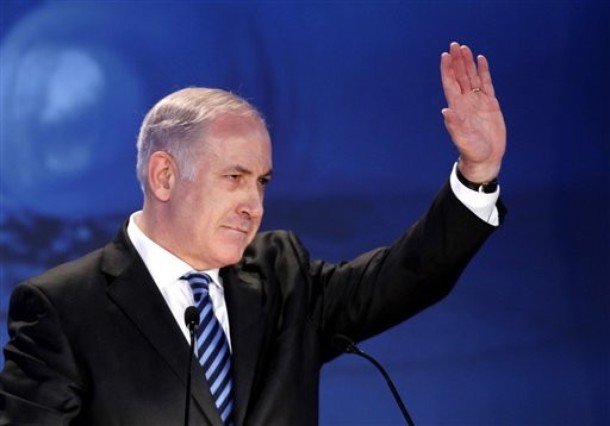
Critics talk as though Obama is the first president to tie aid and support to policy, which he most certainly isn't. And were Washington's relationship with Israel a normal, healthy one, this wouldn't be such a problem. The idea that friends and allies can critique each other isn't, as Larison notes, a new one. And it makes sense that countries will apply conditions to foreign aid that are consistent with that country's interests and ideals. America does this with its other allies, as does China. But our special relationship with Israel is different and is, as a result, far more "special" - and peculiar.
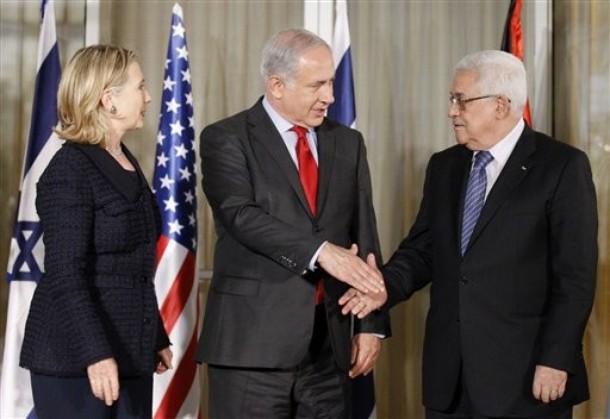
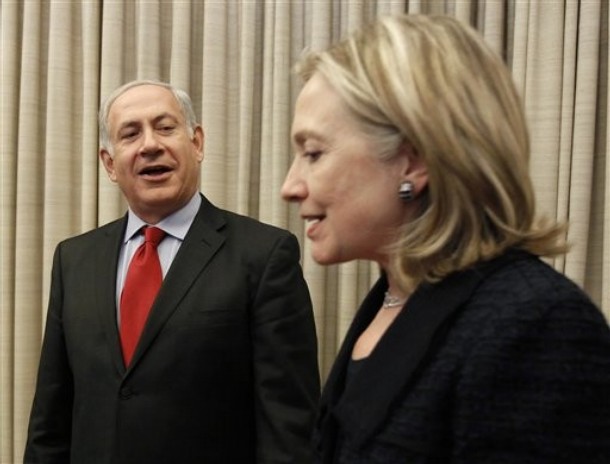
So allow me to make my own prediction: the United States will continue to provide a large and unique sum of military aid to Israel, the two countries will continue to operate in conjunction on specific threats, such as Iran, and - sadly, by my view - the status quo will remain the status quo for the indefinite future. Israel will be no more "isolated" than it already is, and Jerusalem will continue to be